Greetings friends, I hope you are well! 🙂
I wanted to do a little comparative listening with the Audio Note (UK) Tomei and Ongaku 211 integrated amplifiers today, using the Audio Note (UK) CD 5.1x Red Book CD player as a source.
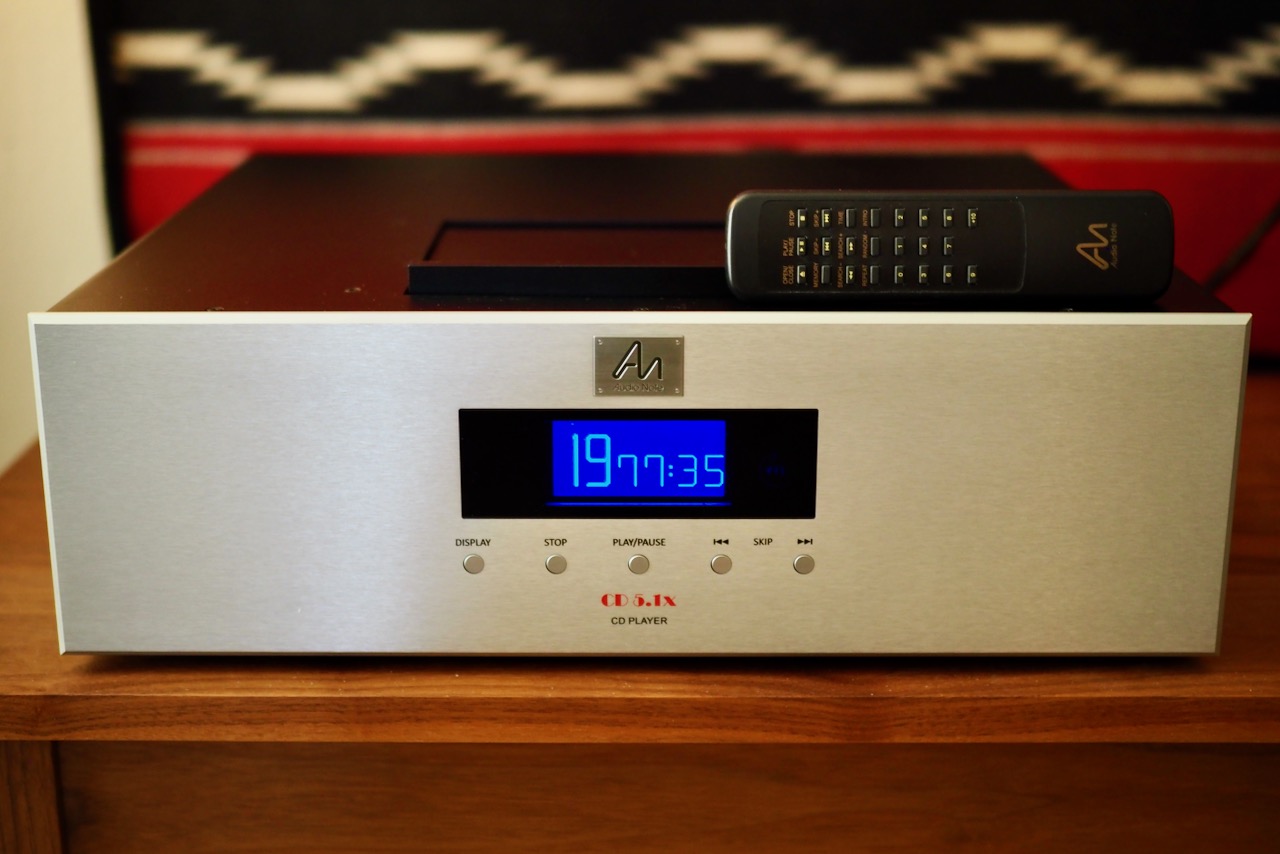
Audio Note (UK) CD 5.1x Red Book CD player.
Before I forget, here's links to previous posts in chronological order where I've been exploring the Ongaku, in case you missed them:
Today's Fresh Catch: The Audio Note (UK) Ongaku 211 SET Integrated Amplifier! HERE
Jeff Checking In: Discovering a new audio language ... Level 5 listening musings! HERE
Listening adventures with 50 great classical performances on Decca! HERE
Jeff Checking In: Audio Fun & Games with Alden & Carolyn, Audio Note (UK) Level 5, Decca, and the Perfect Amplifier? HERE
A peek inside the Audio Note (UK) Tomei and Ongaku 211 SET integrated amplifiers! Part 1. HERE
A peek inside the Audio Note (UK) Tomei and Ongaku 211 SET integrated amplifiers, along with some listening impressions! Part 2. HERE
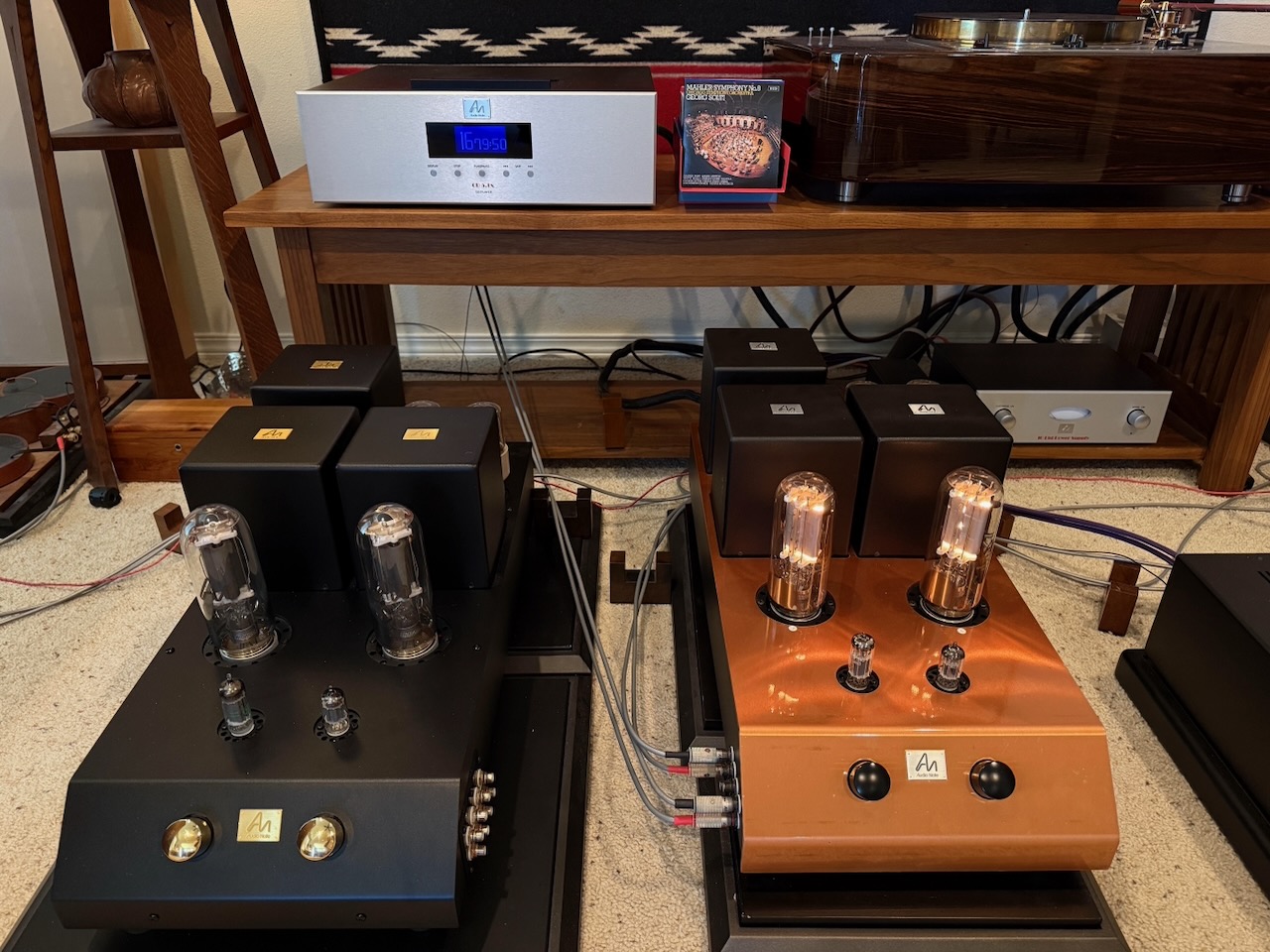
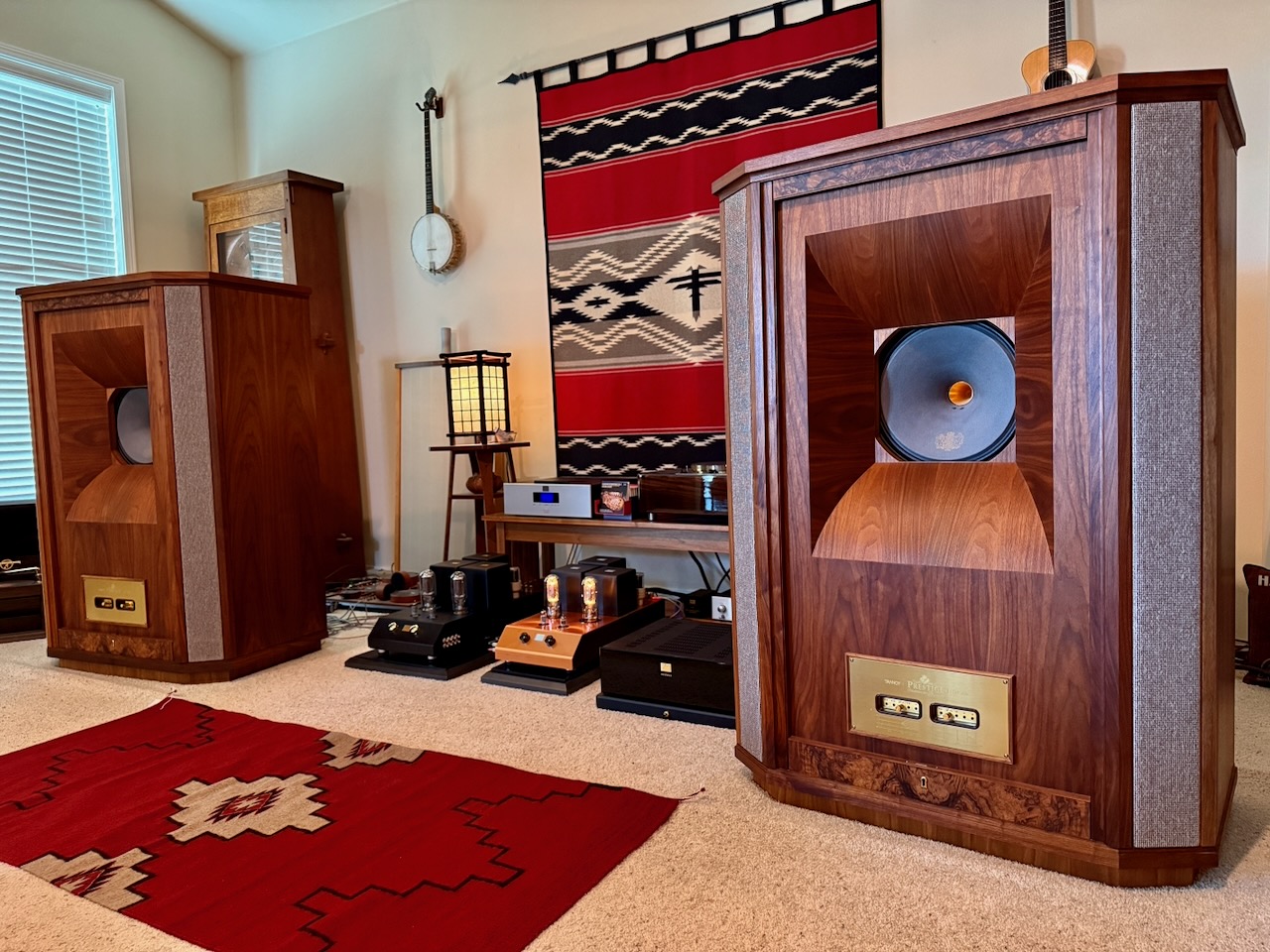
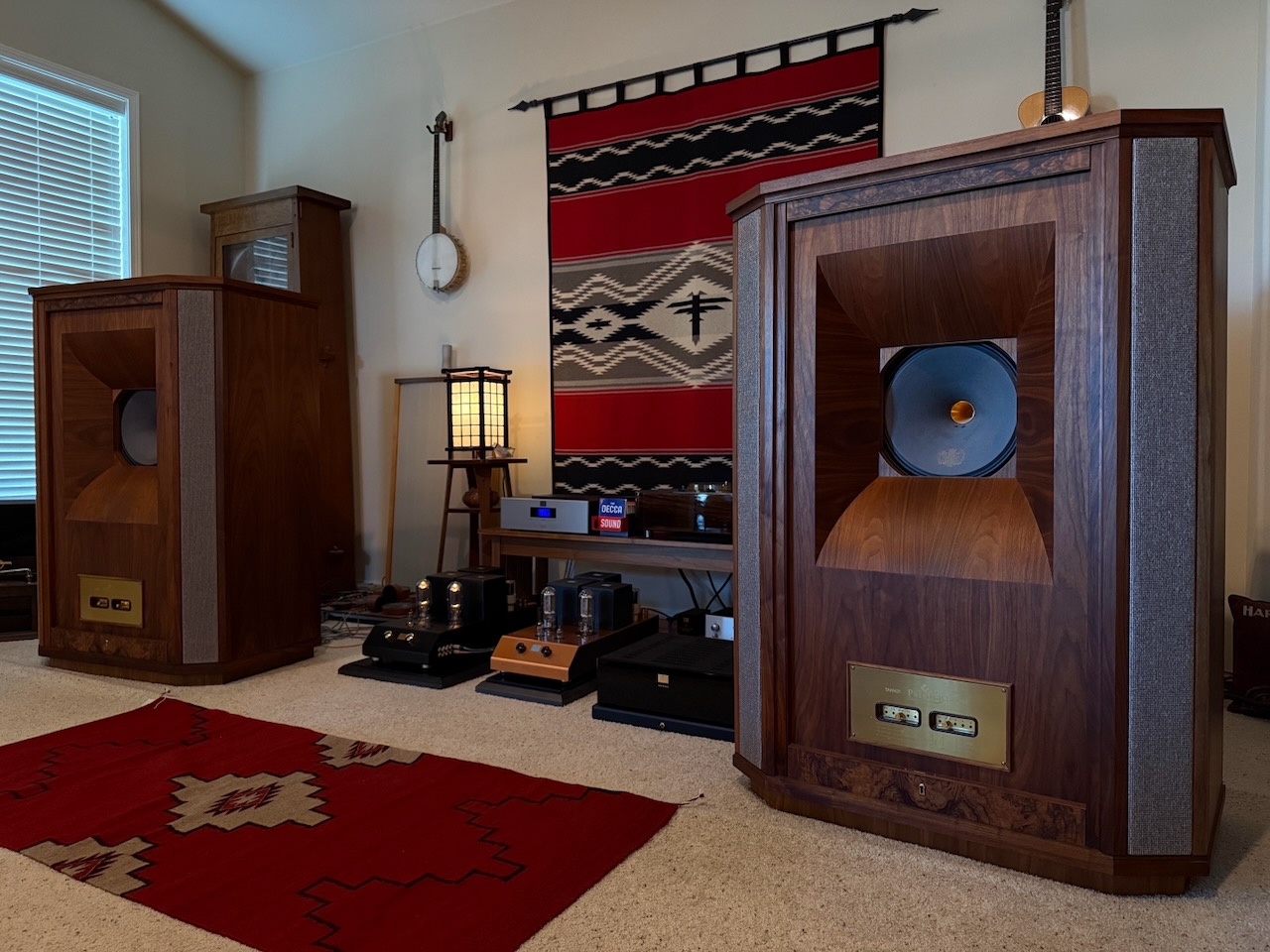
CD 5.1 x (left rear), Tomei 211 integrated amplifier (left front), Ongaku 211 integrated amplifier (right front).
It takes patience and extra effort when comparing the Tomei & Ongaku 211 integrated amplifiers, as they require 45 minutes of warmup prior to listening to be at their optimum.
So that means letting the Tomei or Ongaku warmup for 45 minutes, gathering listening impressions, then shutting it down, and installing the other amp, letting it warm up for 45 minutes, gathering listening impressions, swapping amps, and so on for each album. So no quick A-B comparisons here.
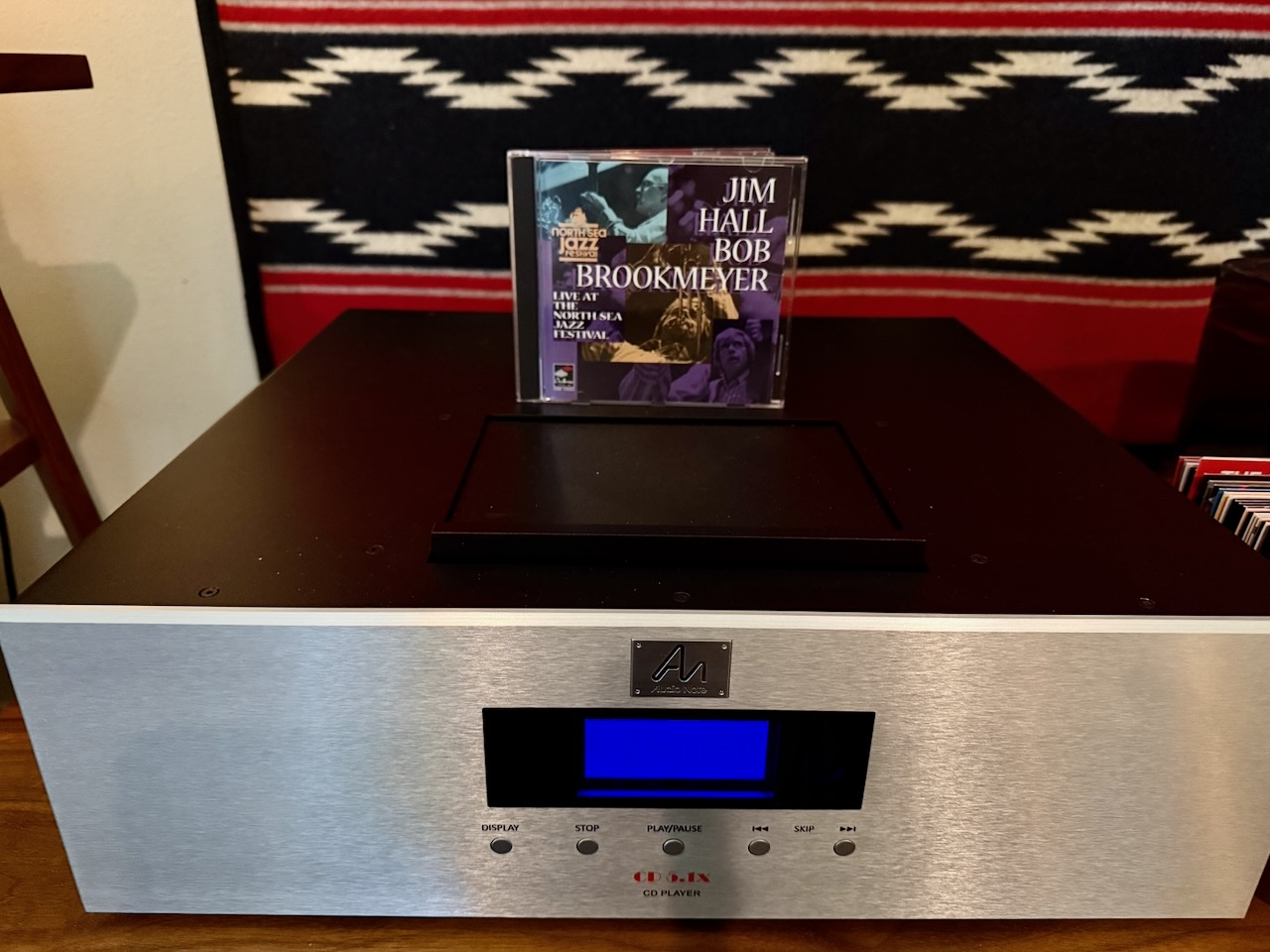
Jim Hall and Bob Brookmeyer - Live At The North Sea Jazz Festival (Challenge Records CHR 70063, 1979).
First up for a listen is Jim Hall's and Bob Brookmeyer's Live At The North Sea Jazz Festival CD.
If I remember correctly, jazz guitarist friend David Gitlen told me about this album. Jim Hall is David's favorite jazz guitarist, and played with him in duets a few times. Extraordinary guitarists!
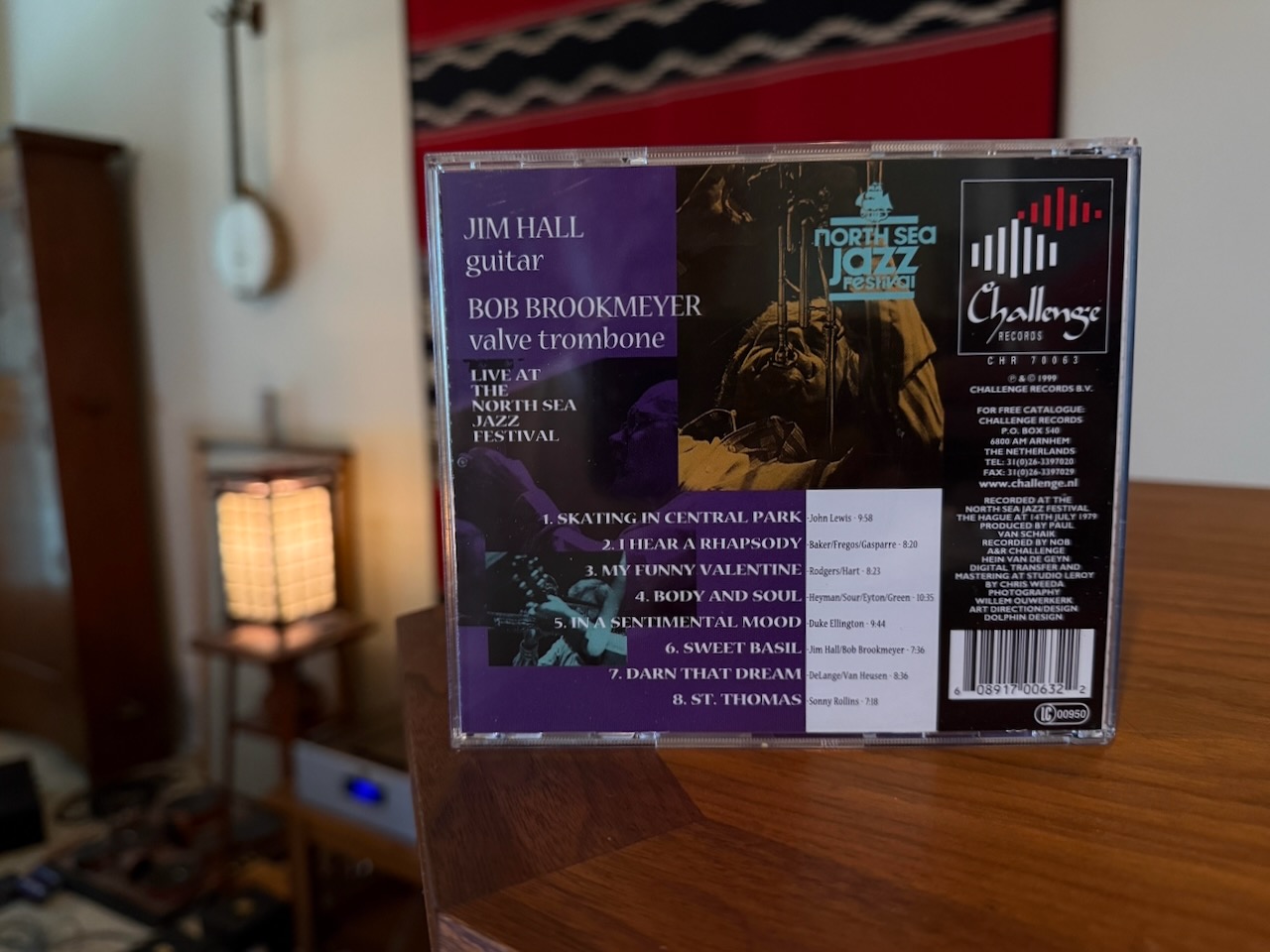
Live At The North Sea Jazz Festival, with Jim Hall on guitar and Bob Brookmeyer on valve trombone, was recorded live at the North Sea Jazz Festival on July 14, 1979.
Jim and Bob performed a really beautiful set of jazz standards: Skating In Central Park (John Lewis), I Hear A Rhapsody (Baker/Fregos/Gasparre), My Funny Valentine (Rodgers/Hart), Body And Soul (Heyman/Sour/Eyton/Green), In A Sentimental Mood (Duke Ellington), Sweet Basil (Jim Hall / Bob Brookmeyer), Darn That Dream (DeLange/Van Heusen), and St. Thomas (Sonny Rollins).
Ongaku 211 integrated amplifier (right).
The Ongaku was up first, and my listening SPLs were in the range of mid-60s to mid-70s dB, which results in a very live-like presentation through the Ongaku, with oodles of presence, lots of natural sounding musical details and dynamics, and a very natural sounding presentation of timbral textures.
The ability of the Ongaku to deliver everything on a recording so effortlessly and completely, both in terms of impressive sonic performance and dramatic emotional engagement, even at modest volumes, makes it a true wonder.
The background is absolutely black courtesy of the Black Gate capacitors, which also provide a high signal-to-noise ratio (i.e. a very low noise level), which also allows much more low-level information to emerge from the music signal than I'm used to hearing from recordings I know well. The "Tone King" non-magnetic silver tantalum resistors also contribute to that impressively black background, as well as beautiful tone, and oodles of timbral textures.
The amount of recorded detail retrieved from the music signal is remarkable, which is made possible in part by the Ongaku's all silver wiring, silver wired transformers with high-content nickel iron C-cores, silver connectors, silver tantalum resistors, silver foil signal capacitors, Black Gate capacitors, silver everything, and just the whole clever design, all of which are optimized to let as much musical information come through as possible with its high contrast voicing.
I could hear every little technique detail of Bob playing his valve trombone, and all of Jim's strings tonal and timbral textures contributions as he was comping to Bob's playing.
I've had a couple of audio pals stop by and listen to the Ongaku, and when you first hear it, it sounds so utterly tonally natural, and with its ultra-black backgrounds, one doesn't really notice the prodigious amount of musical detail it reveals in the music, and indeed both commented they thought that the Ongaku sounded kind of "laid back."
The Ongaku's not really laid back sounding, what it is, is extremely accurate, with lots of musically relevant detail emerging from the music, but Peter's voicing using the comparison by contrast approach gives a high contrast voice that just sounds sublimely "real" on this album.
The Ongaku is deceptive in that way, remarkable even, in that it can sound so completely natural and "live" while delivering so much musical detail, which I think increases the sense of realism and presence of the musical performance.
The high contrast voicing of the Ongaku does more than just make the differences in album's recording styles obvious, it also makes the dynamic gradations more agile and involving. Both Jim and Bob play with subtlety, with finesse, at relatively low volumes, and the Ongaku makes their playing come alive dynamically even at low SPL playback levels. This sort of dynamic prowess at the soft end of the dynamic spectrum makes their playing come alive, full of feeling, and extremely dramatic in its emotional engagement.
The combination of ultra-low noise levels, and the remarkable resolution of detail, means that the soundstage of recordings really lights up and expands, with solid but natural flesh & blood solid holographic images of Jim and Bob playing in front of me, to an eerie extent. The sense of space in the recording is huge, and even the crowd applause on Live At The North Sea Jazz Festival, was utterly life-like, fillings the width and depth of the soundstage.
I've said this before, but the Ongaku delivers an utterly tonally natural presentation of the music that is accurate, dramatic, authoritative, and provides such an intense feel of realism for the artistic intent of the music, that it results in a very emotionally engaging presentation of Bob's and Jim's music that it's truly spellbinding.
When listening to Live At The North Sea Jazz Festival it really feels like I am at the concert in The Hague, immersed into the audience, feeling, hearing, experiencing, the live performance by Jim and Bob. Truly breathtaking!
Ok, time for a break while I swap out the Ongaku with the Tomei, and let the Tomei warm up for 45 minutes, for further listening.
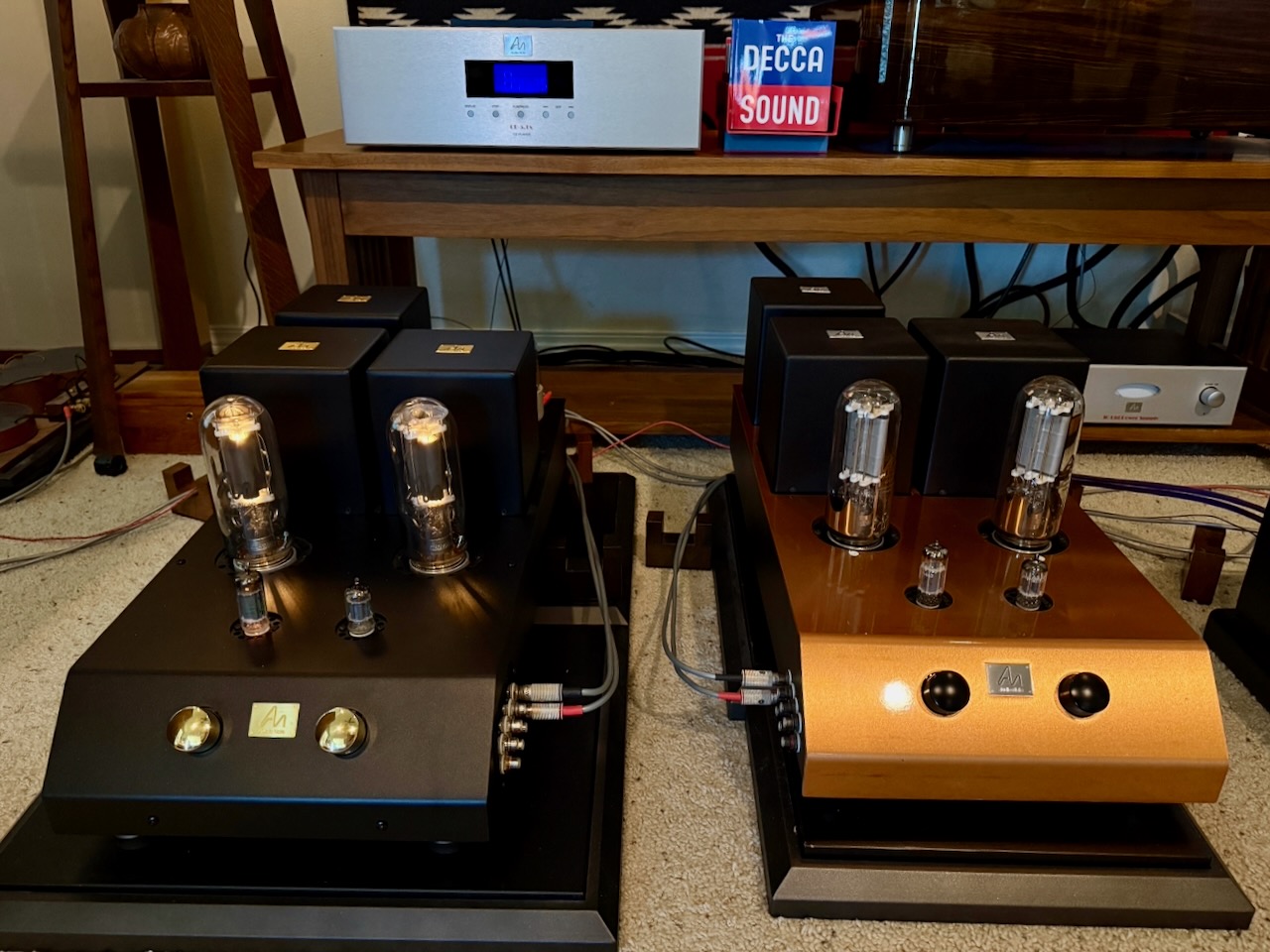
Tomei 211 integrated amplifier (left).
If you read my previous posts in this series you know that the Ongaku and Tomei share the same circuit design and chassis, but the Ongaku's circuit is populated with components that deliver a more refined, higher level of sonic performance.
Don't think for a moment that means the Tomei isn't amazing, because it is, as the components that populate the Tomei's circuit are still custom über quality components, but just not quite as exotic, refined, über, and expensive, as those in the Ongaku.
Still, until the arrival of the Ongaku, the Tomei was the highest performing amplifier I'd ever had the pleasure of experiencing in my audio system, and I adore listening to music with it in the system.
45 minutes later: now back to Jim and Bob.
After I checked the Tomei's SPLs were in the same mid-60s to mid-70s range, I set about to do a little more listening with Jim and Bob.
First off, even though the SPL levels were comparable, I felt like I wanted to turn the volume up a little more with the Tomei because the music felt more distant, less vivid and resolved, and with less "you are there" realism, and presence, than with the Ongaku.
Clarity and resolution of fine detail across the frequency bands of the audio spectrum were less with the Tomei than with the Ongaku.
Another observation was that the tonal refinement, resolution of fine details and timbral textures, across the frequency bands of midrange, upper midrange, and presence region particularly, were at another level with the Ongaku.
The Tomei is a fantastic amplifier, but the Ongaku really does take everything to a considerably higher level of sonic performance and dramatic portrayal. To a surprising degree.
While I consider anyone who owns a Tomei or Ongaku 211 integrated amplifier to be a very fortunate music lover in the extreme, if money isn't a factor for you, go for the Ongaku, it really is at another loftier level of performance compared to the Tomei. You do get what you pay for with Audio Note (UK) kit when going from one level to another.
I absolutely adore the Tomei, so I was a little shocked by the magnitude of performance increase I was hearing from the Ongaku in this comparison. Shocked!
As great as the Tomei is, and it is great, the Ongaku is really something special. One of a kind. With a presentation that is more resolving, even more natural tonally and timbrally, more resolving of fine detail, more dynamically dramatic, more accurate, more authentic, more authoritative, the Ongaku just has more of everything. The Ongaku is a true work of audio art, one that I've never heard the likes of before. I am in awe.
Live At The North Sea Jazz Festival is a fantastic recording of extraordinary musicians, and both the Tomei and Ongaku make listening to it incredibly involving, albeit the Ongaku more so.
It's a recording of only two musicians, however, and in Part 2 I'm going to share some listening impressions with you of some much more complex music.
As always, thanks for stopping by, and may the tone be with you!