
Greetings friends, I hope you are doing great!
I've been noodling about how to best proceed with writing about the Audio Note (UK) Level Five suite of source and amplification components I have here: the I0 Ltd. field-coil moving-coil phonograph cartridge and its power supply, the AN-S9 step-up transformer, the M8 RIAA phono preamplifier, and the Ongaku 211 SET integrated amplifier.
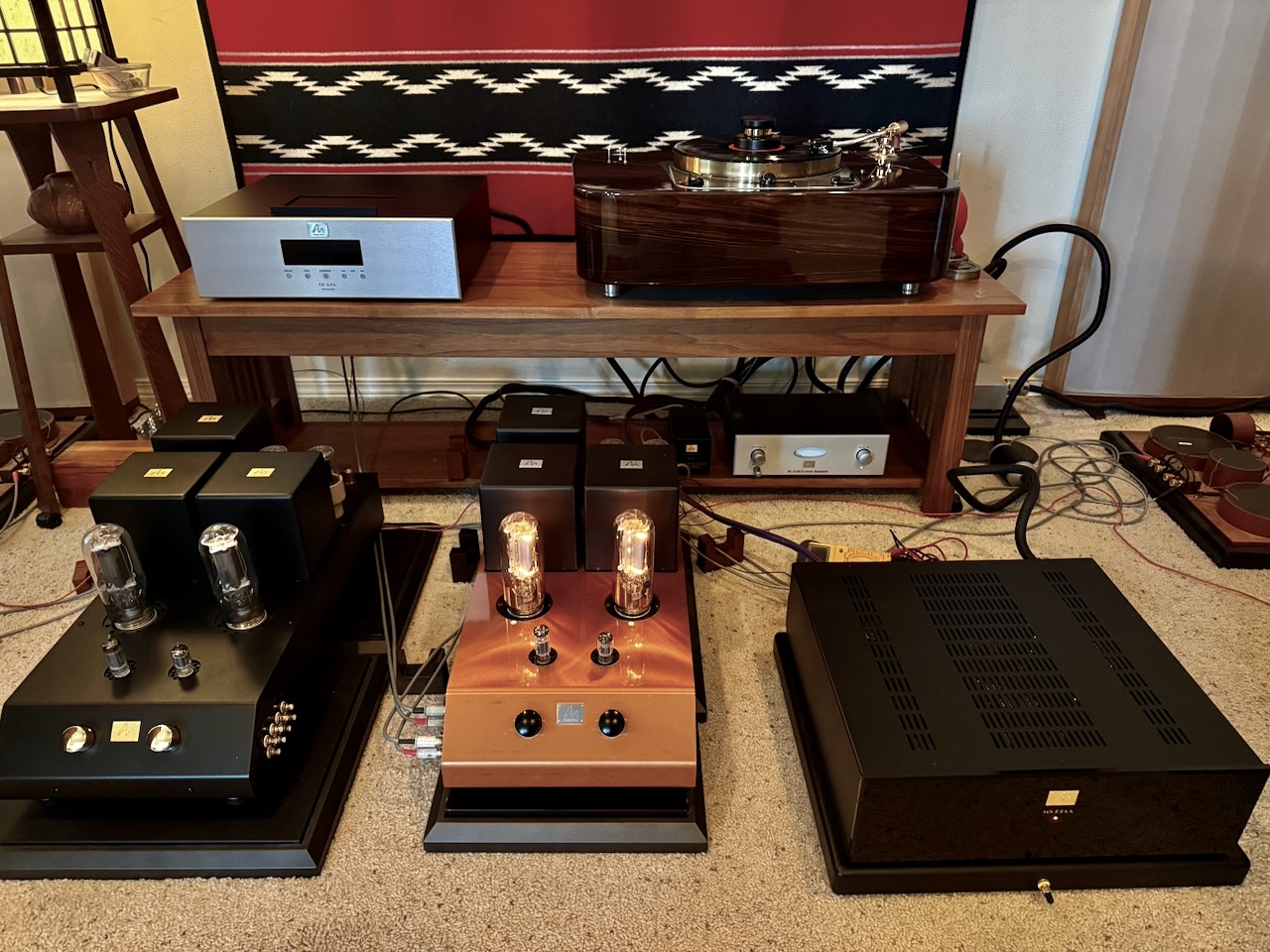
Tomei (left), Ongaku (middle), and M8 RIAA (right).
I should mention that me referring to the Io Ltd. FC MC phonograph cartridge and the AN-S9 as at the "Level Five" performance level isn't really correct.
The "Level Five" designation is really for amplification devices like the Ongaku and M8 RIAA, but the Io Ltd. FC MC phonograph cartridge and the AN-S9 are at the tippy top of Audio Note (UK)'s product lines for moving-coil phonograph cartridges and step-up transformers, respectively, and they are the simply the very best that Audio Note (UK) offers in their respective product lines.
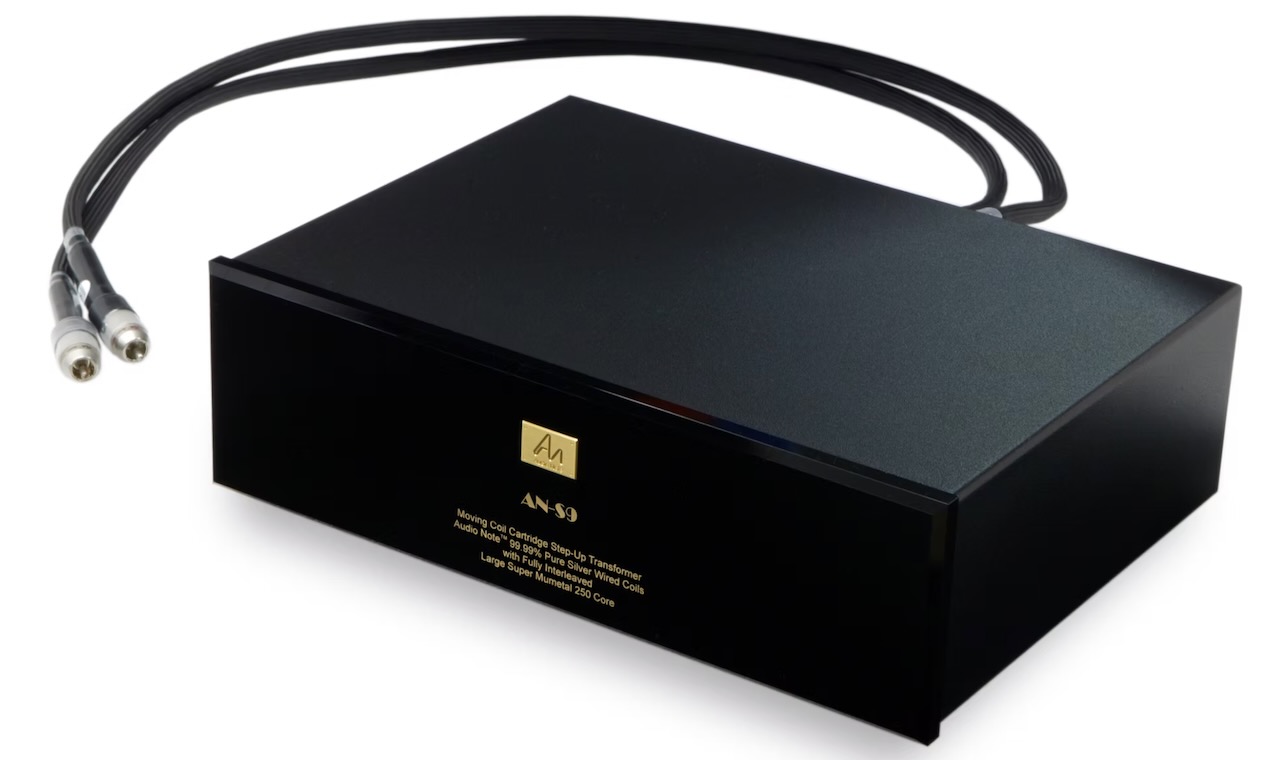
Alas, unfortunately the AN-S9 SUT that is the intended partner to the Io Ltd. FC MC phonograph cartridge suffered shipping damage on its way to me, so it needed to be sent in for diagnosis and repair. I've been listening to the AN-S8 SUT that is here in the meantime, which is a superb SUT in its own right.
When the repaired AN-S9 gets back here I'll have more to say about the Io Ltd. FC MC phonograph cartridge, but until then I've been listening to it with the AN-S8, and as a pairing they sound superb together.
In the meantime I thought I'd take a peek inside the Level Five Ongaku 211 SET integrated amplifier, and see what it looks like in comparison to the Level Four Tomei 211 SET integrated amplifier.
If you've been following along with my Audio Note (UK) series of articles exploring the "Levels" of performance in the various product lines I've been writing about, you know that the Jinro, Tomei, and Ongaku all share the same circuit design and topology, pure Class A operation, zero negative feedback, a single-ended output stage, valve rectification, and directly heated triode operation Where they differ is the components that are used to populate their circuits.
As one goes up through the levels of performance, the circuit components chosen to populate it are at a higher level of performance and refinement, and let me just say that the improvements to performance are elevated significantly - you get what you pay for with Audio Note (UK) performance as one ascends up through the levels.
From the top you can see that the layout is the same for both the Tomei and Ongaku.
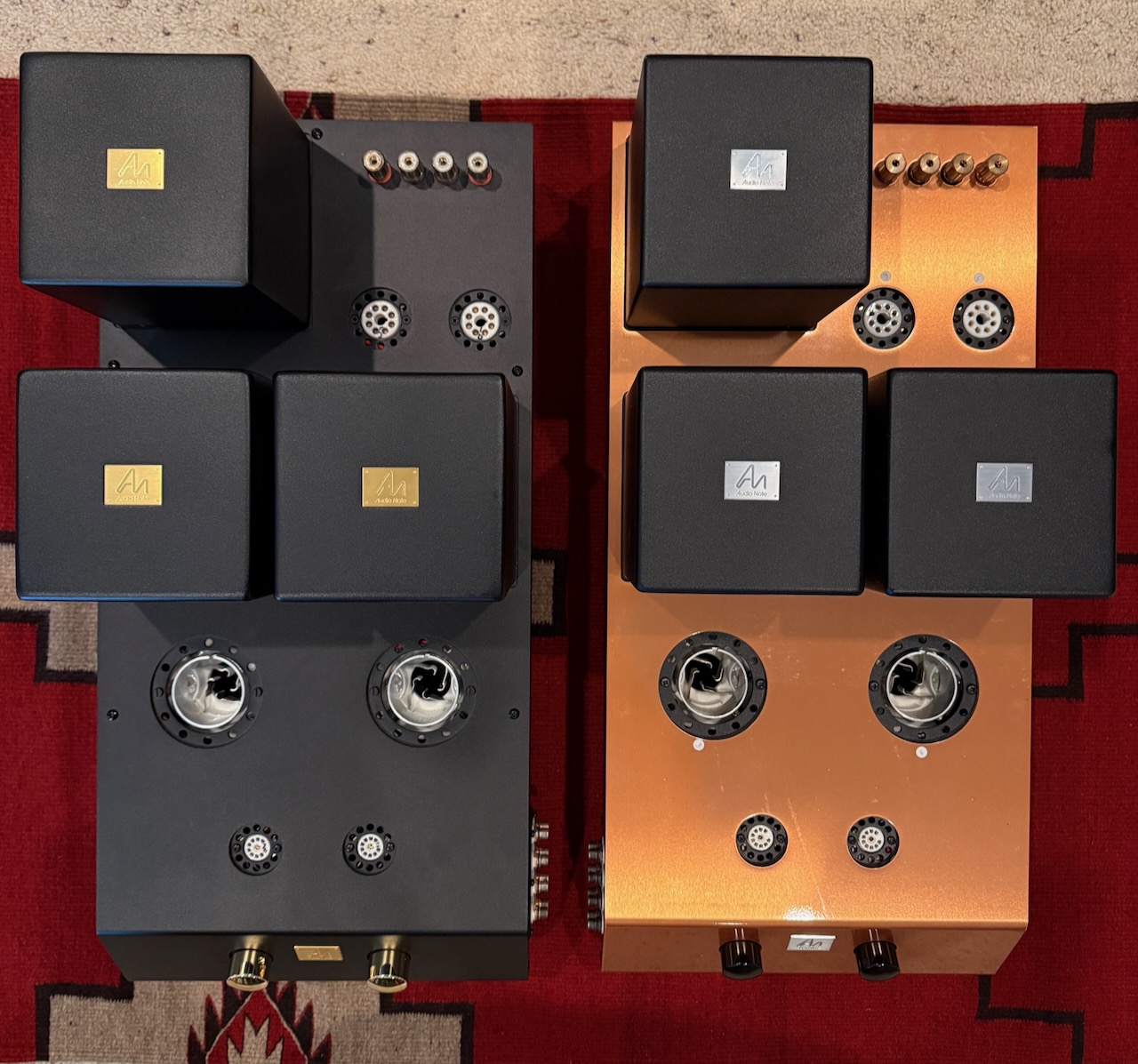
Tomei (left), Ongaku (right)
Other than the black anodized aluminum top plate on the Tomei, and the copper top plate on the Ongaku, they look identical from the top except for the finish on the switching and volume controls and the transformer cover emblems. Oh, wait there is one significant difference - can you spot it?
Now let's flip them over in preparation for taking a peek inside.
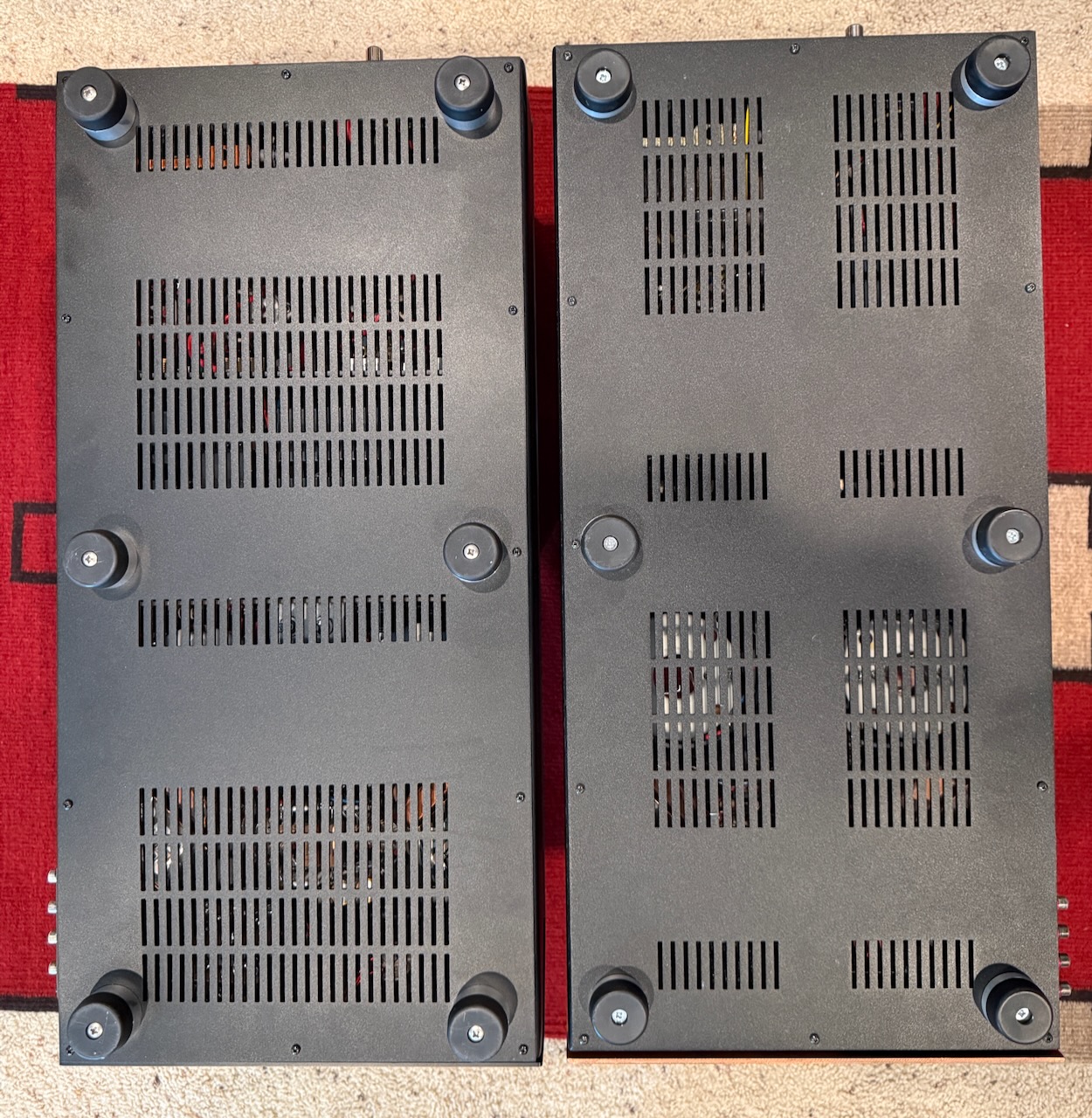
Tomei (left), Ongaku (right).
The pattern of vents on the bottom plate of the chassis differ, but other than that they are the same.
Ok, let's take a look inside, shall we?
Now for the unveiling - ta-da!
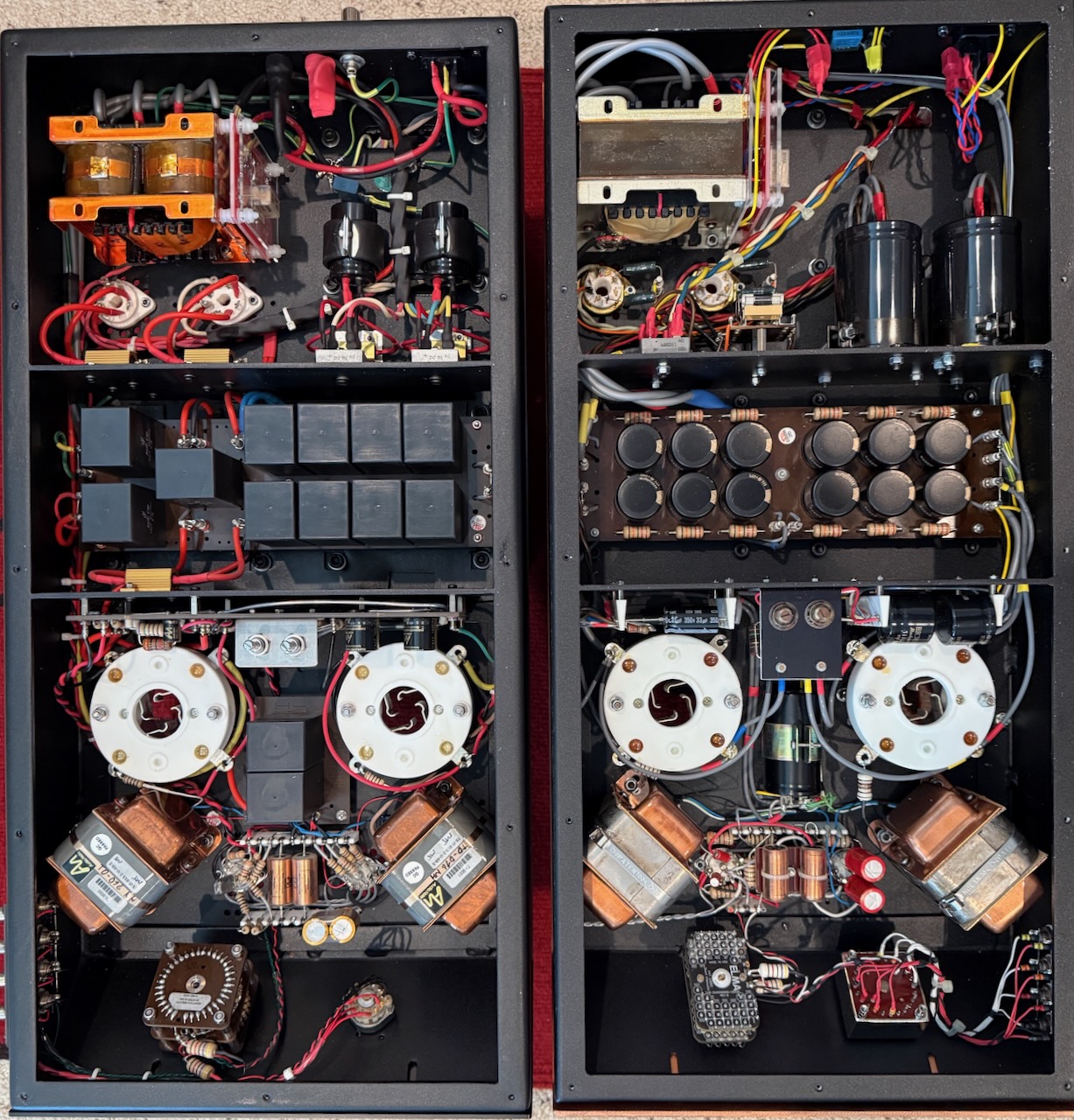
Tomei (left), Ongaku (right).
The Tomei features a combination of copper and silver for the transformers, Audio Note (UK) tantalum resistors, oil capacitors, and and Audio Note (UK)'s in-house designed and manufactured copper/silver wired output transformers.
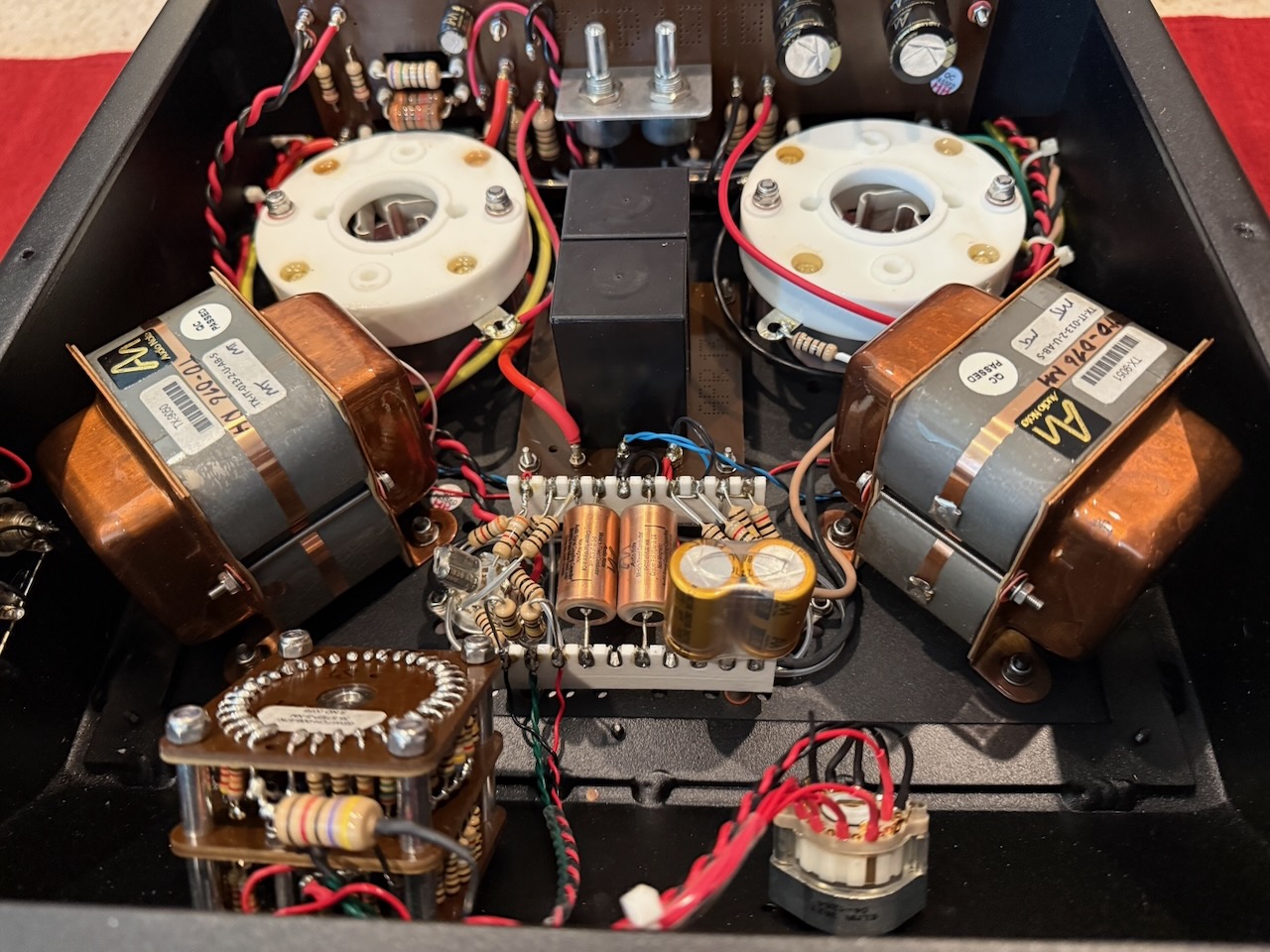
Notice the stepped attenuator in the lower left of the photo above. The stepped attenuators are custom built by Audio Note (UK) using tantalum resistors. They use 2 Watt AN (UK) load resistors, followed by a single AN (UK) 1/2 Watt resistor for each of the individual volume steps.
Notice in the center of the photo a couple of AN (UK) copper paper-in-oil capacitors. To each side of them are silver-copper chokes.
Next to the copper PIO caps you can see a pair of Audio Note (UK) electrolytic Kaisei caps that "were developed in collaboration with the engineering team at Rubycon (of Black Gate fame)."
In the upper right corner of the photo you can see a pair of custom black AN (UK) electrolytic capacitors.
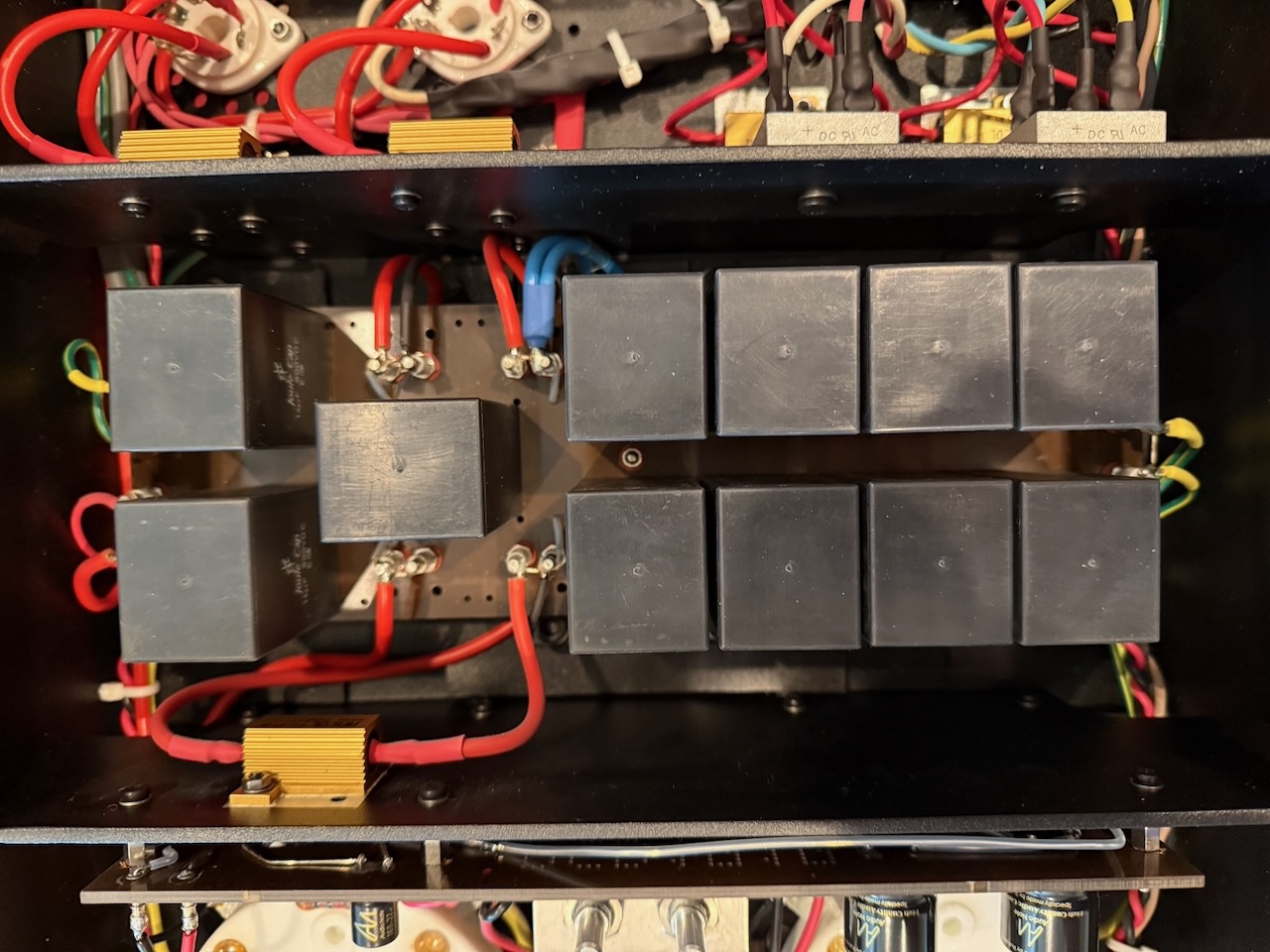
Above: Power supply caps.
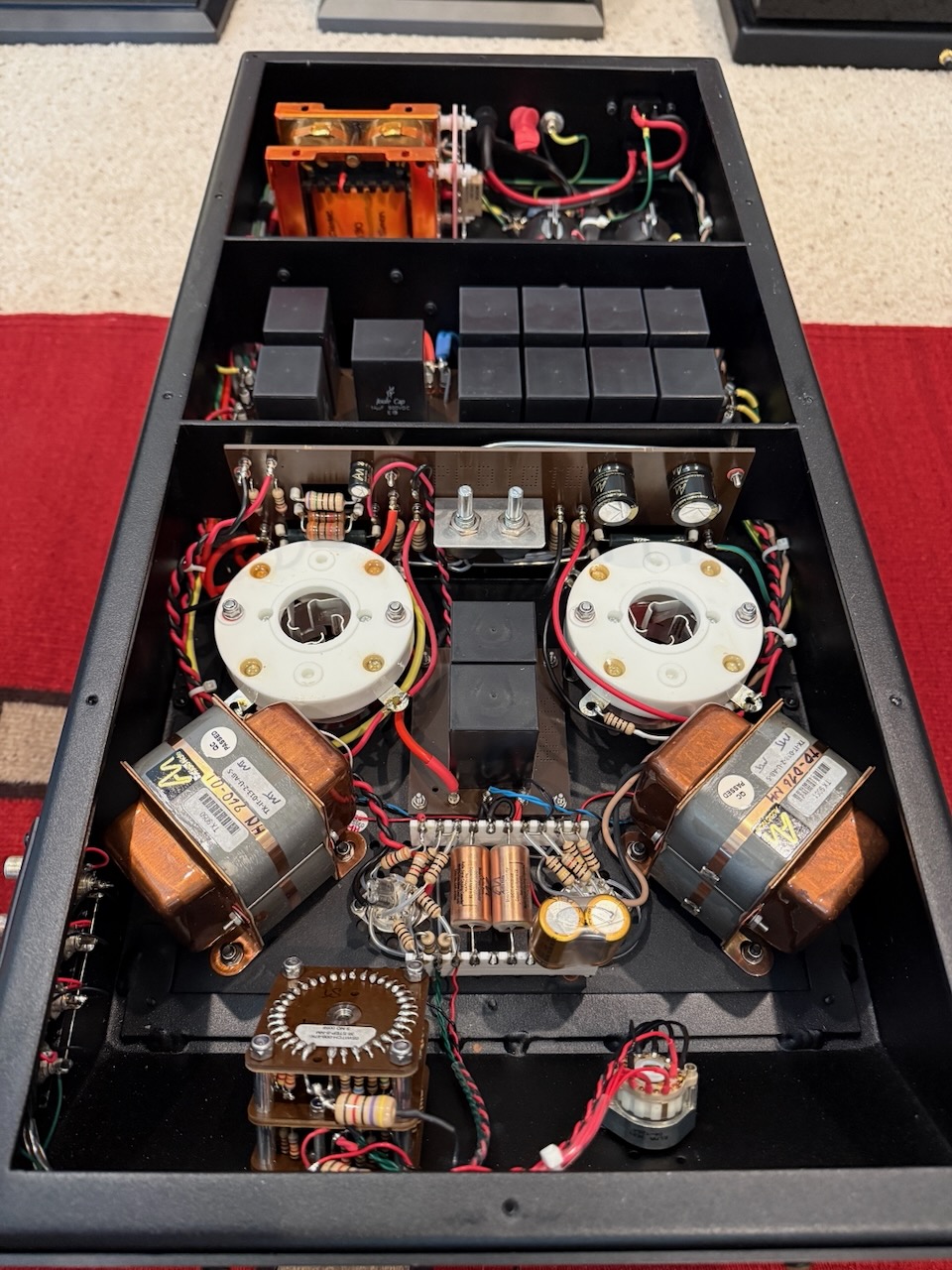
The Tomei is one beautiful amplifier!
Ok, now let's take a look inside the Ongaku.
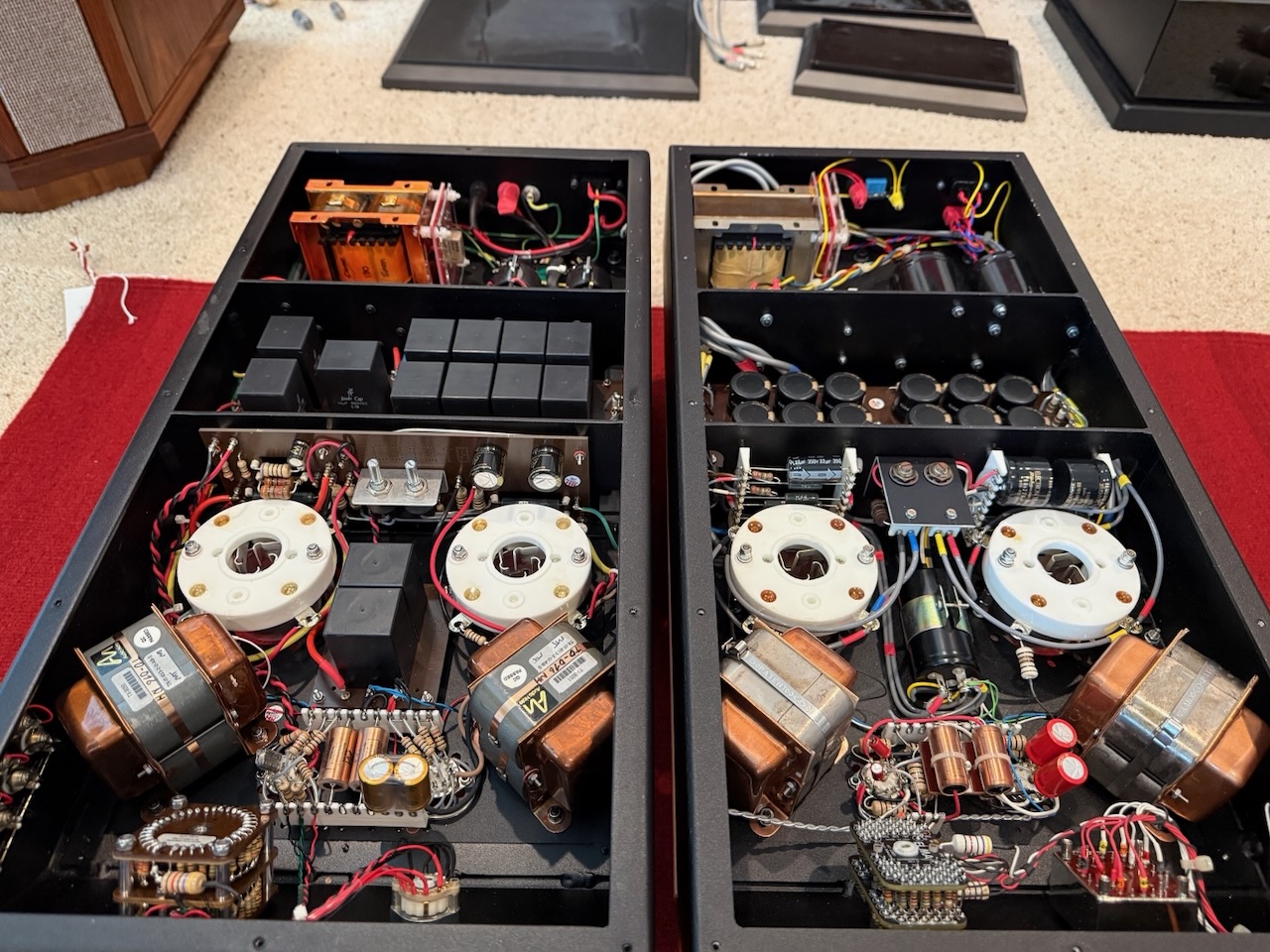
Tomei (left), Ongaku (right).
In the Ongaku Audio Note (UK) silver wire has been used exclusively for all internal wiring, including transformers and power supply connections.
Note the silver wire, silver wound transformers, and silver paper-in-oil caps in the photo below.
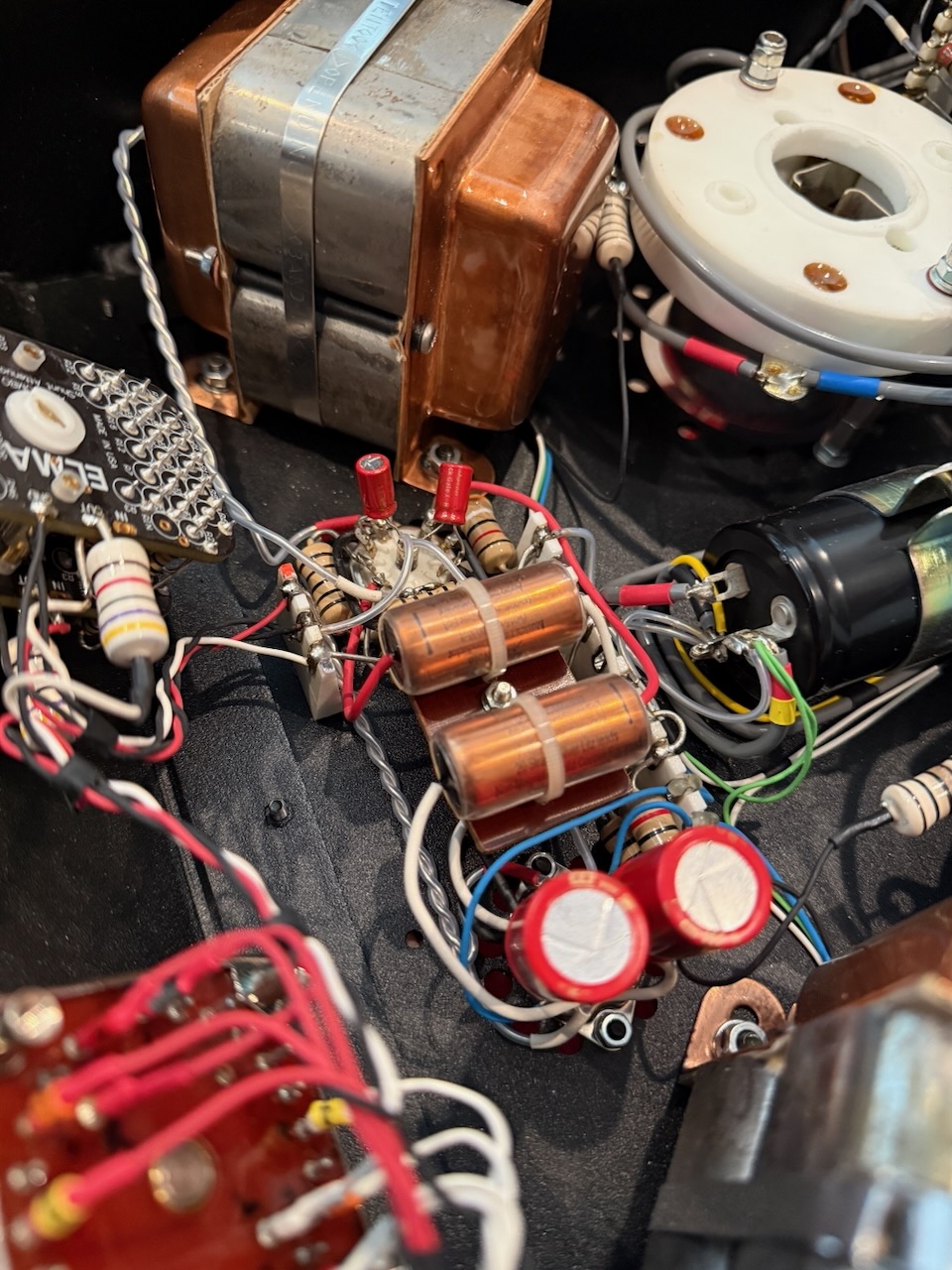
AN (UK) two watt tantalum resistors have been used throughout the Ongaku.
Look at all those lovely Black Gate electrolytic capacitors in the power supply!
Black Gate capacitors have a legendary reputation for contributing to sound quality in terms of improved signal to noise ratio, incredible transparency, a holographic soundstage, vivid tone colors, pitch black backgrounds, and incredible dynamic feel across the dynamic spectrum on attacks and decays, to give an utterly natural presentation of the music that is accurate, dramatic, authoritative, providing an intense feel of realism for the artistic intent of the music, which results in a very emotionally engaging presentation of the music.
These are performance traits I hear coming through in the Ongaku in spades.
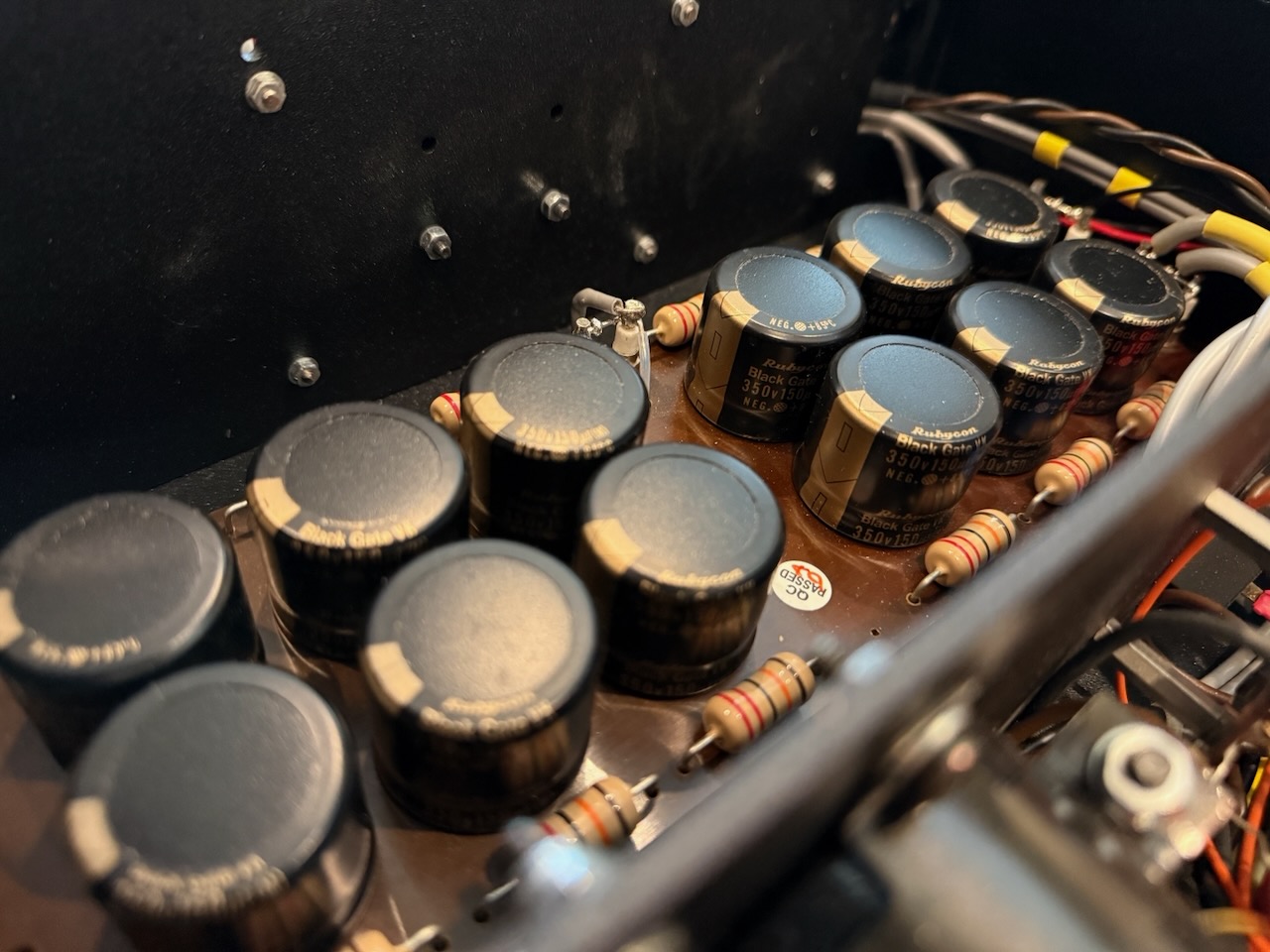
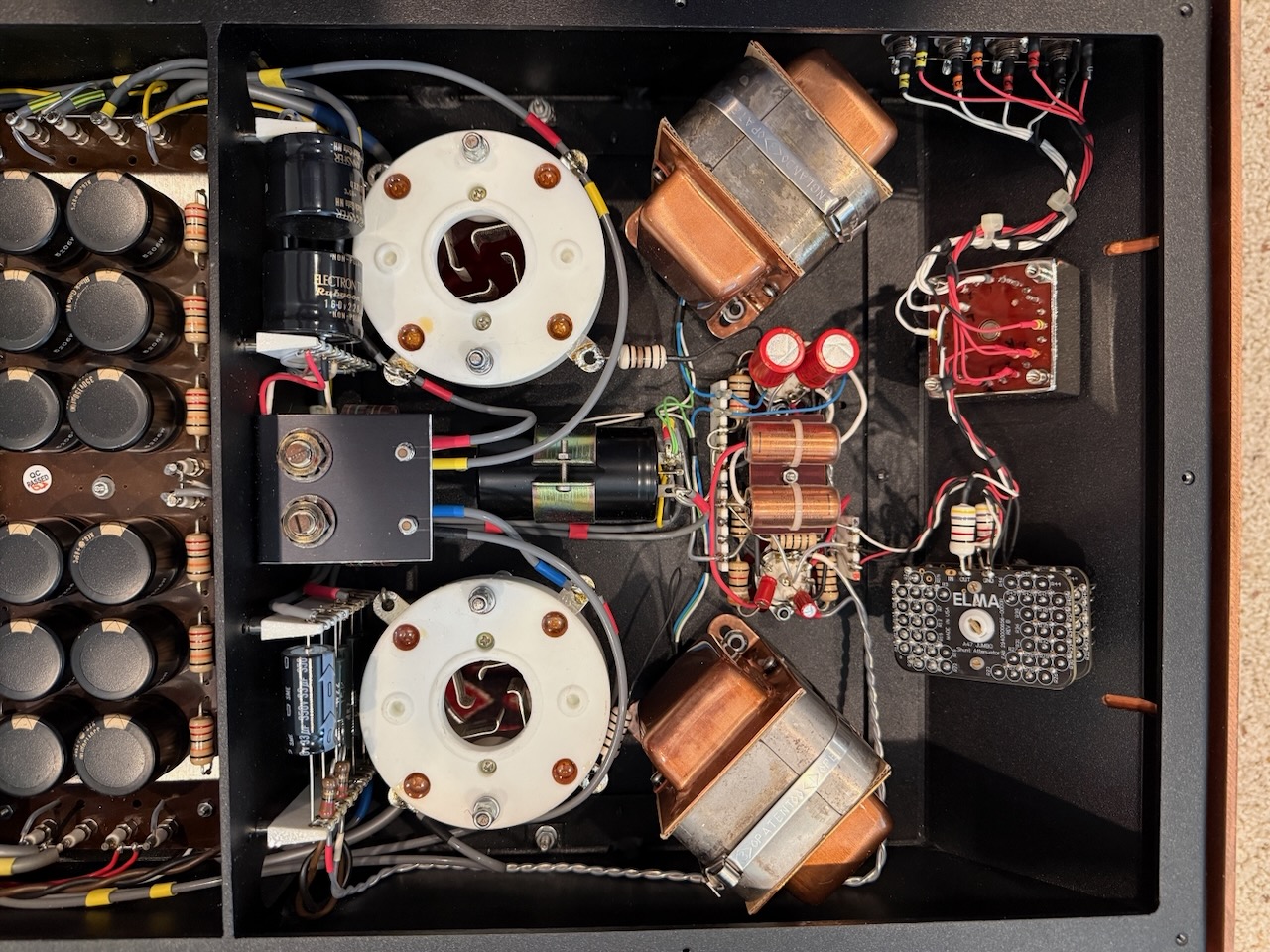
All capacitors are either Black Gate Electrolytic or Audio Note (UK) silver foil which work together to provide an incredible level of audio performance.
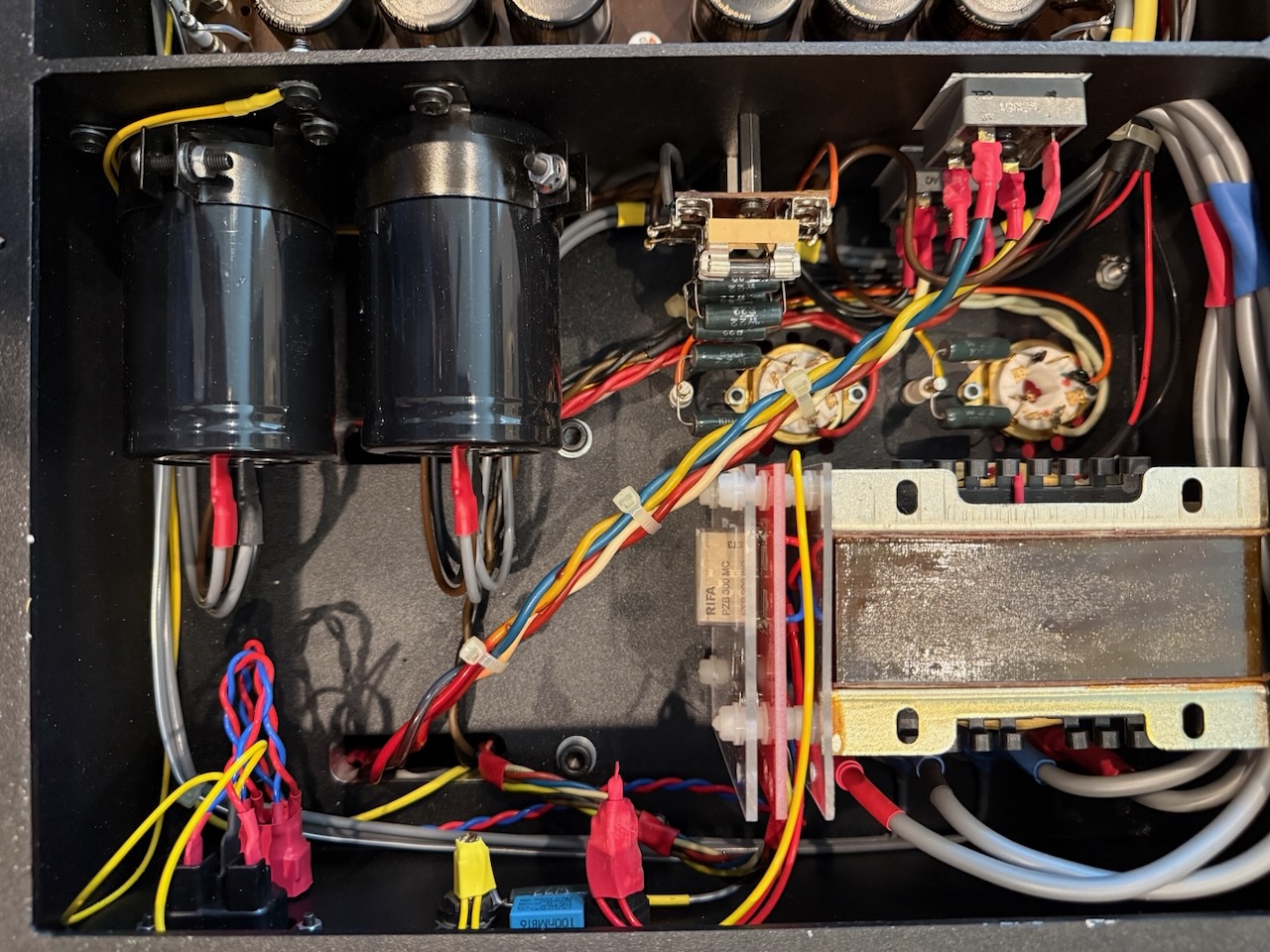
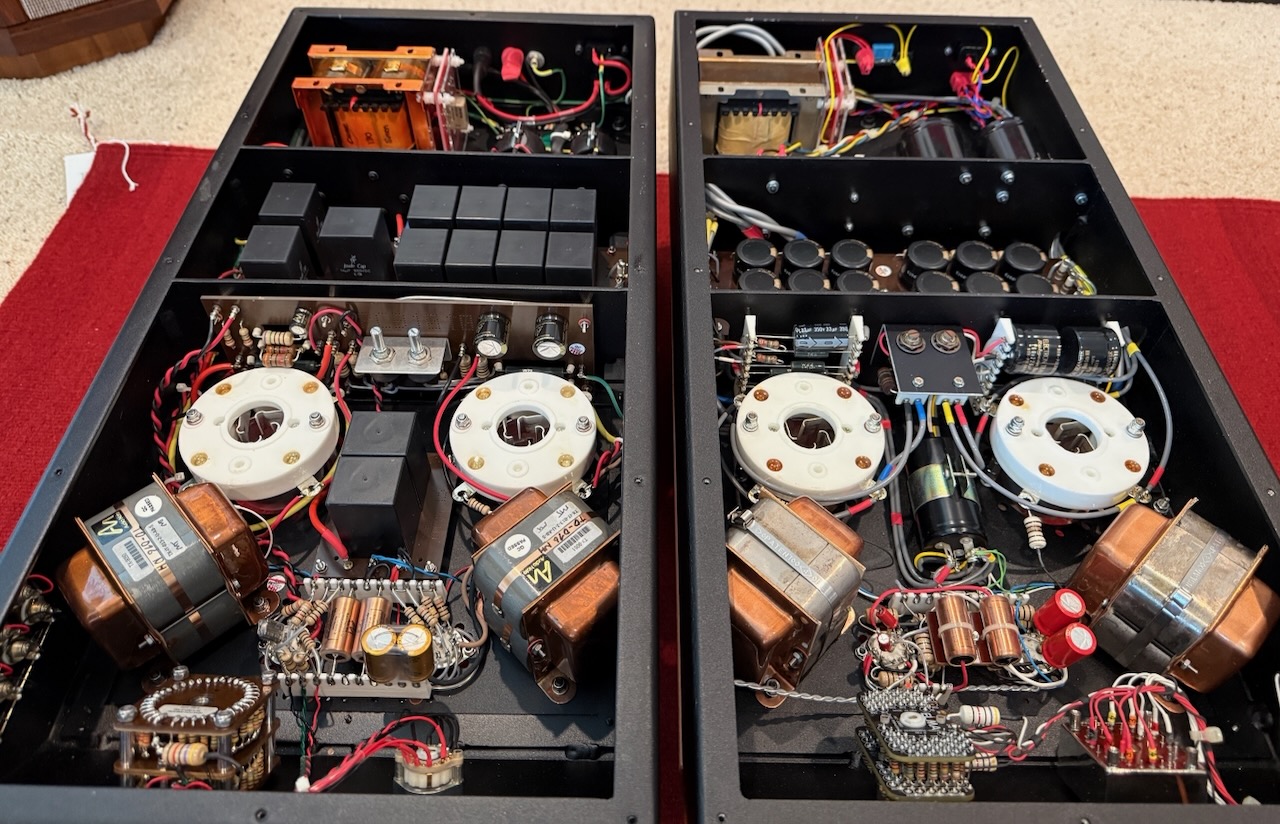
Tomei (left), Ongaku (right).
All transformers are custom designed and made by AN (UK) in-house. The Ongaku's driver and output transformers are fully silver wired AN-Perma 50 nickel C-core, and the mains transformer is copper wired (to meet UK safety standards) with an HiB double C core.
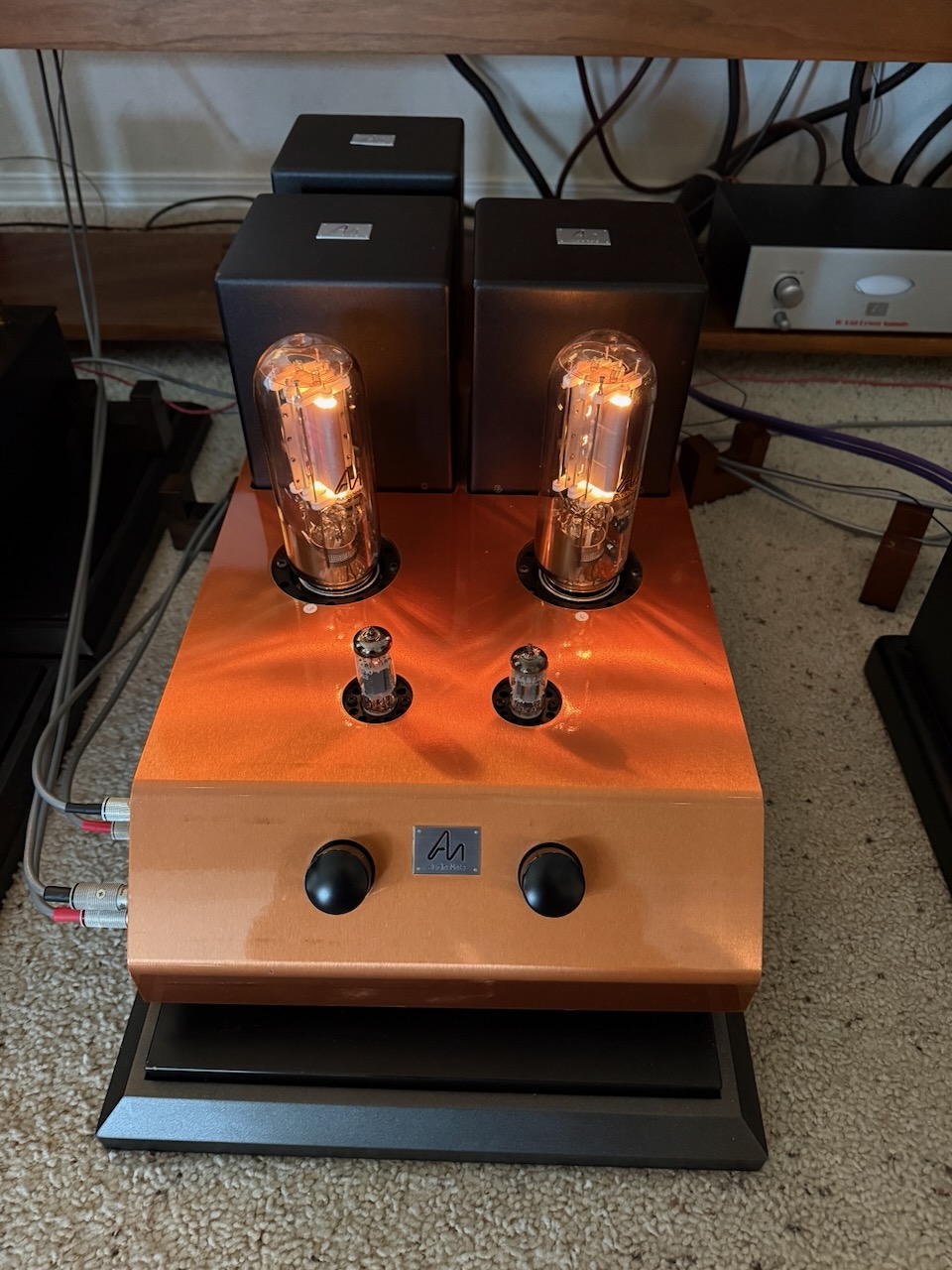
The Ongaku.
I hope you enjoyed our little peek inside the Tomei and Ongaku. They really are impressive to see, with all their beautiful custom components in the circuits.
Next time I'll tell you about some comparative listening with the Tomei and Ongaku using the Audio Note (UK) CD 5.1x CD player used as a source.
You can read Part 2 of this post HERE.
As always, thanks for stopping by, and may the tone be with you!