
Greetings friends, I hope you are well. 🙂
Yesterday I sat down to engage in my audio scribe role, as I wanted to share some listening impressions with you about the Audio Note (UK) Level Four Tomei 211 SET integrated amplifier, the Audio Note (UK) Level Five Ongaku 211 SET integrated amplifier, with the Audio Note (UK) 5.1x Red Book CD player as a source.
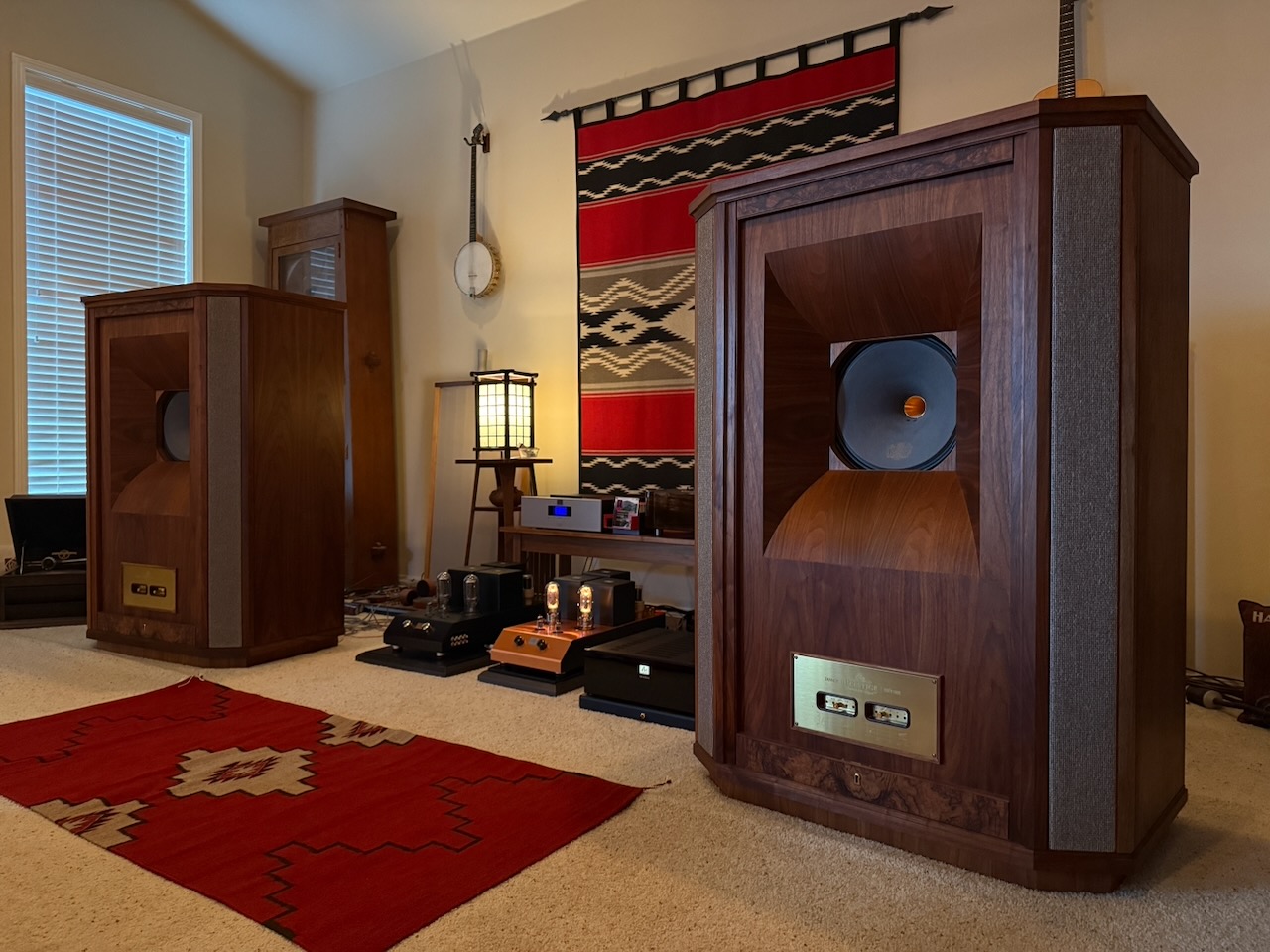
However, I diverged from jumping right into my listening impressions because I wanted to write a short preamble about the survey of Audio Note (UK) components at ascending performance levels that Peter Qvortrup and I have been doing, as a helpful introduction for those who might be new to this article series.
After writing down my preamble draft, I realized it was too long to serve as a brief introduction to my initial listening impressions, and in the course of writing it I had several Aha! moments occur that I thought deserved further consideration and elaboration.
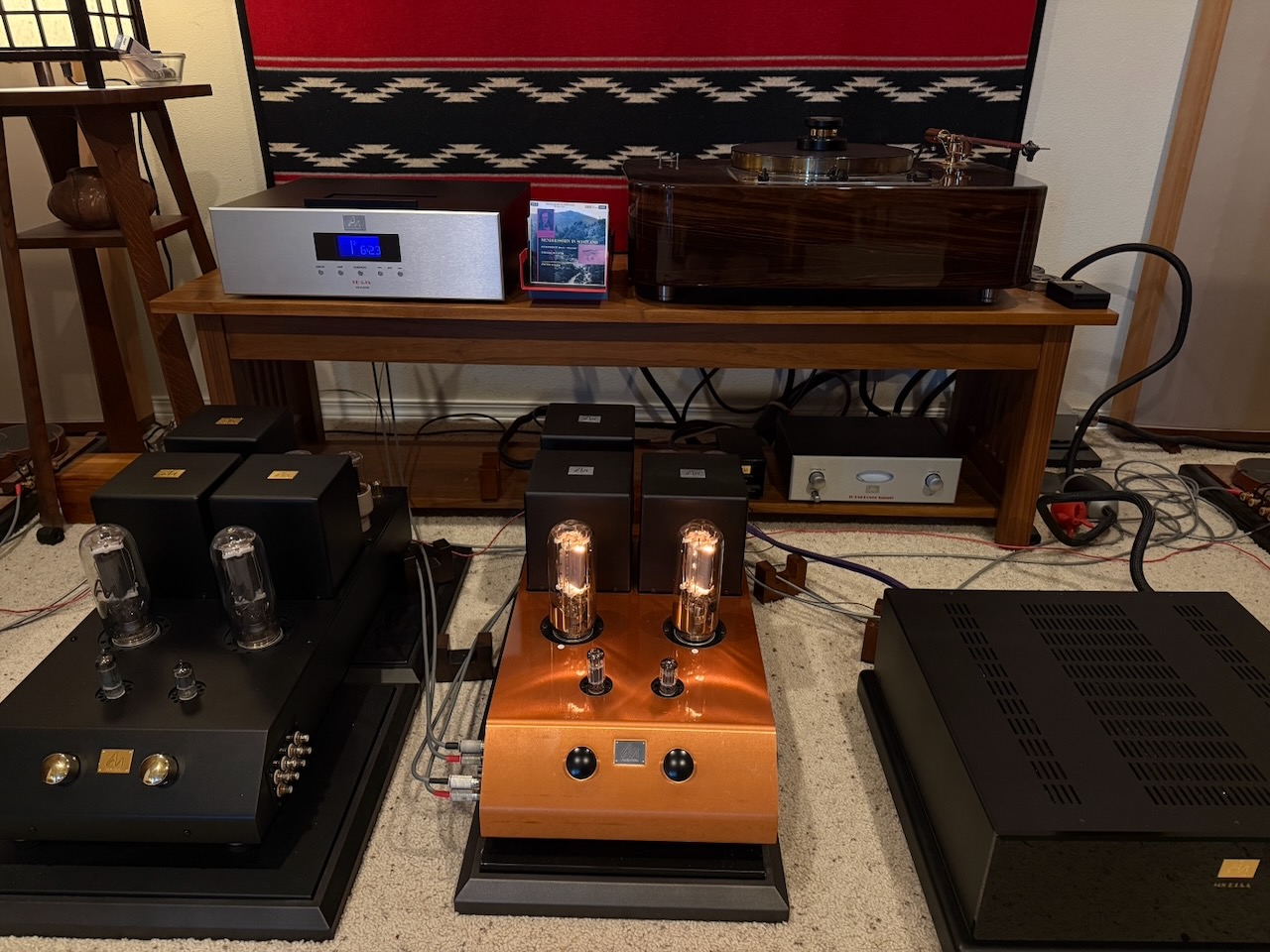
I’ll get back to Peter’s “performance level system” in a bit, but first of all, with the Audio Note (UK) Level Four Tomei 211 SET integrated amplifier, and particularly with the Audio Note (UK) Level Five Ongaku 211 SET integrated amplifier that arrived, the state of shock and awe they induced in me as I was listening caught me up in such an intense whirlwind of sonic performance, musical realism, and emotional engagement, that it put me back on my heals.
I was dumbstruck by the Ongaku’s level of performance, and I wondered how its level of performance was even possible. Certainly I had never encountered an amplification device that could perform at such a lofty level, and I found my ability to articulate what it was doing, and how it was doing it, was lacking.
A couple of years ago Peter was telling me about how he thought we needed to develop a new audio reviewing terminology that was capable of articulating audio performance at the highest levels, as the descriptors we audio scribes used were inadequate.
At the time, I didn’t really get why Peter was saying that, as I thought the audio reviewing terminology we scribes used was capable of articulating the performance of audio kit pretty well.
That was before I heard the Level Four Tomei and the Level Five Ongaku. After hearing them I completely got why Peter thought we needed better audio reviewing terminology to describe performance at the higher levels.
Upon listening to the Ongaku in particular, my scribal audio reviewing terminology was caught up in a whirlwind of shock and awe and was scattered to the four corners of the earth, and it felt completely useless in articulating what I was experiencing from this amplifier.
I was essentially struck dumb, and I was so impressed that I didn’t know how to put into words what was happening in my audio system with the arrival of the Ongaku. I had to listen, listen, and listen some more, to try and understand what was happening, and how to explain it.
How was this level of performance even possible? In my nearly seven decades here on Planet Earth, I’d never encountered anything that could do what I heard the Ongaku doing. How was the Ongaku doing what it does?
When I come across something inexplicable I first try to sort through it using reason so I can form an initial judgement about it. I separate fact from commentary, consider precedence, weigh the evidence for and against, and make a preliminary judgement. Then as I learn more I revise the judgement as needed. Sort of a logical form of the scientific method.
Way back when my day job was at a national laboratory. This was just after the Human Genome Project was initiated in 1990, where the goal was “… determining the base pairs that make up human DNA, and of identifying, mapping and sequencing all of the genes of the human genome from both a physical and a functional standpoint.” (Wikipedia)
The big idea was that if scientists could figure out the human genome, that we then would be able to find the answers to what caused human disease mechanisms, and we would be able to fix them, ushering in a new age of human health.
The first human genome was mapped, then many others followed, but those disease mechanisms still largely eluded the scientific community.
Then came proteomics, and researchers dived into the large-scale study of the proteins in the genomes, including their structures, functions, and interactions within biological systems, once again with the goal of understanding disease mechanisms so that drug targets could be discovered, evaluated, and implemented, to heal diseases. It is at the protein level that disease mechanisms occur, so understanding what is going on at that level was key to healing diseases.
It occurred to me that to understand what was going on with the Ongaku’s performance level that I had to correlate what I was hearing and feeling from it with what was going on at its “genome” and “proteome” level of performance.
What is the Ongaku’s “genome”? What is going on in the Ongaku’s “proteome”?
Those are analogies of course, but I think you get the idea: the “genome” corresponds to the Ongaku being a directly-heated single-ended-triode circuit with valve rectification, operating in pure Class A, with zero negative feedback.
But that doesn’t get us all the way there in understanding the Ongaku’s level of performance, refinement, and sophistication, as it is necessary to drill down to the “proteome” level of how it functions to get more of an understanding of what it is doing.
That “proteome” level is the choice of materials and components quality used in the circuits, and those components are key to understanding its level of performance.
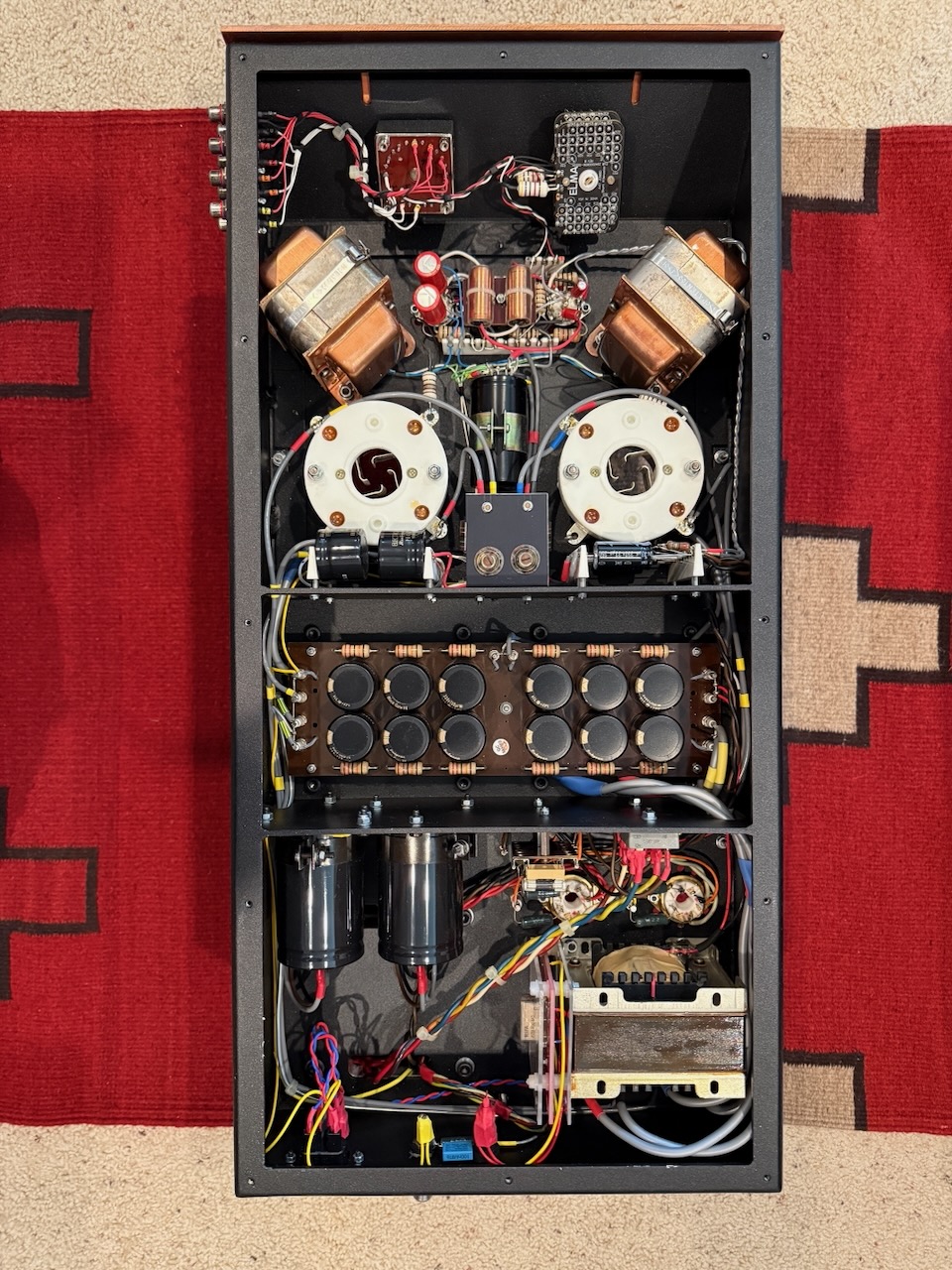
Those materials and components that make its performance possible can be summarized as: the choice of vacuum tubes in the circuit, the silver wire used in the circuits and transformers, the silver foil used in the signal capacitors, the exotic cores used in the transformers, the Black Gate electrolytic capacitors used in key locations, and the use of non-magnetic silver tantalum resistors.
Of course, one can’t just throw all those materials and components into a circuit and expect magic results, rather it is the arduous and time consuming process of trial and error listening evaluations with every component used in a circuit, until the final desired voicing is achieved.
There’s a very careful and time consuming process of making sure the voicing of the component is optimized for the highest sonic performance, and Peter does that through his “comparison by contrast” voicing process (more HERE).
You’ve probably noticed that different recordings of music sound different, regardless if they are vocals, orchestral, jazz, chamber music, folk, rock, opera, blues, or whatever. No two recordings are exactly the same.
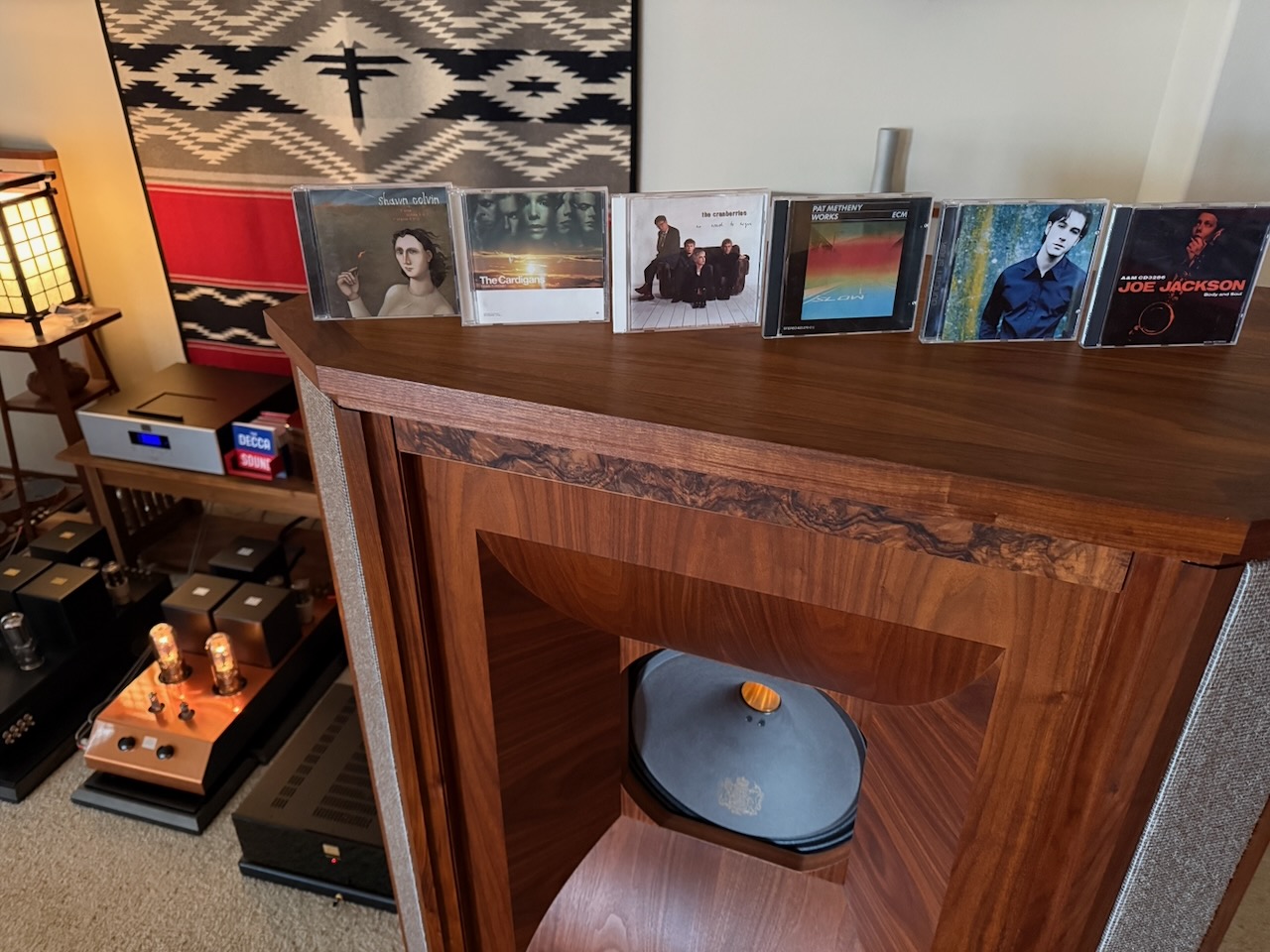
What we want is an audio system that lets as much of the musical information come through from those recordings as possible, and maximizes those differences in recordings.
It takes countless hours of listening, experimenting with circuits, components in circuits, and materials used in circuit components, to finalize a design at any given level of performance in Audio Note (UK)’s product lines.
That process is a painstaking art, not just a science, an art that delivers to the listener the ultimate level of sonic performance and emotional engagement for any given performance level.
As is written HERE, “Only if your audio system is designed to be as accurate as possible - that is, only if it is dedicated to high contrast reproduction - can it hope to recover the uniqueness of any recorded musical performance. Only then can it possibly achieve for the listener an emotional connection with any and every recording - no matter the instrumental or vocal medium and no matter the message. Boredom and frustration are the inevitable alternatives. Think about it.”
These ideas of comparison by contrast and high contrast in audio reproduction aren’t just bullshit, they are for real, important, and crucial to achieving those lofty levels of performance.
Once I began to hear and better understand what was going on with the high contrast reproduction at levels four and five in the Tomei and Ongaku, I began to understand how crucial the choice of vacuum tubes in the circuit, the silver wire used in the circuits and transformers, the silver foil used in the signal capacitors, the exotic cores used in the transformers, the Black Gate electrolytic capacitors used in key locations, and the use of non-magnetic silver tantalum resistors, was to achieving this lofty level of performance.
So let’s look a little more into that.
When properly implemented, silver sounds better than copper in a circuit, and allows much more musical information to come through.
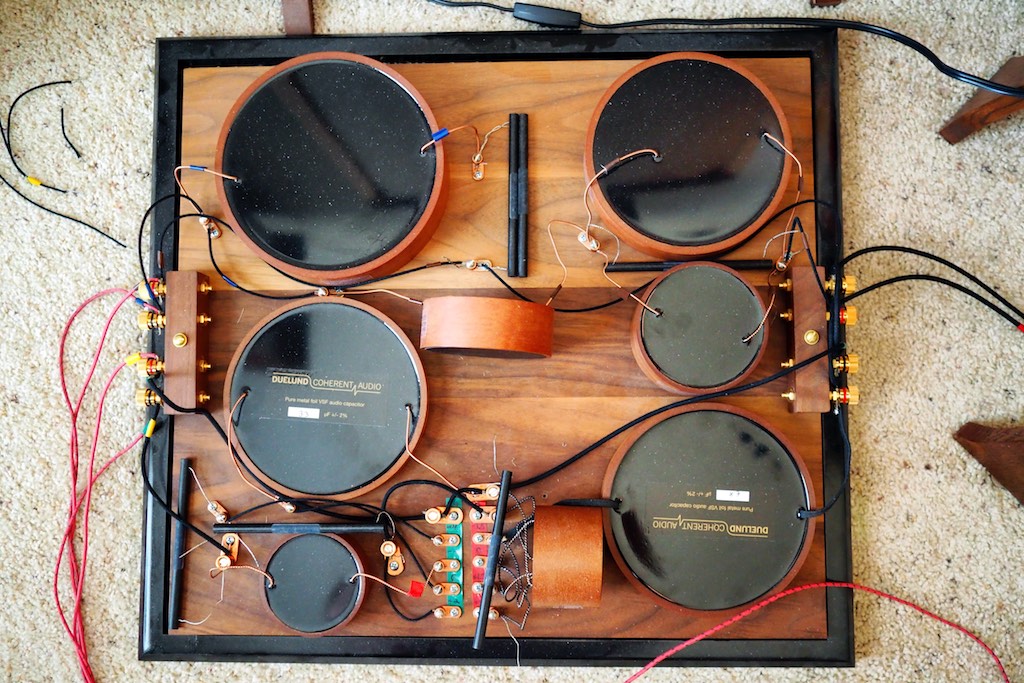
For example, in my Tannoy Westminster Royal SE loudspeakers, Frederik Carøe and I replaced the stock crossovers with custom Duelund Coherent Audio crossovers (above) using high-performance CAST copper foil capacitors, etc., and then compared them to the CAST silver foil capacitors in the crossovers’ high-frequency circuits. The difference in going from CAST copper to silver was astonishing, with so much more musical information being recovered from the audio signal that it was breathtaking to hear.
There’s a lot more information available in the music signal than most of us are used to hearing, and silver conductors in the capacitors and inductors made that apparent, but it does come at a considerable increase in cost.
Increasing performance levels are increasingly expensive because of the increasing sophistication of the circuits, the custom nature of the circuit components, and the materials used in manufacturing the circuit components.
For a simple example, today when I checked the spot prices for raw copper and silver, they were $6.15/ounce (copper) and $58.85/ounce (silver), so it is approximately ten times more expensive to use silver in circuits and circuit components than it is to use copper.
So, as one goes up the performance levels, more custom manufactured components are used, which adds to the cost.
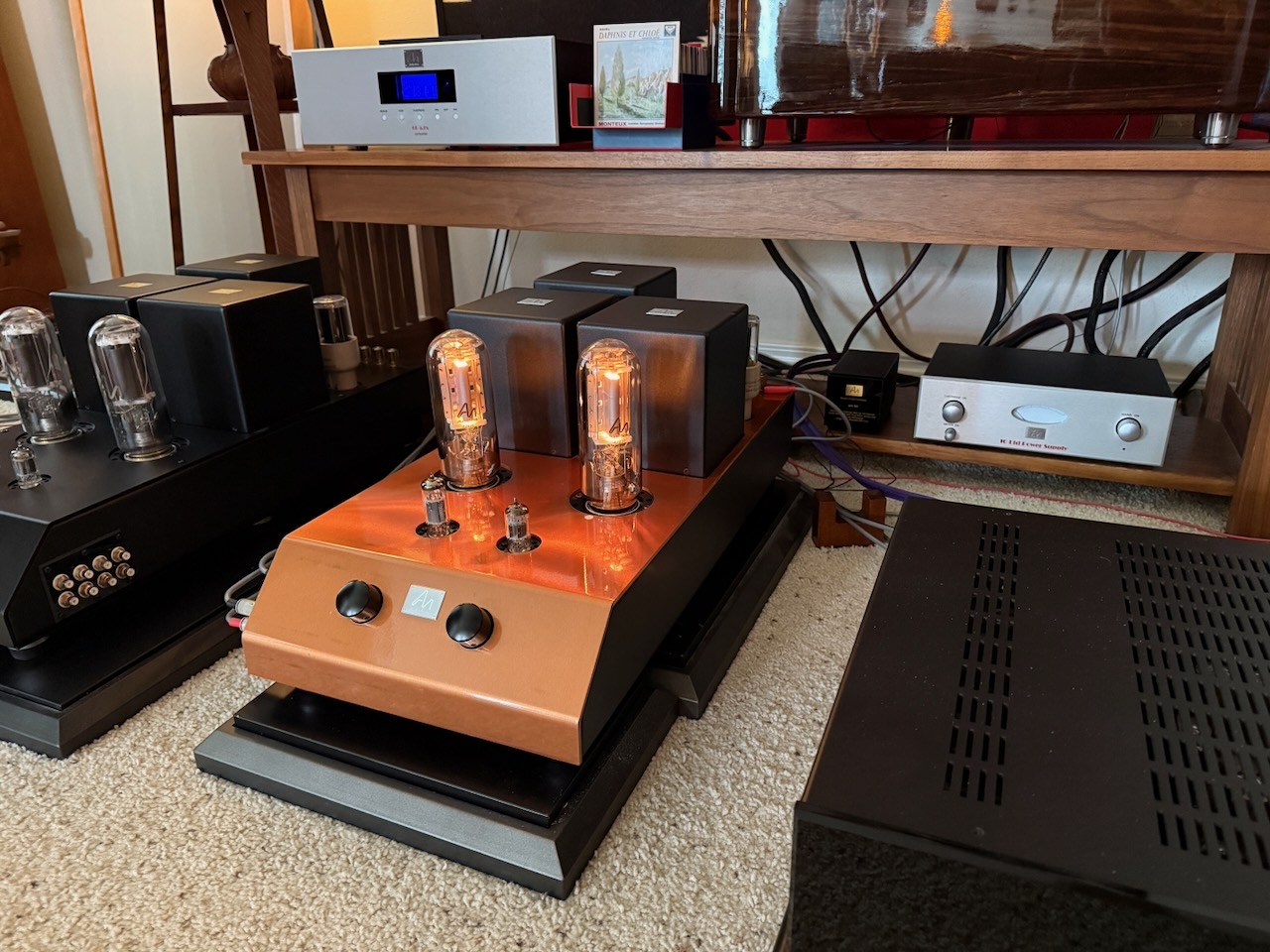
Tomei (left), Ongaku (middle).
Using the Level Four Tomei 211 SET integrated amplifier and Level Five Ongaku 211 SET integrated amplifiers as examples, let me go over some of the differences according to Audio Note (UK)’s definitions.
“Level Four: Class A single-ended directly heated no feedback triode amplifiers, with high quality parts and materials such as hard wired circuits using silver wire, copper or silver foil signal capacitors, choke coupled power supplies with valve rectifiers for the HT, with a mixture (relative to overall cost) of Cerafine or Black Gate electrolytic capacitors, non-magnetic resistors made from tantalum film and output transformers with C-cores (instead of IE cores traditionally used due to cost) with very high nickel content.”
The valve complement for the Tomei is: 2 x 5R4WGB, 2 x 211, 1 x ECC82 / 5814a, and 1 x 7044.
"Level Five: Class A single-ended directly heated no feedback triode amplifiers, with only the very best parts and materials available, fully silver wired high content nickel iron C-core output transformers, Black Gate capacitors throughout where available, silver foil signal capacitors, and both circuit and power supply hard wired with silver wire.”
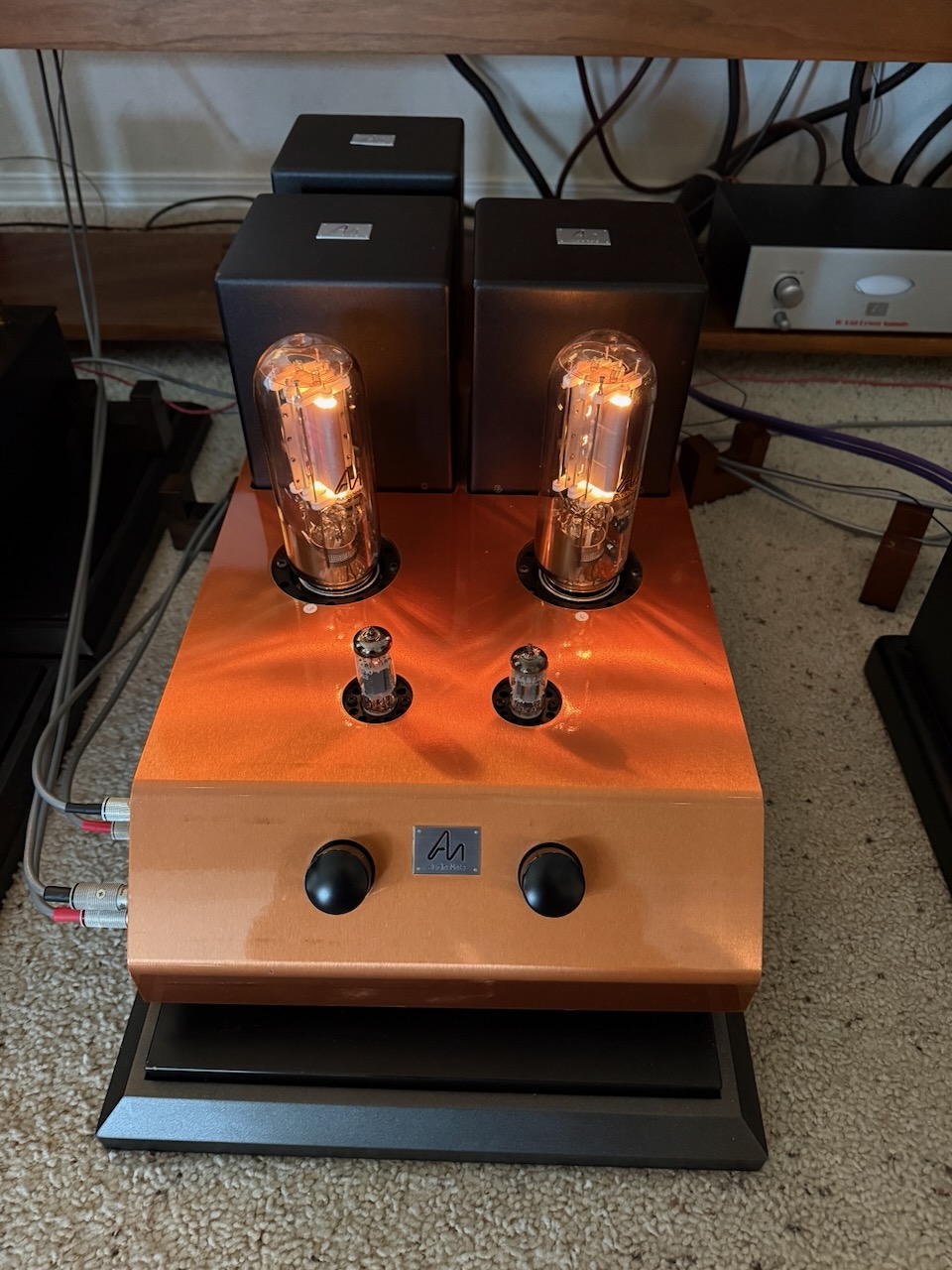
The valve complement for the Ongaku is slightly different to optimize it for its choice of circuit components and materials: 2 x 5R4WGB, 2 x 211 / GE VT-4C, 1 x CV4068, and 1 x 6463.
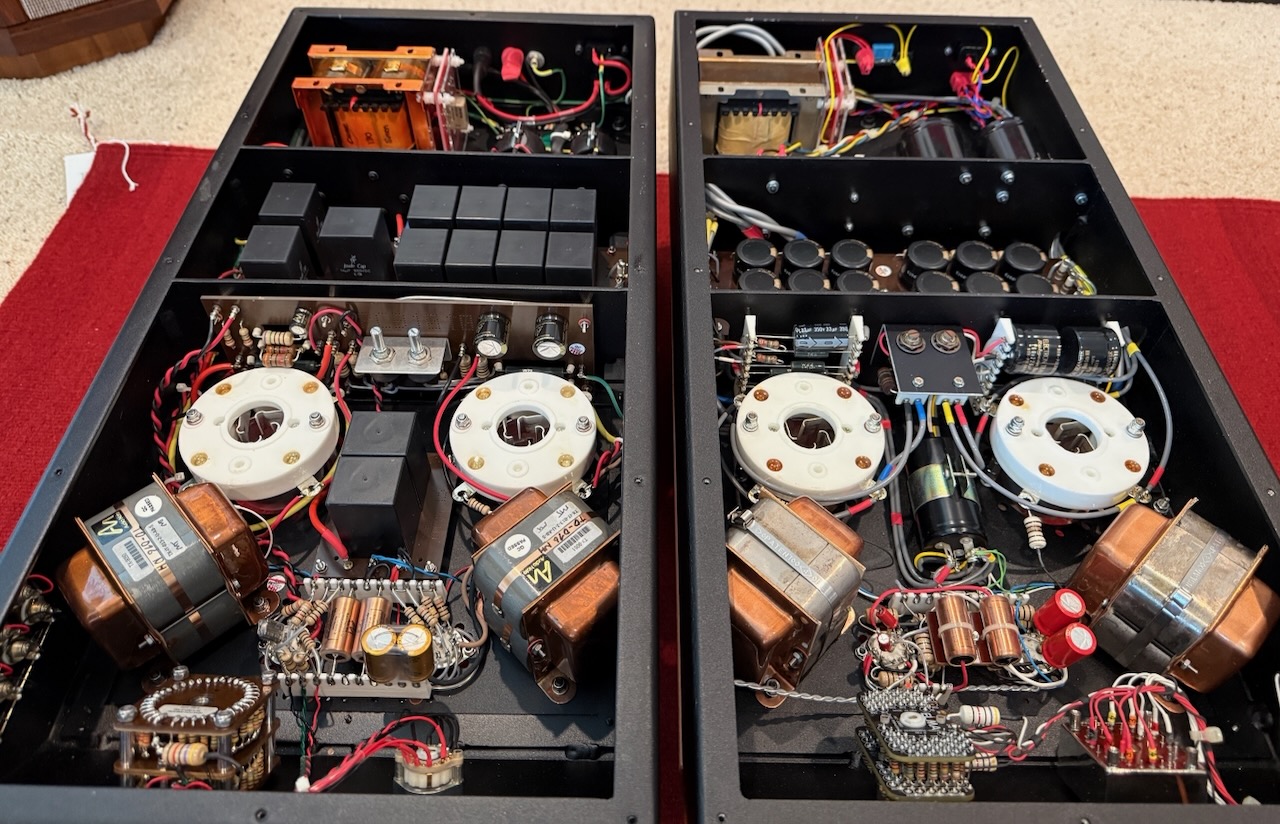
Tomei (left) and Ongaku (right).
Peter manufactures his own custom transformers, using copper and/or silver wire windings, with cores made from a range of good quality silicon steels to exotic high-content nickel irons depending on the performance level.
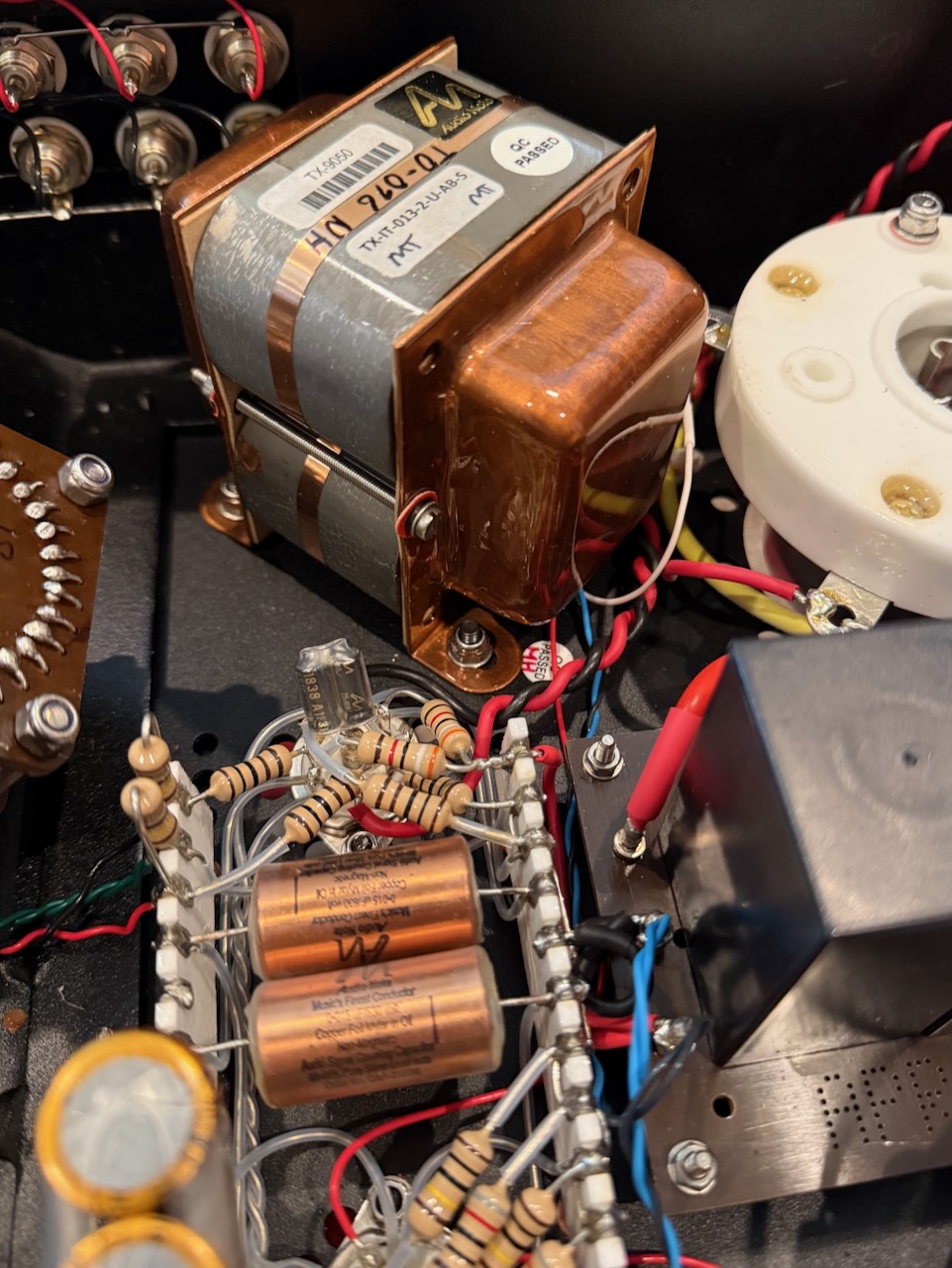
As you ascend in performance levels the higher-performance cores deliver “… more color and texture in the performance and more low level details are present. The high frequencies are so much clearer. It is like the difference between an artificial light and sunlight.”
Then there’s the Black Gate electrolytic capacitors that were made by the Rubycon Corporation in Japan according to the 'The Transcendent Electron Transfer' theory (more HERE), and are widely considered to be the finest electrolytic capacitors money can buy.
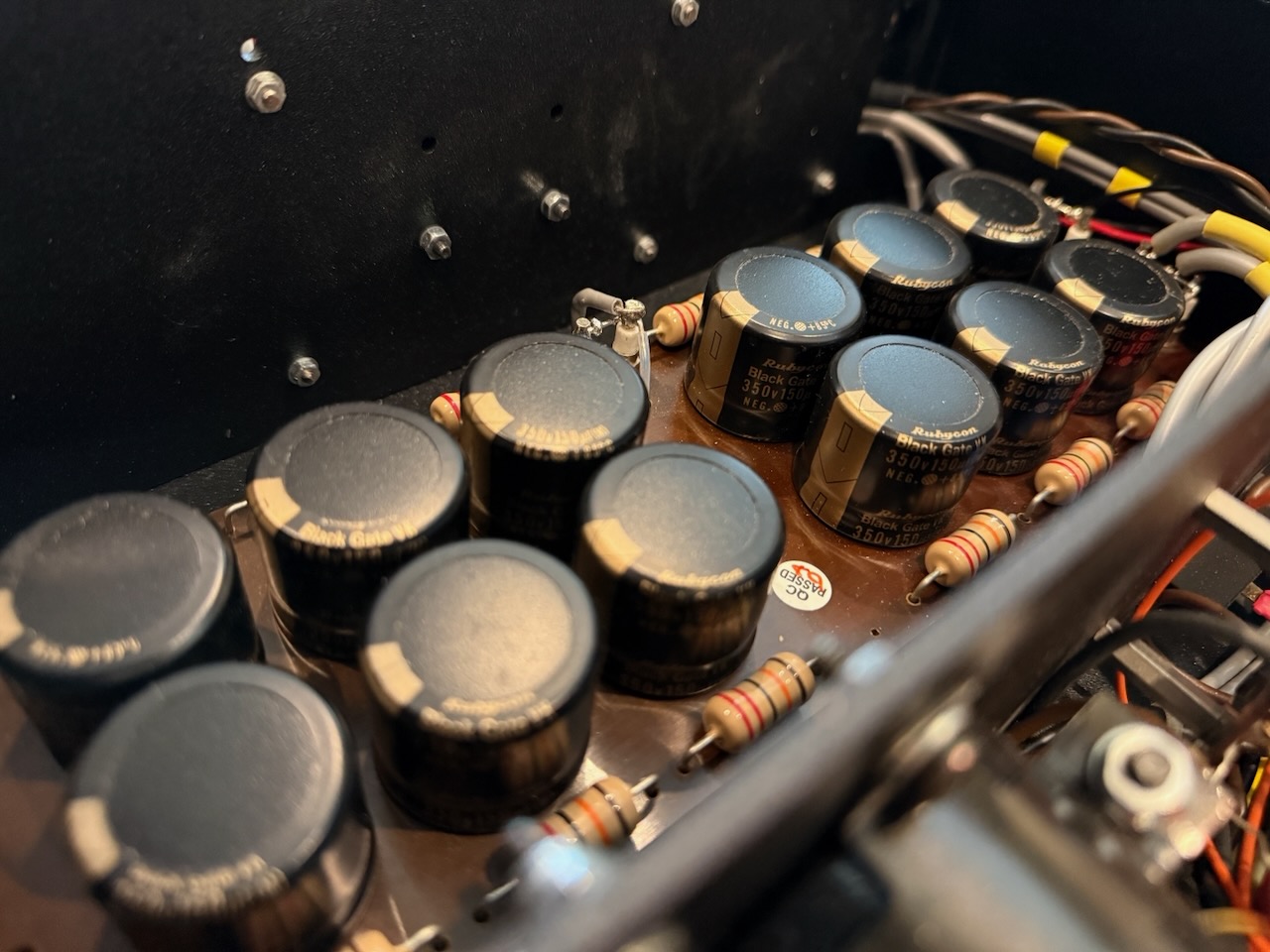
Rubycon used fine graphite particles in between the anode and cathode, and their Black Gate capacitors were notable for improving the signal-to-noise ratio and lowering distortion in audio components, and were/are particularly popular for use in high-voltage power supplies for ultra-performance amplifiers, where their smaller size, more capacitance per volume, and high-capacitance and energy storage attributes made them ideal for the limited space available in audio electronics.
Black Gate capacitors have a legendary reputation for contributing to sound quality in terms of improved signal to noise ratio, incredible transparency, a holographic soundstage, vivid tone colors, pitch black backgrounds, and incredible dynamic feel across the dynamic spectrum on attacks and decays, to give an utterly natural presentation of the music that is accurate, dramatic, authoritative, and providing an intense feel of realism for the artistic intent of the music, which results in a very emotionally engaging presentation of the music.
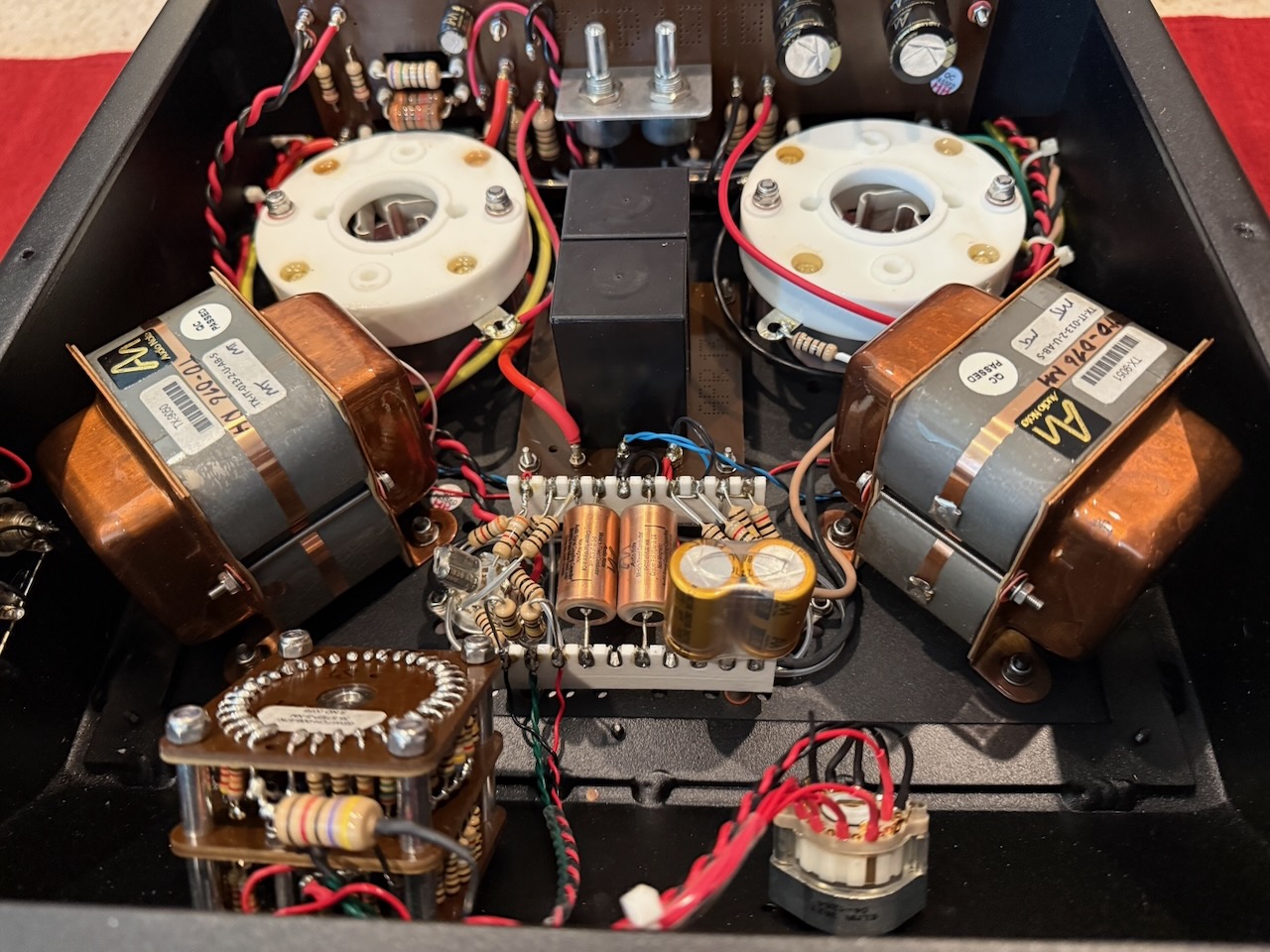
Sadly, Black Gate capacitor production ceased in 2006 after 18 years of production. Black Gates were manufactured by Rubycon under license for Jelmax Co.Ltd., and Jelmax Co.Ltd. went out of business and that was the end of Black Gate capacitors.
Since then, Peter has worked closely with Rubycon to produce capacitors that can serve as replacements for Black Gates (more HERE and HERE).
As an aside, a decade or two ago I replaced one coupling capacitor with Black Gate capacitors in the circuits of some 300B monaural amplifiers I had at the time, and the improvement was dramatic - and that was from replacing just one capacitor!
However, there are places in circuits where foil signal capacitors are desirable over electrolytic capacitors, so Peter manufactures custom tin, copper, and silver foil capacitors for those critical applications (more HERE).
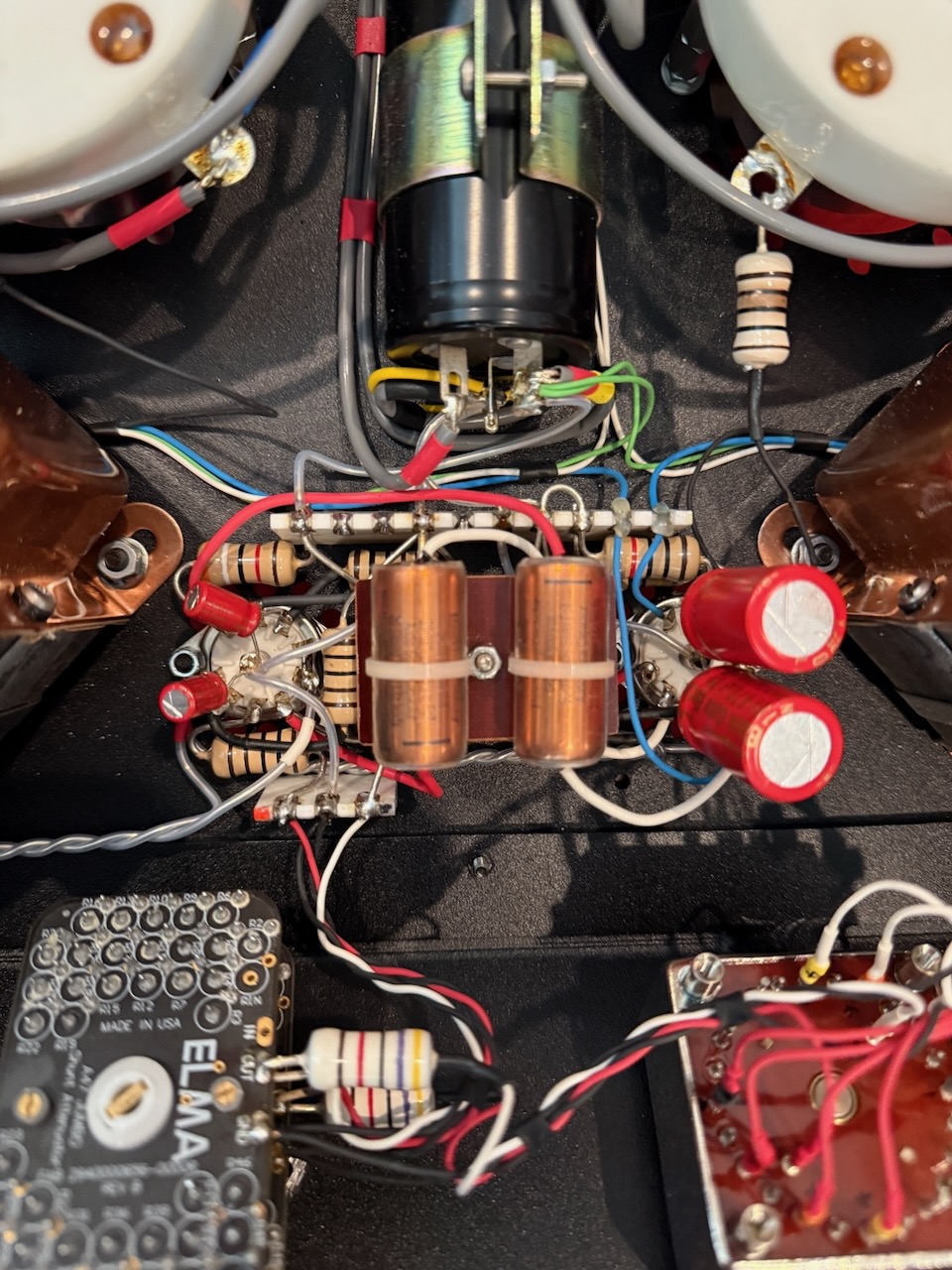
Finally, let me mention the custom range of non-magnetic silver tantalum resistors that Peter custom manufactures for his Audio Note (UK) components (more HERE). These exotic resistors are known as “tone kings” and deliver improved tone, increased texture, a darker background, and a greater sense of immediacy when compared to other fine resistors.
So what does all that exotica in vacuum tube circuits, materials and components quality in the circuits, deliver to the Ongaku listener?
There’s a lot more information available in the music signal than almost of us are used to hearing, and the Ongaku’s combination of vacuum tubes, circuits, Class A single-ended directly-heated zero feedback triode circuits that are fully silver wired, with silver wired high-content nickel iron C-core output transformers, Black Gate electrolytic capacitors, silver foil signal capacitors, non-magnetic silver tantalum resistors, recovers an astonishing amount of more of everything in the music signal.
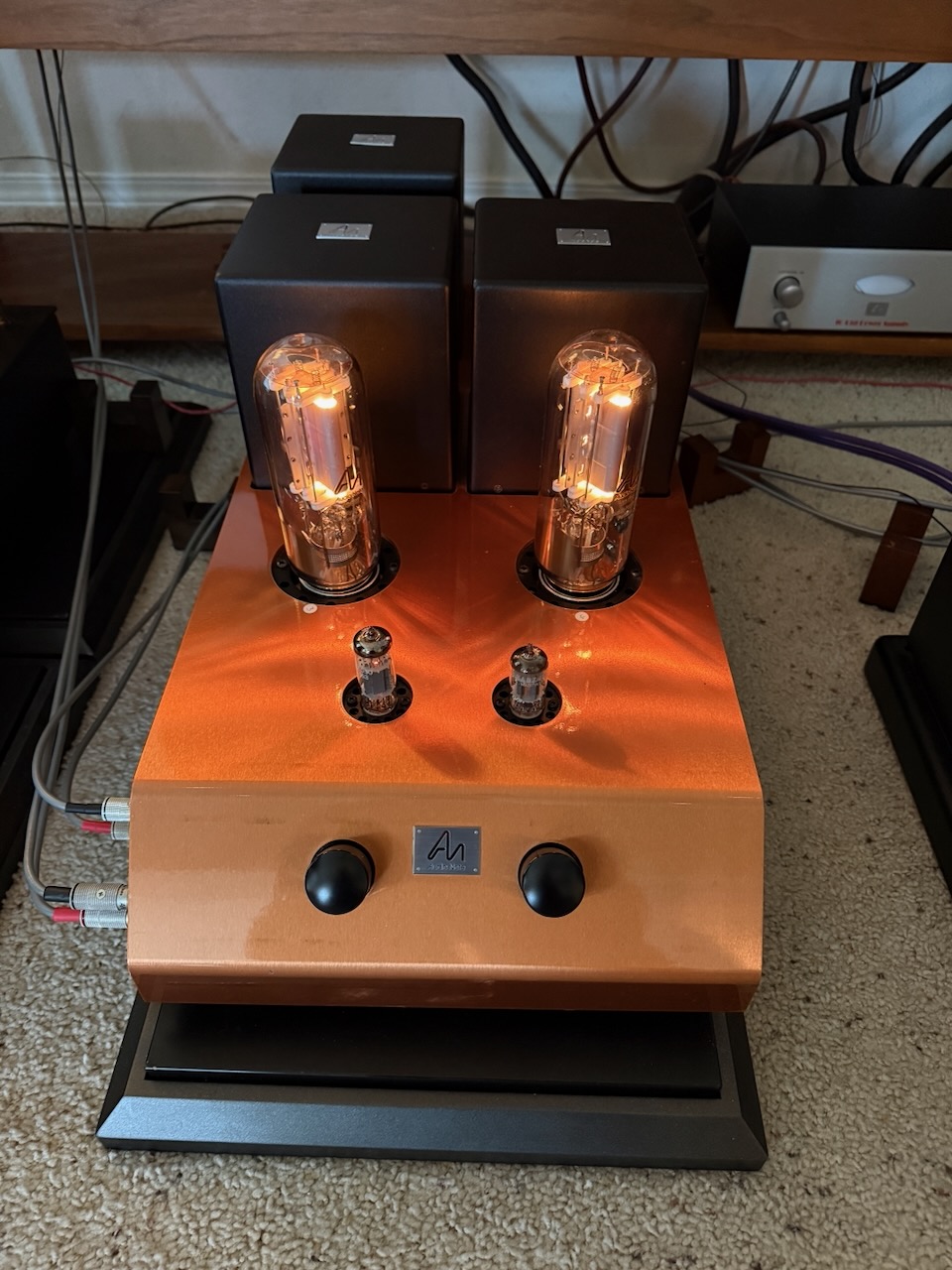
Here’s what I’m hearing from the Ongaku:
A high signal-to-noise ratio (i.e. a very low noise level) that allows much more low-level information to emerge from the music signal. The low noise results in extremely black backgrounds from which highly resolved musical information emerges with startling clarity across the seven frequency bands of the audio spectrum (sub bass, bass, low midrange, midrange, upper midrange, presence region, and brilliance region).
The tonal balance is “flesh and blood” natural, intensely realistic, and astonishingly beautiful.
The additional musical information recovered from recordings is revelatory for timbral textures and tone color (the additional tones added to three-tone triads), allowing much more of a feel for the musicians touch on their instruments to come through, as well as greatly enhancing emotional responses to the musicians’ tone color chord choices that greatly enhances the overall mood of a piece and its emotional impact on the listener, as intended by the musicians.
The low noise level and high resolution also yields an incredible level of transparency and a vast holographic soundstage, vivid tone colors, pitch black backgrounds, a sense of immediacy, and incredible dynamic feel across the dynamic spectrum on attacks and decays. The overall dynamic prowess is extraordinary, and is off the scale of my experiences, being incredibly articulate across the dynamic spectrum in its ability to express even subtle variations in loudness and intensity of sounds, which I find crucial for fully expressing the emotions intended for a piece, and making it intensely engaging as a performance.
There is an utterly tonally natural presentation of the music that is accurate, dramatic, authoritative, and provides an intense feel of realism for the artistic intent of the music, which results in a very emotionally engaging presentation of the music.
Recordings that before were just “meh” to me were now profoundly interesting and engaging, and the recordings that are dear to me delivered so much more than I was used to hearing them that it was revelatory, and intensely stimulating emotionally.
I found that I could listen even at low SPL levels and still get the full sense of the music delivered to my soul, an important consideration for listeners who have to be thoughtful for those around them.
Every time I listen to the Ongaku, I am still overcome with shock and awe at how convincingly it serves up the music, at how much more music is there to be enjoyed.
It is like the Ongaku creates its own little pocket music universe that envelops my listening room, emitting musical gravitational waves that alter the space-time continuum of recordings in a way that makes them come alive. They're not just recordings any more, each album is a unique life form present in my living room, enticing me, changing me, with its presence.
The Ongaku is a remarkable work of audio art, with countless hours spent voicing it to high-contrast perfection using ultra-high quality materials and custom components, and capable of delivering an extraordinary music listening experience that leaves me in a state of awe each time I listen to music with it in my audio system.
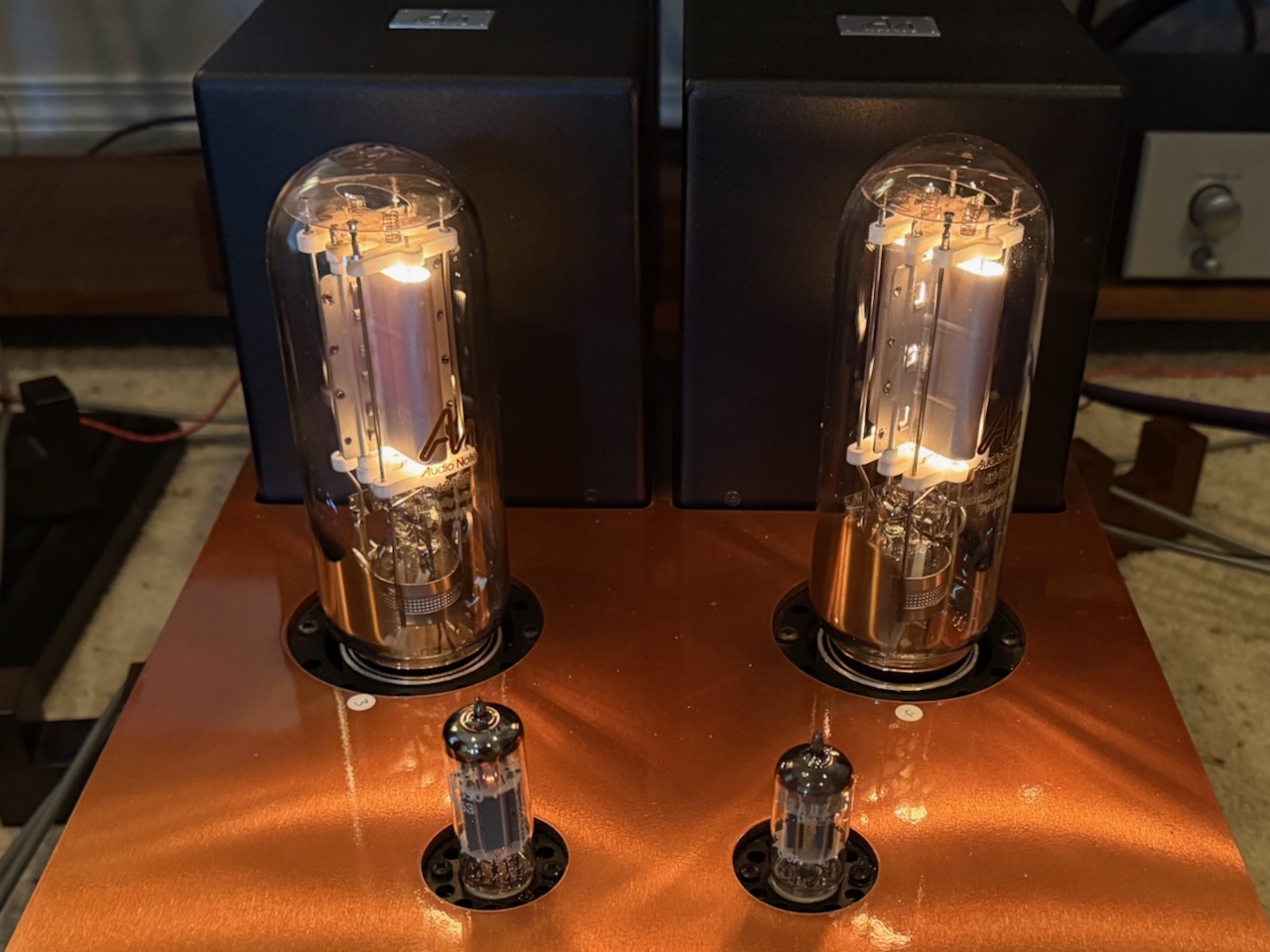
The shock and awe has not diminished an iota over time, every time I listen to the Ongaku I am dumbfounded by what I'm hearing. I didn't even think this level of performance was even possible, but here it is, in my living room, showing me there are new musical realities to explore that I didn't even know existed before the Ongaku's arrival in my listening room.
Next time I’ll go through some album examples to highlight what the Ongaku is doing, and compare it to the Tomei, while using the CD 5.1x Red Book CD player as a source.
In time I’ll get to what it is like to listen to vinyl with it. It’s extraordinary. There’s a lot more music in those vinyl grooves than I would have ever imagined, and the Ongaku sets them free.
If you didn't see Part 1 of this post, you can read it HERE.
As always, thanks for stopping by, and may the tone be with you!