

The full article about the Audio Note (UK) Ongaku 211 SET integrated amplifiers has now been published at Positive Feedback and you can read it HERE. Enjoy! 🙂
As is my custom, I like to give readers of Jeff's Place a preview of upcoming feature articles for Positive Feedback, which in this case is about the legendary Audio Note (UK) Ongaku 211 SET integrated amplifier.
The Ongaku is crazy good, and it has really rocked my world with its extraordinary level of performance, and forever changed my perception of what is possible in high-fidelity audio.
The plan is for the full feature review of the Ongaku to be published at Positive Feedback in the next two to three weeks, so much more is coming in the near future.
When the Positive Feedback review is published I'll update this post with a link to the full article.
Enjoy!
Greetings friends, I hope you are well!
Today’s feature article is about the incredible Audio Note (UK) Ongaku 211 single-ended-triode (SET) integrated amplifier.
Audio Note (UK) is Peter Qvortrup’s family-owned audio electronics business located near Brighton, England, that specializes in building hand-crafted high-fidelity fine audio systems for people who love listening to music, and of course, us audiophiles, like yours truly, who are passionate about music and this wonderful Hi-Fi hobby.
In case you are new to this article series, this is the fourth Audio Note (UK) integrated amplifier article - in ascending levels of performance - that I’ve written here at Positive Feedback: first the Oto Phono SE Signature (Level Two), then the Meishu Phono Silver Tonmeister (Level Three), the Tomei (Level Four), and now in this article, the top-of-the-line Ongaku (Level Five).
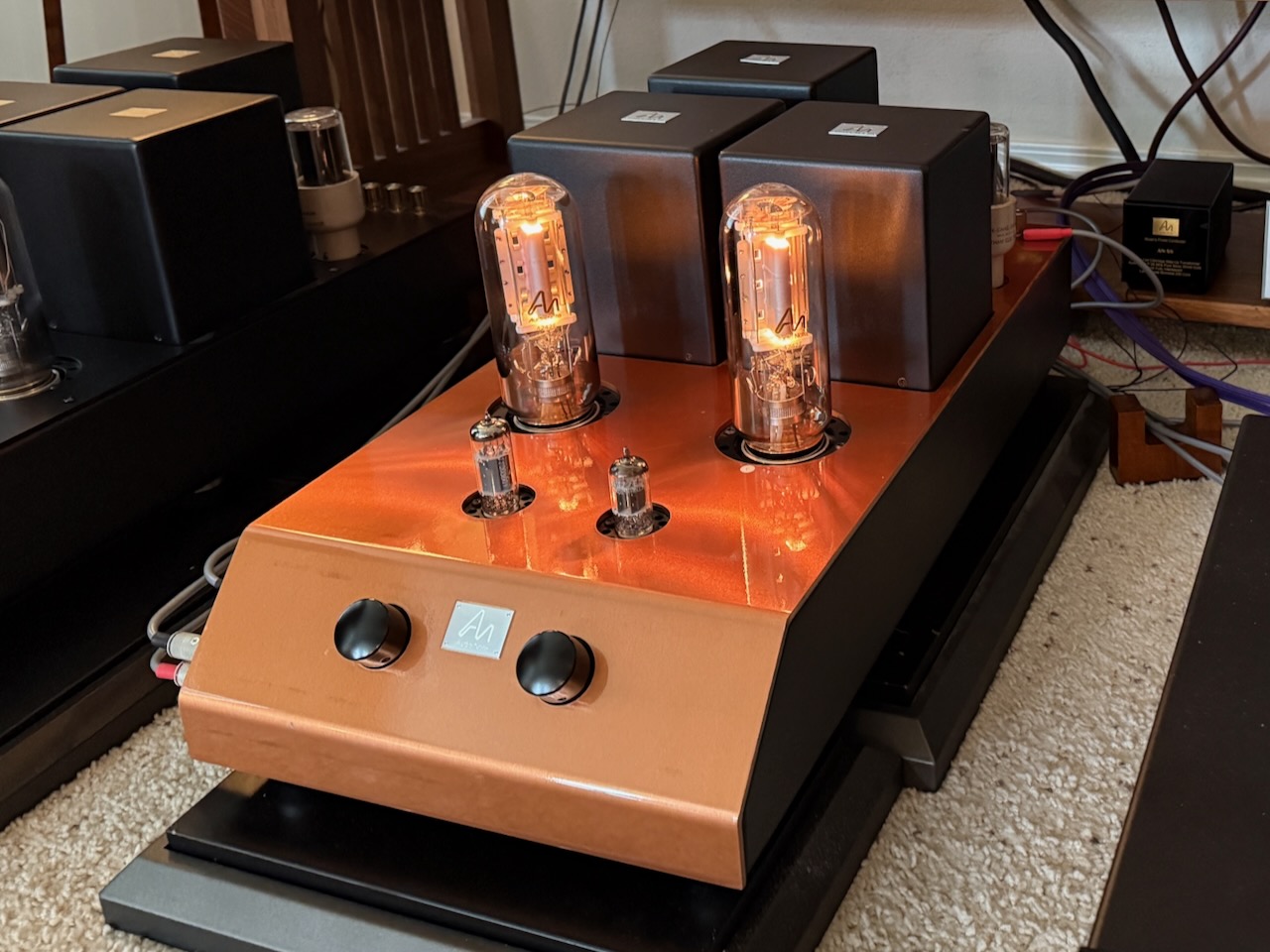
Above: Audio Note (UK) "Level Five" Ongaku 211 SET integrated amplifier.
Long-time readers know I have a special fondness for integrated amplifiers, as I believe they provide music and audio enthusiasts with the greatest performance bang for the buck, and particularly those integrated amplifiers that utilize single-ended vacuum tube circuits designed to complement contemporary and vintage high-sensitivity loudspeakers, of which I enjoy a modest collection: my Tannoy Westminster Royal SEs, and 3 pairs of vintage Altecs.
As you might imagine, this really has been a fascinating and enlightening journey listening to and writing about Peter’s integrated amplifiers product line that includes parallel single-ended-pentode (the Oto) and single-ended-triode designs (Meishu, Tomei, and Ongaku). They’re right up my alley, and I have learned a lot along the way!
As I have already alluded to, Peter’s integrated amplifiers are arranged in an ascending performance level system, and Peter considers the performance level of the integrated amplifier to be the anchor point to build your audio system around.
After selecting your desired integrated amplifier, as a rule of thumb, to complete your audio system, you would then select associated Audio Note (UK) components that are within the span of one performance level above and two performance levels below your choice of integrated amplifier, to give you the greatest components performance synergy for your money spent.
In this review series of Peter’s integrated amplifiers product line, Peter has demonstrated to me how his performance level system works, and we have “walked up” through the integrated amplifier performance levels Two through Five, while matching each ascending performance level of integrated amplifiers with synergistic matching levels of digital and analog source components.
This has been a very enlightening audio journey for me, and has very clearly demonstrated to me the power of Peter’s approach, going from the superb Level Two of performance with the Oto all the way up to the “Oh my god!” Level Five of performance with the Ongaku.

Above: Audio Note (UK) "Level Five" M8 RIAA phono preamplifier.
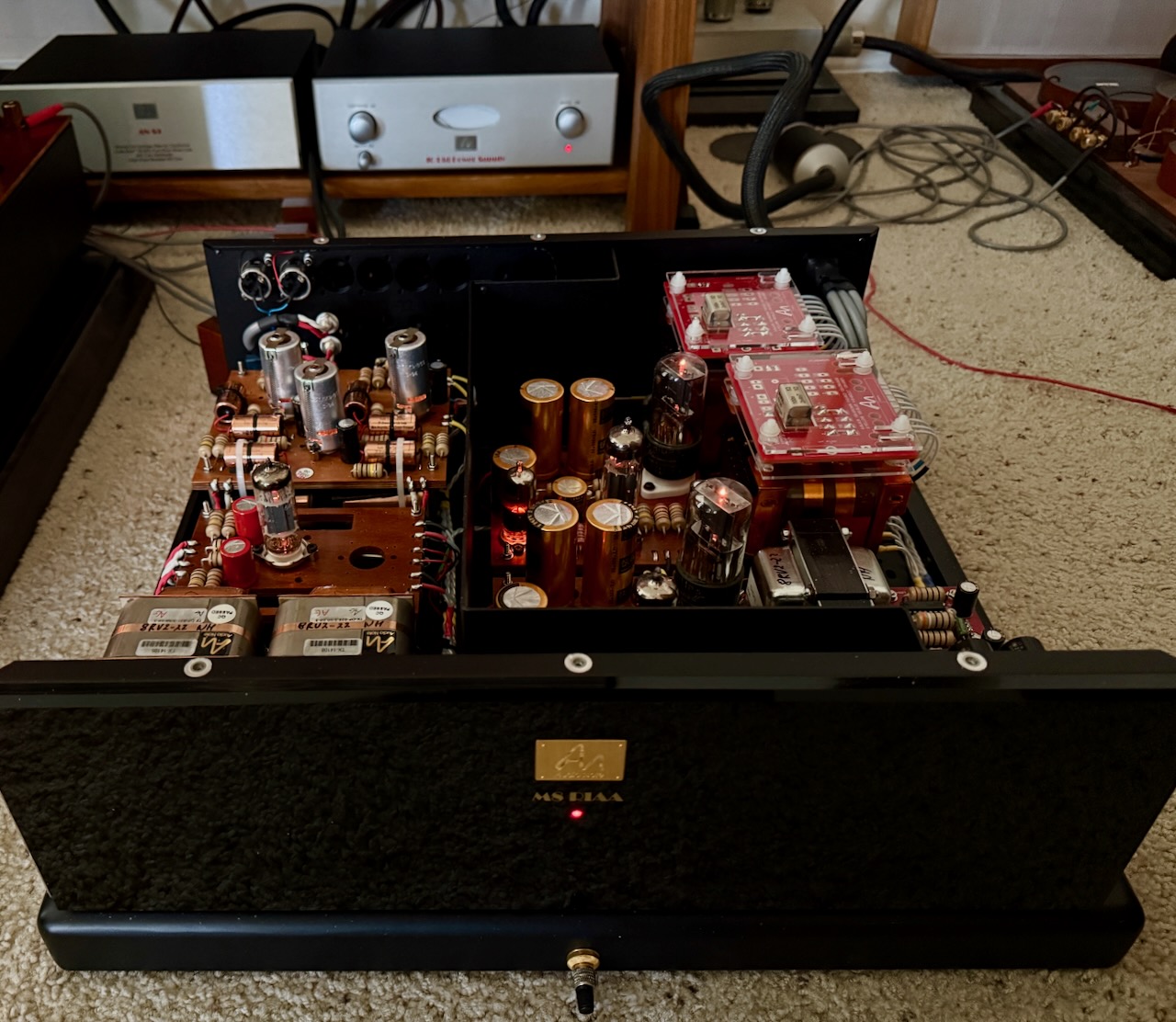
Above: Topless view the Audio Note (UK) M8 RIAA phono preamplifier.
To demonstrate the performance of the Level Five Ongaku, Peter has paired it with the Level Five M8 RIAA phono preamplifier (review HERE) in combination with the exotic top-of-the-line Io Ltd. field-coil moving-coil phonograph cartridge, and the equally exotic, top-of-the-line AN-S9 step-up transformer (reviews to come), as an analog source.
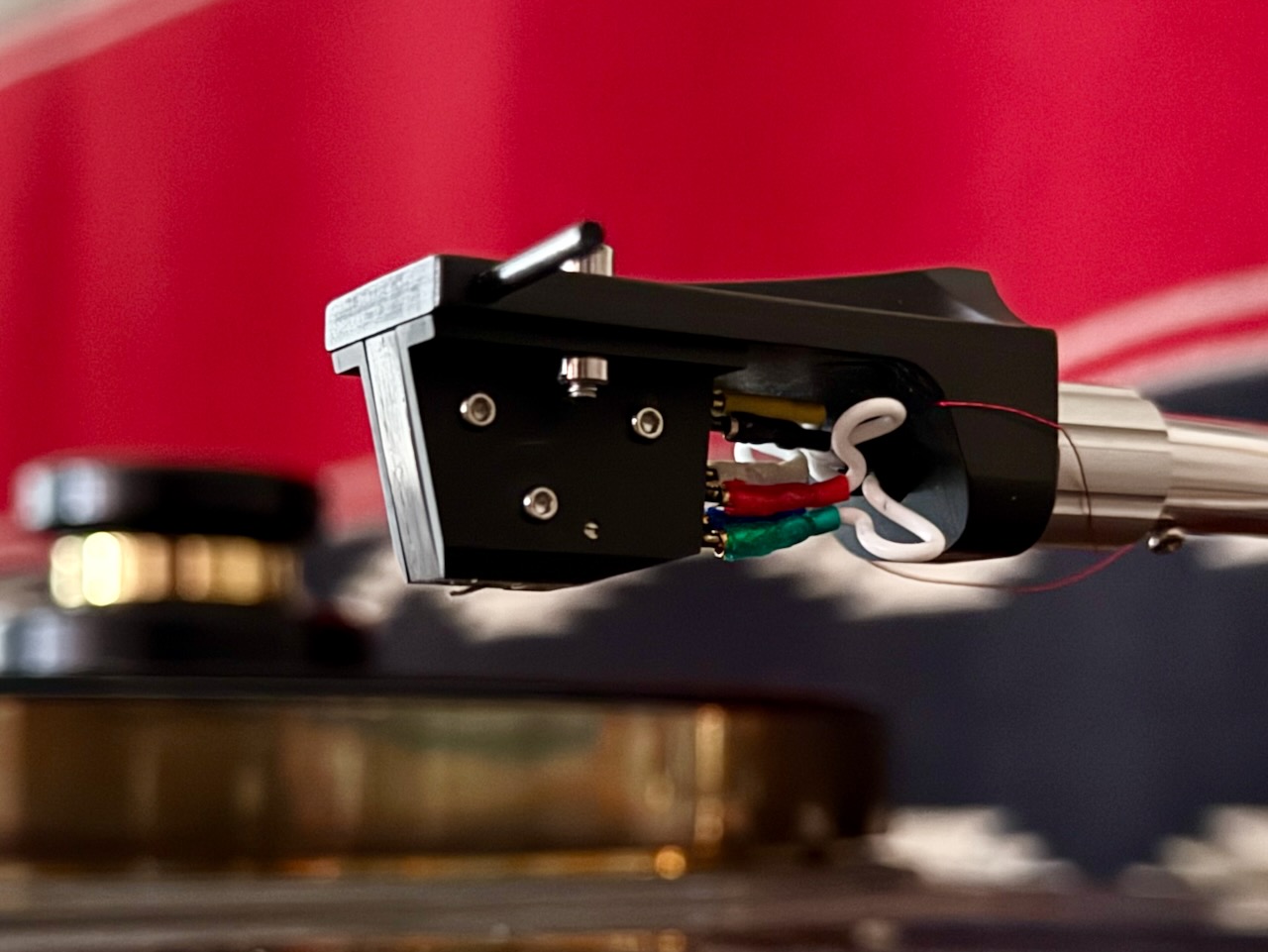
Above: The top-of-the-line Audio Note (UK) Io Ltd. field-coil moving-coil phonograph cartridge. Note the fine red field-coil leads exiting towards the rear of the cartridge.
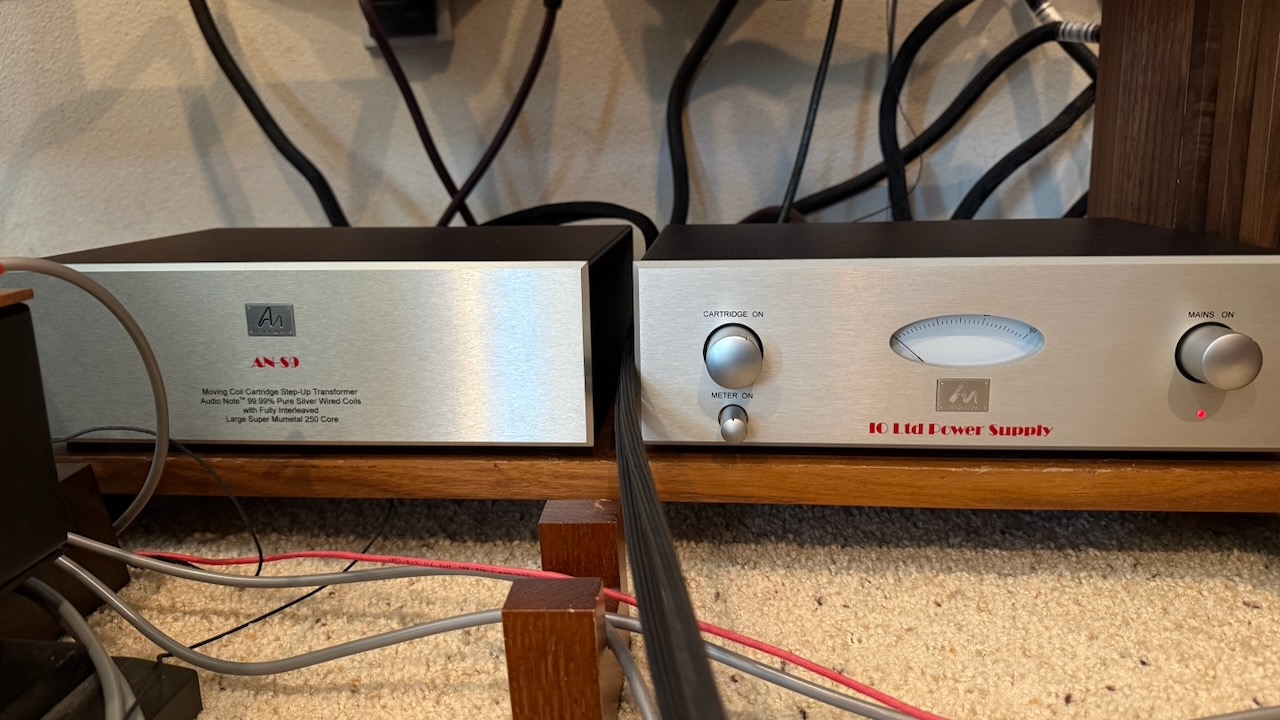
Above: The top-of-the-line Audio Note (UK) AN-S9 step-up transformer (left) and power supply for the Audio Note (UK) Io Ltd. field-coil moving-coil phonograph cartridge (right).
For an integrated digital source, Peter paired the Ongaku with the Level Three CD 5.1x Red Book CD player (review HERE).
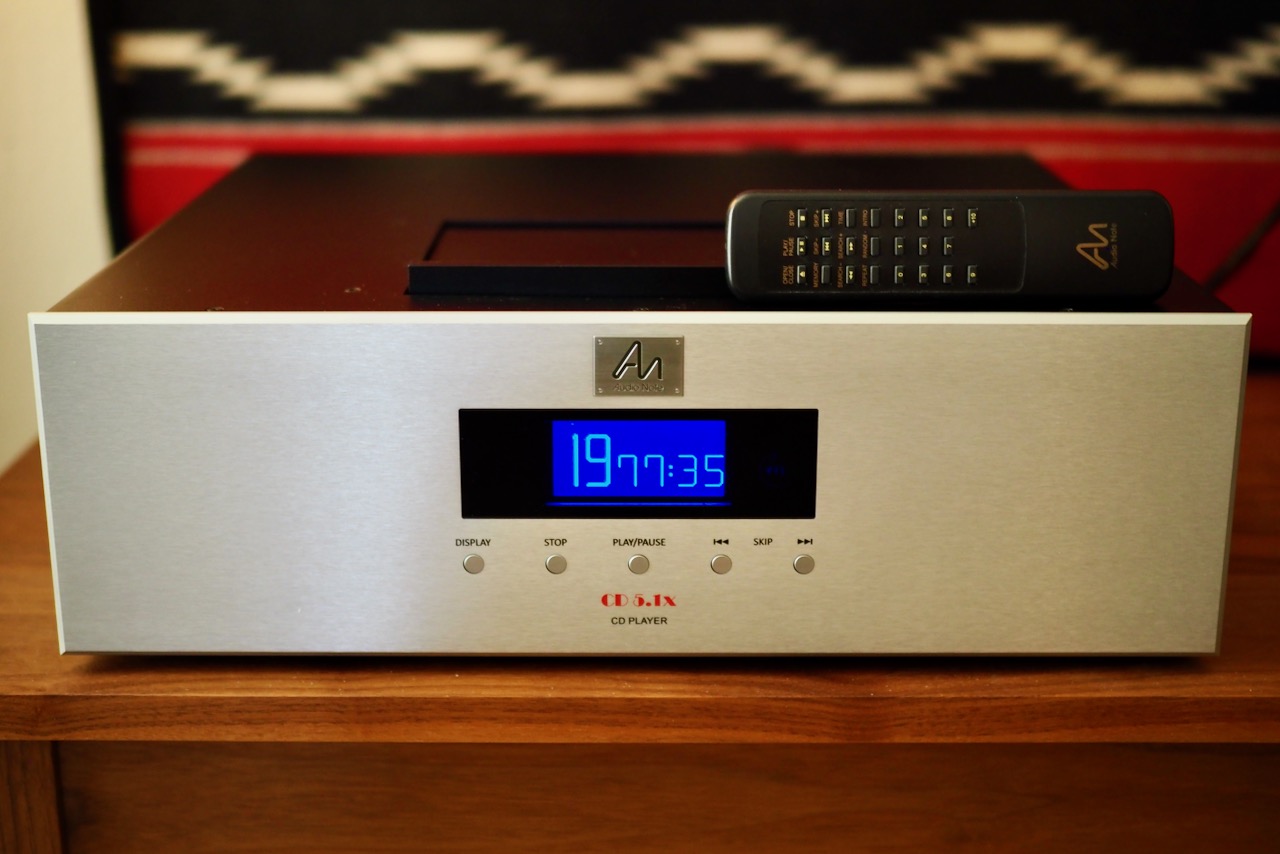
Above: Audio Note (UK) "Level Three" CD 5.1x Red Book CD player.
All the components were connected together with AN-V silver interconnects and AN-SPe silver loudspeaker cables.
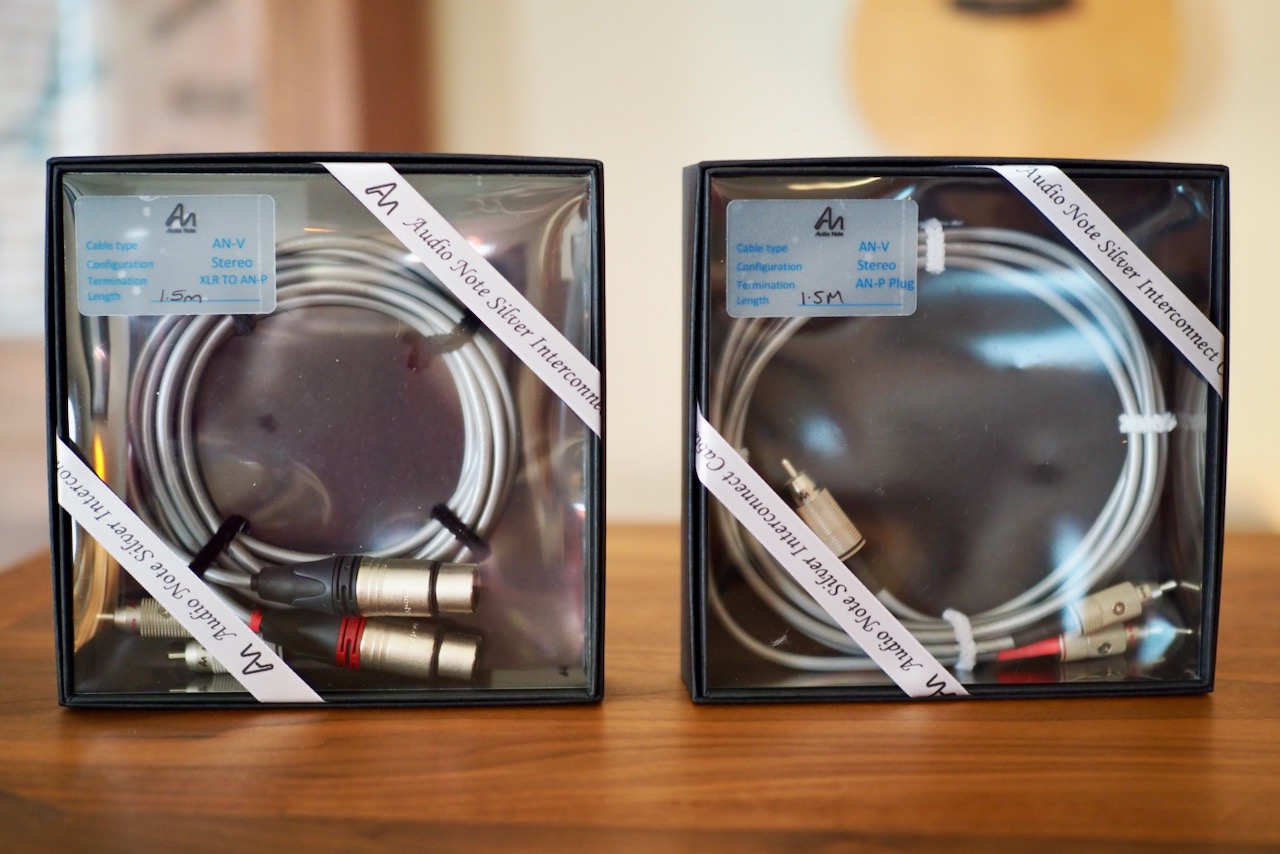
Above: Audio Note (UK) AN-V silver interconnects.
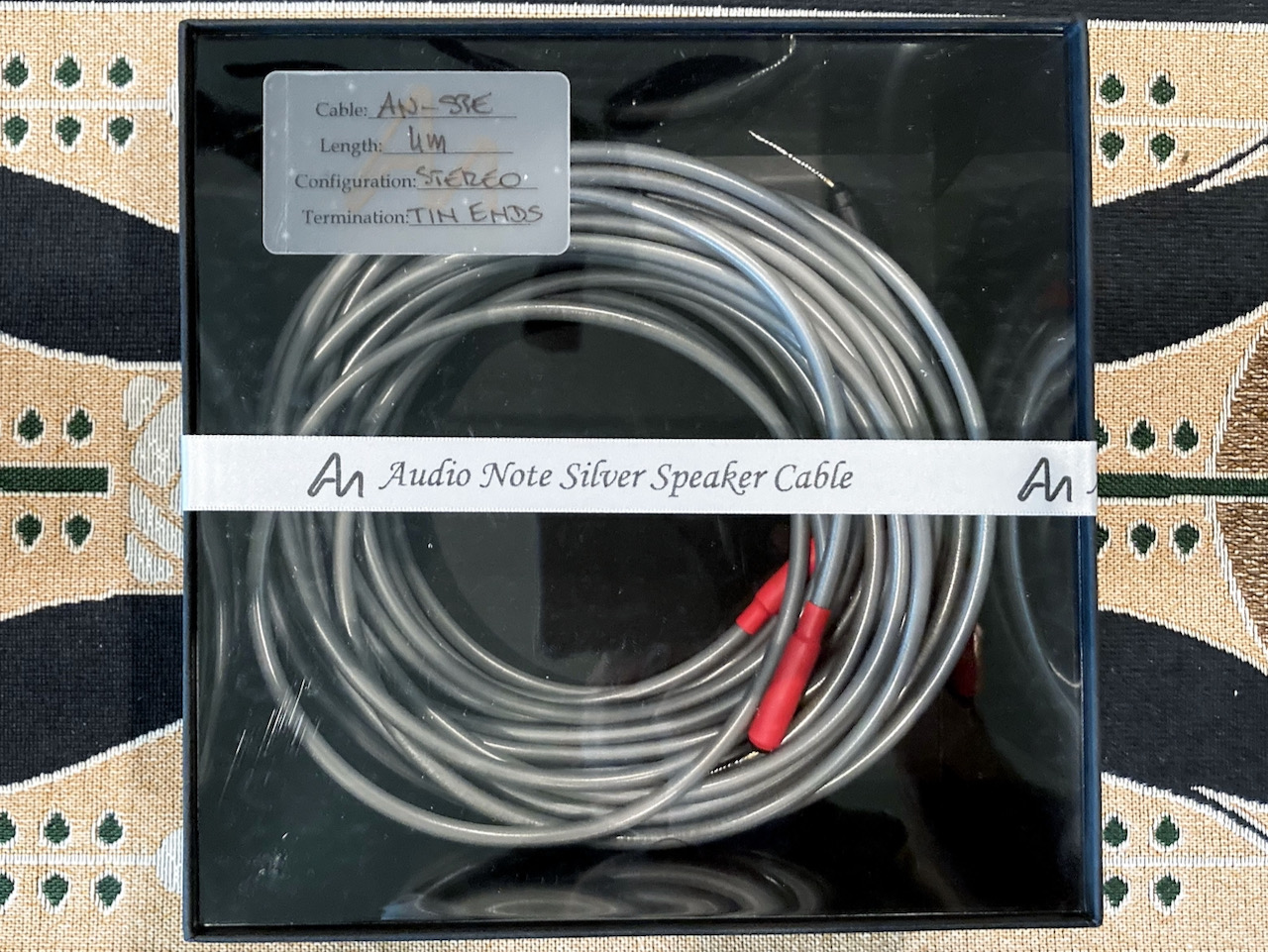
Above: Audio Note (UK) AN-SPe silver speaker cables.
For loudspeakers I used my usual Tannoy Westminster Royal SE loudspeakers, which are hot-rodded with Duelund CAST crossovers, with silver components in the high-frequency circuits, and copper components in the low-frequency circuits.
The positioning of my Westminster loudspeakers is in a typical audiophile arrangement, with a modified rule of thirds/fifths sort of positioning.
The front of my West's are 77 inches out from the front wall, sides are 48 inches from the side walls, and the loudspeakers are 112 inches apart, center-to-center.
My listening position is about 12 feet from the Westminsters, and the rear wall is about 12 feet behind my listening 'couch'.
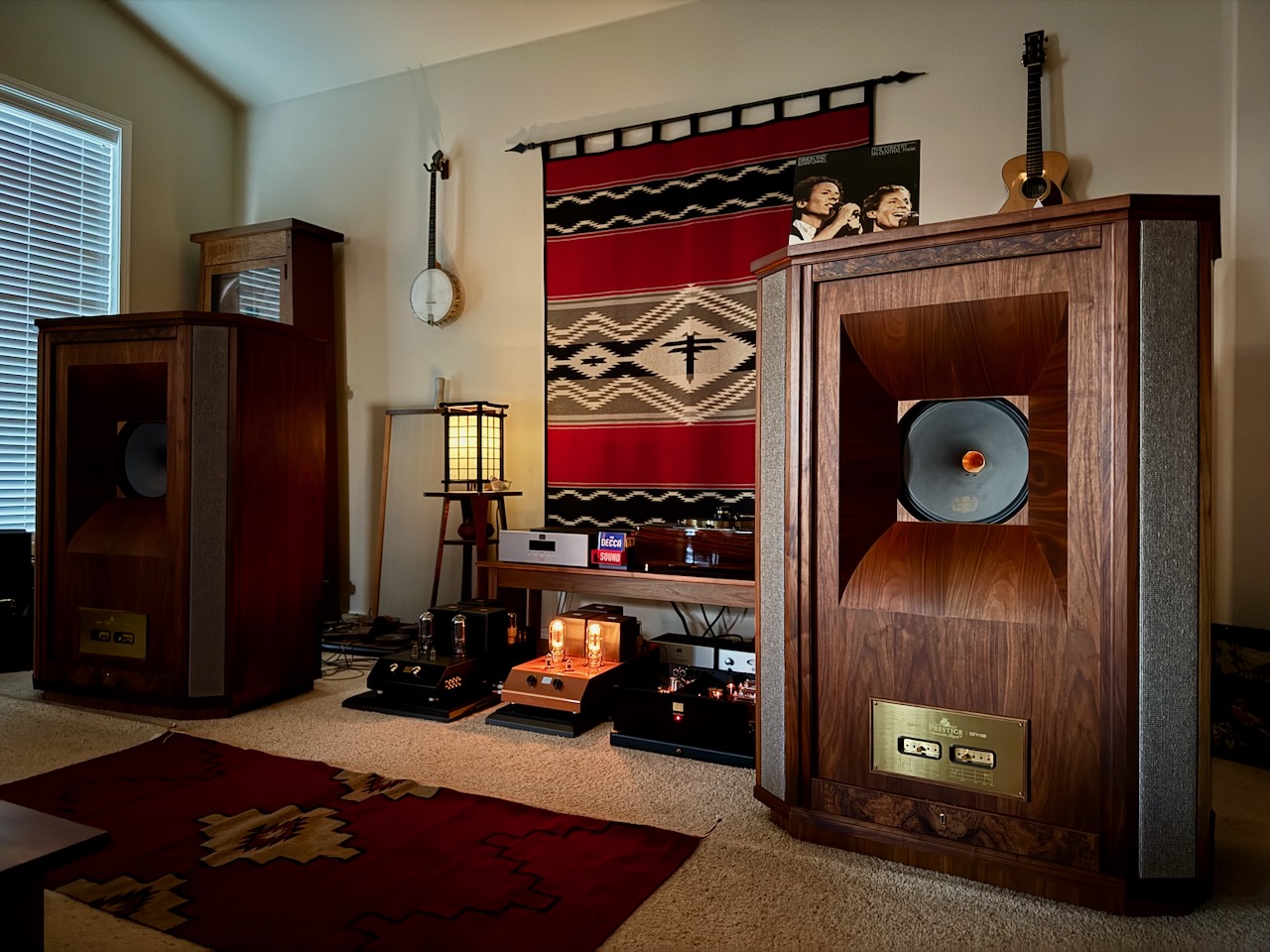
Above: System photo with Tannoy Westminster Royal SE loudspeakers.
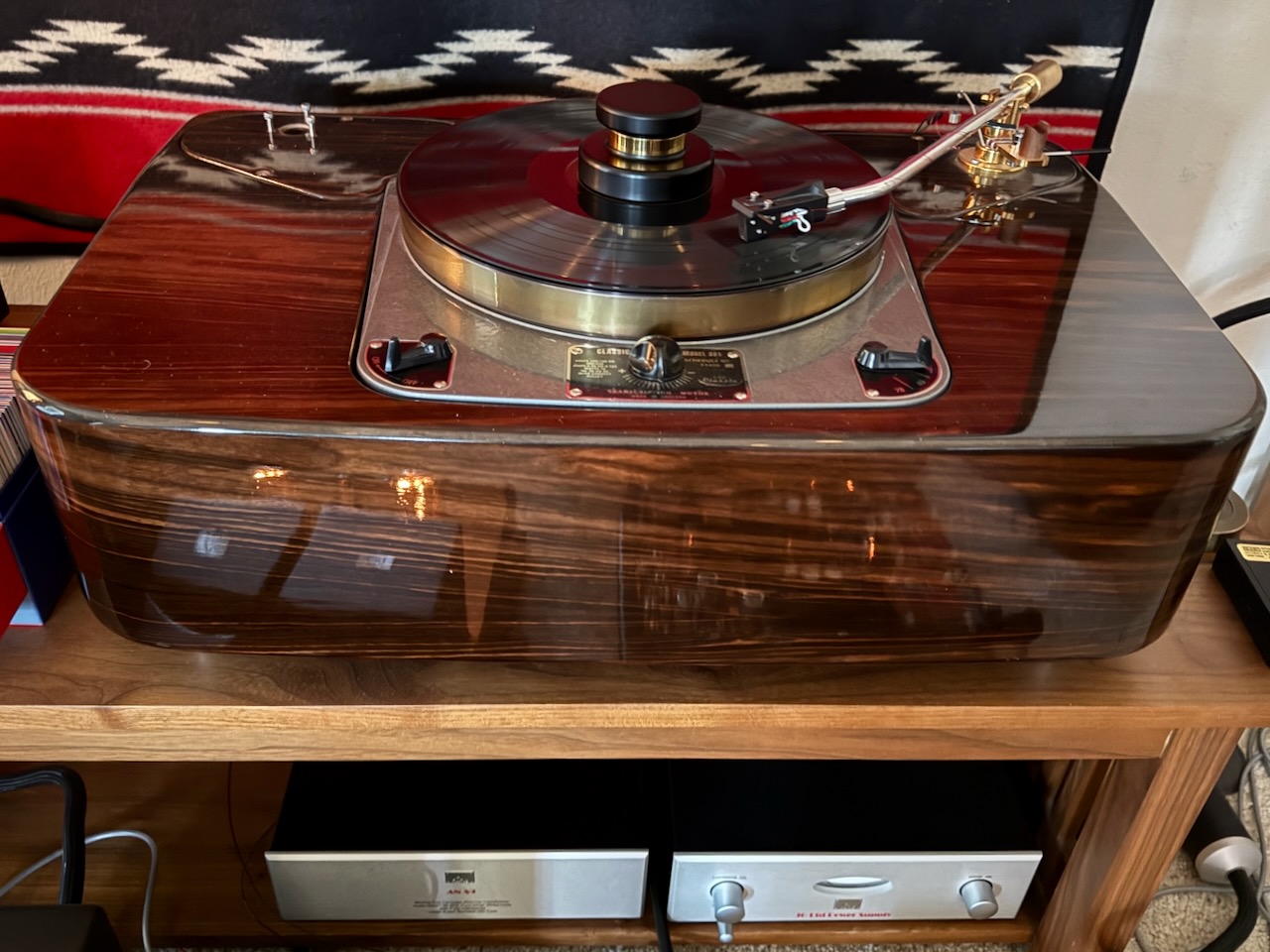
My Classic Turntable Company hot-rodded Garrard 301 turntable in an Artisan Fidelity plinth equipped with a Schick tonearm served as the foundation for the analog front end.
All components were connected by Acoustic Revive Absolute power cables to an Acoustic Revive RPT-6 Absolute NCF power distributor, which in turn was connected to wall AC via an Absolute power cord, into an outlet composed of an Acoustic Revive CB-1DB receptacle base plate, CFRP-1F carbon fiber outlet plate, and Oyaide R-0 AC outlet.
The Ongaku 211 SET Integrated Amplifier
Now let’s take a closer look at the Ongaku 211 SET integrated amplifier.
So what is the Ongaku’s Level Five performance level all about?
To quote Audio Note (UK):
“Class A single-ended directly heated no feedback triode amplifiers, with only the very best parts and materials available, fully silver wired high content nickel iron C-core output transformers, Black Gate capacitors throughout where available, silver foil signal capacitors, and both circuit and power supply hard wired with silver wire.”
So, the Ongaku’s Level Five design criteria includes a circuit that is pure Class A operation, with zero negative feedback, a single-ended output stage utilizing 211 valves for 20 watts of output power, rectification via robust 5R4WGB valves, directly heated triode operation, Audio Note (UK) silver wire for all internal wiring, Audio Note (UK) two-watt non-magnetic tantalum resistors, either Black Gate electrolytic or Audio Note (UK) silver foil capacitors, and Audio Note (UK) in-house custom-designed and manufactured driver and output transformers that have fully silver-wired AN-Perma 50 nickel C-cores, and the mains transformer has a copper-wired HiB double C core.
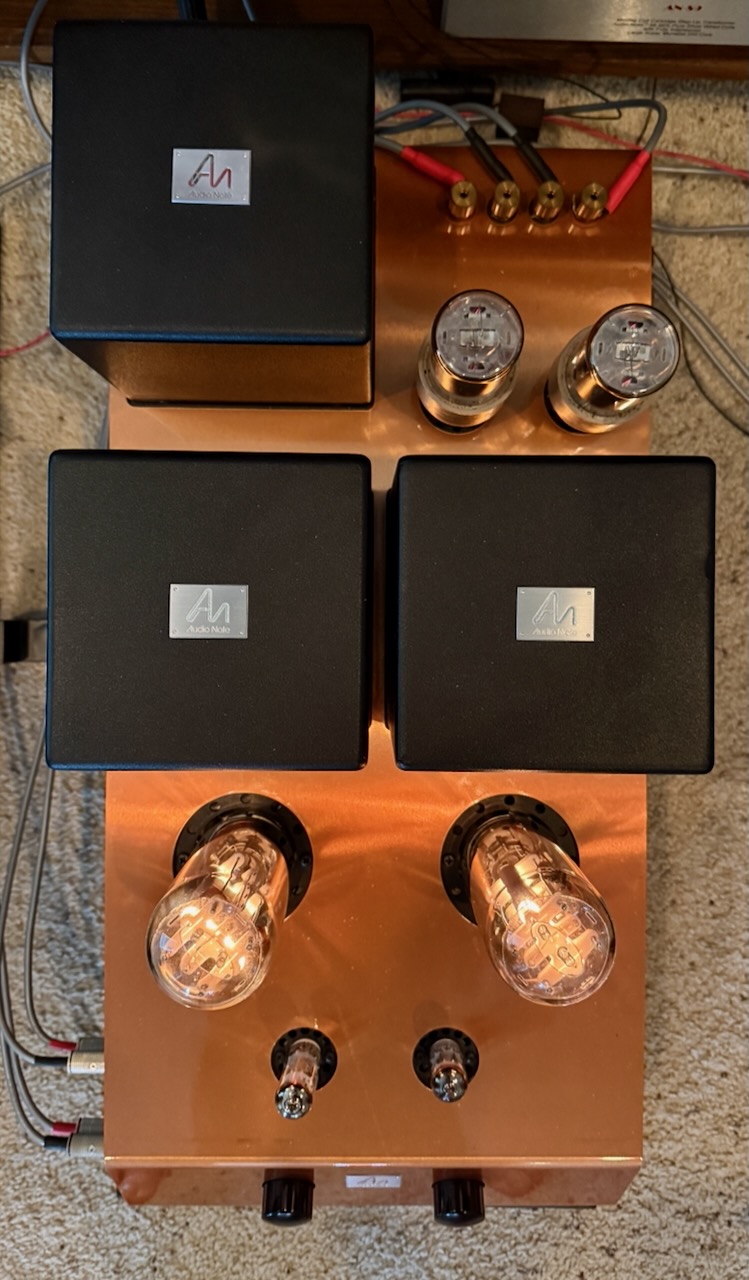
Above: Ongaku top view.
If you look at the top of the Ongaku, starting at the back of the chassis, you can see two new old stock (NOS) Chatham Electronics JAN CAHG 5R4WGA rectifiers to the right of the copper-wired HiB double C core mains transformer. Just in front of the 5R4WGA rectifiers are four Audio Note (UK) silver-plated binding posts.
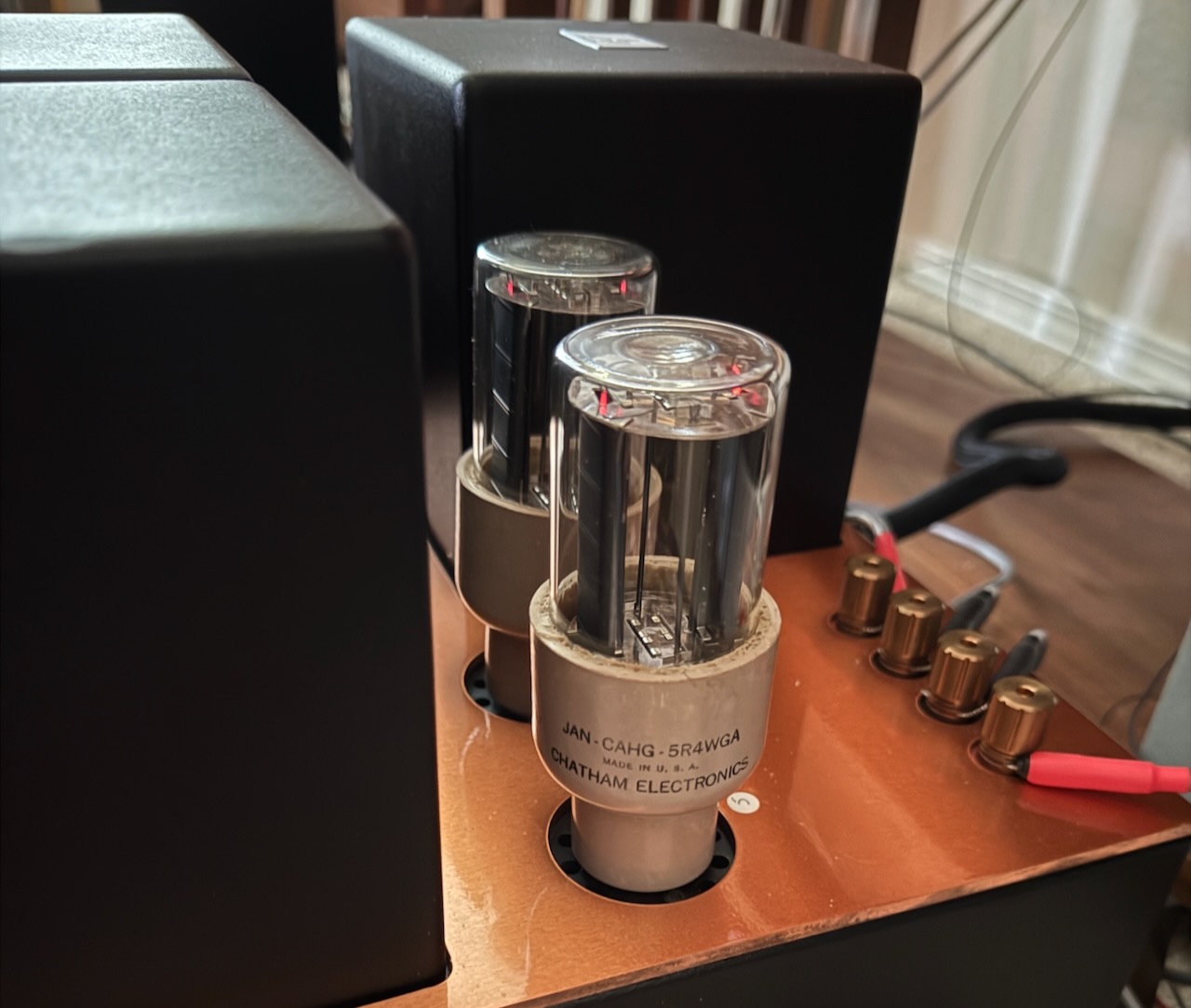
Above: Chatham Electronics JAN CAHG 5R4WGA rectifiers
In the middle of the chassis, you see two Audio Note (UK) 4242E output valves - 211 valves that are custom-made by Psvane for Audio Note (UK) - that are just in front of the fully silver-wired AN-Perma 50 nickel C-core output transformers.
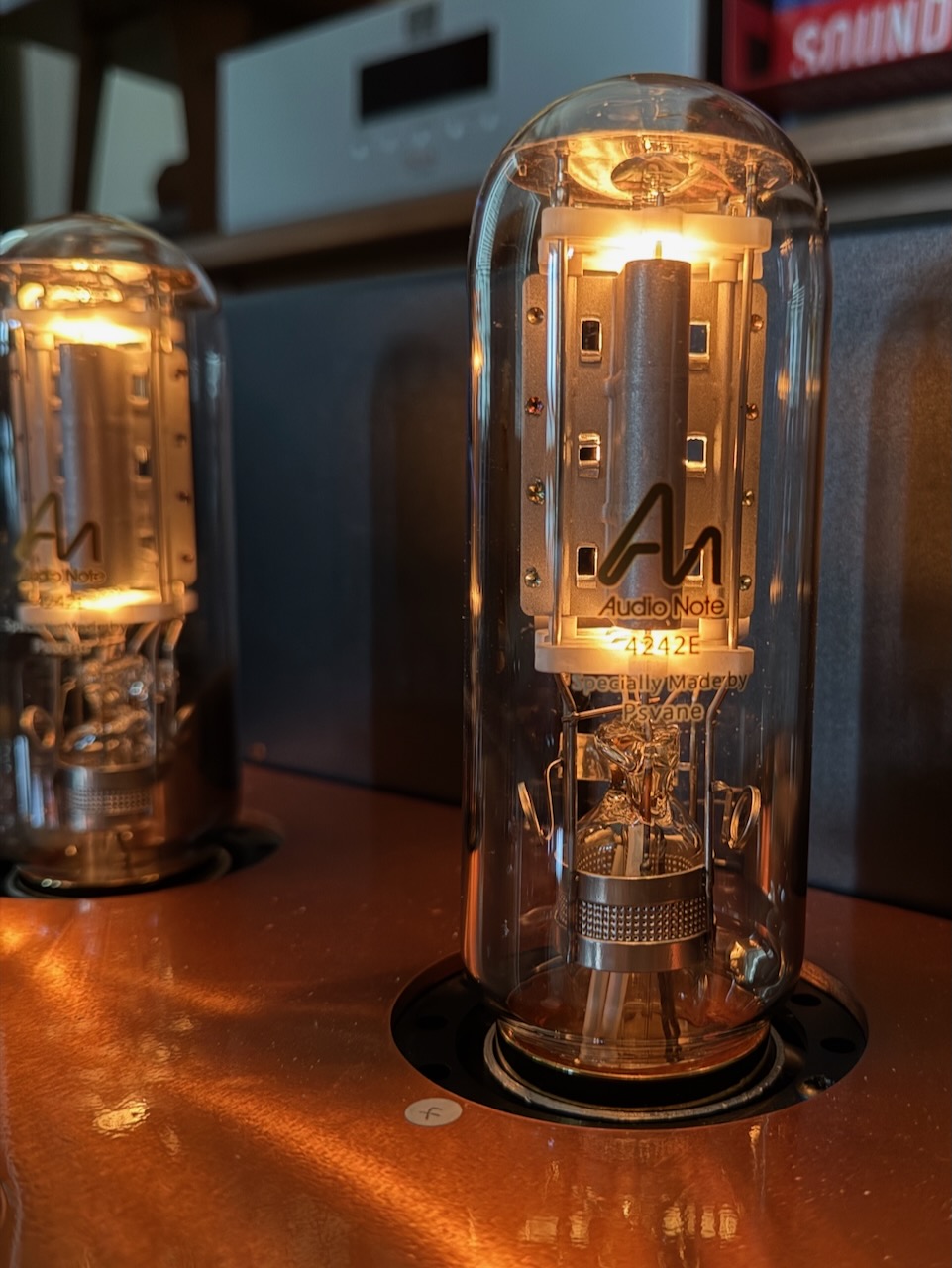
Above: Audio Note (UK) 4242E output valves - 211 valves custom-made by Psvane for Audio Note (UK).
At the front left of the chassis is a NOS 6463 Telefunken driver valve, and on the front right is a NOS 12AU7 Amperex input valve.
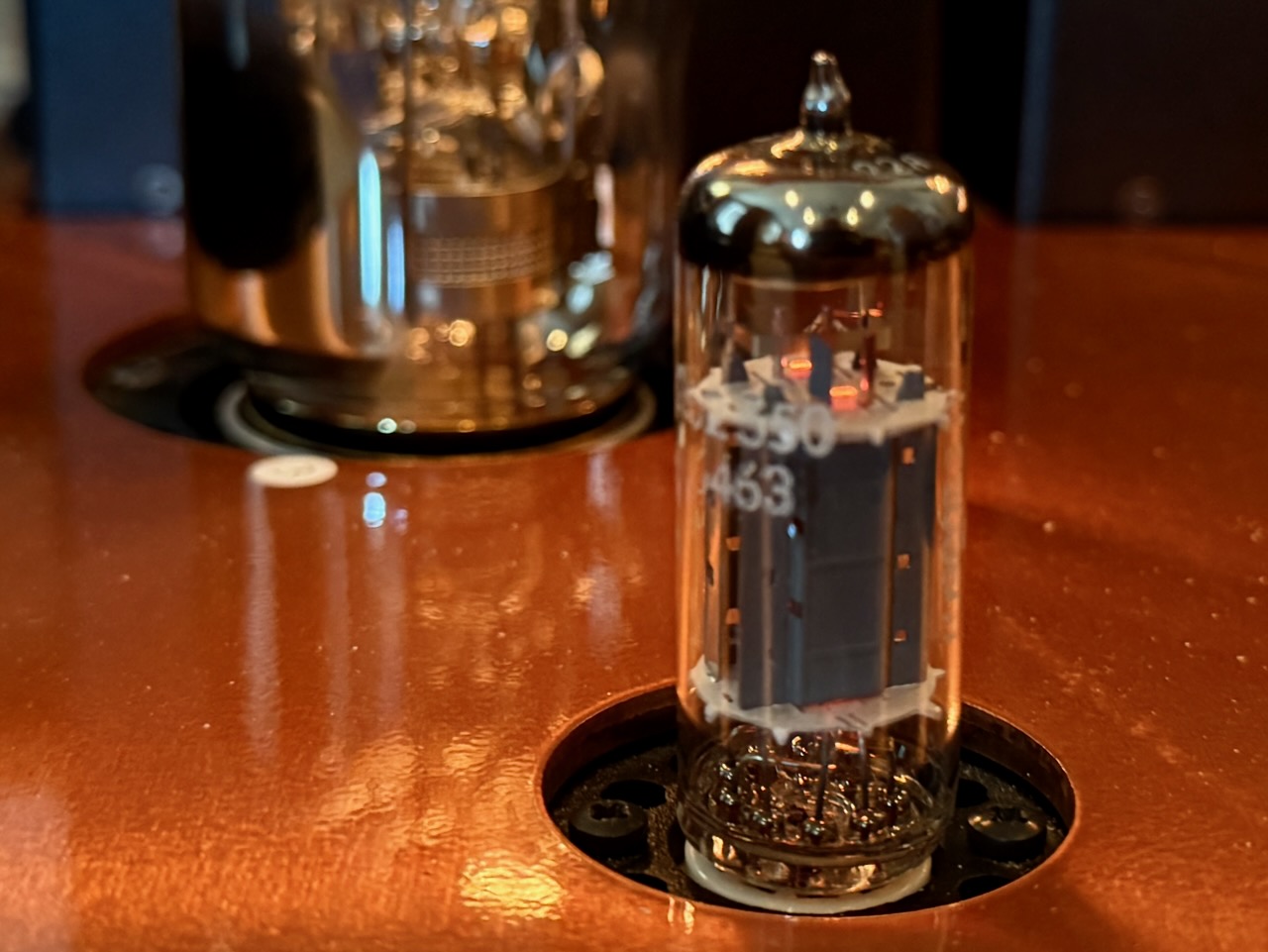
Above: NOS 6463 Telefunken driver valve
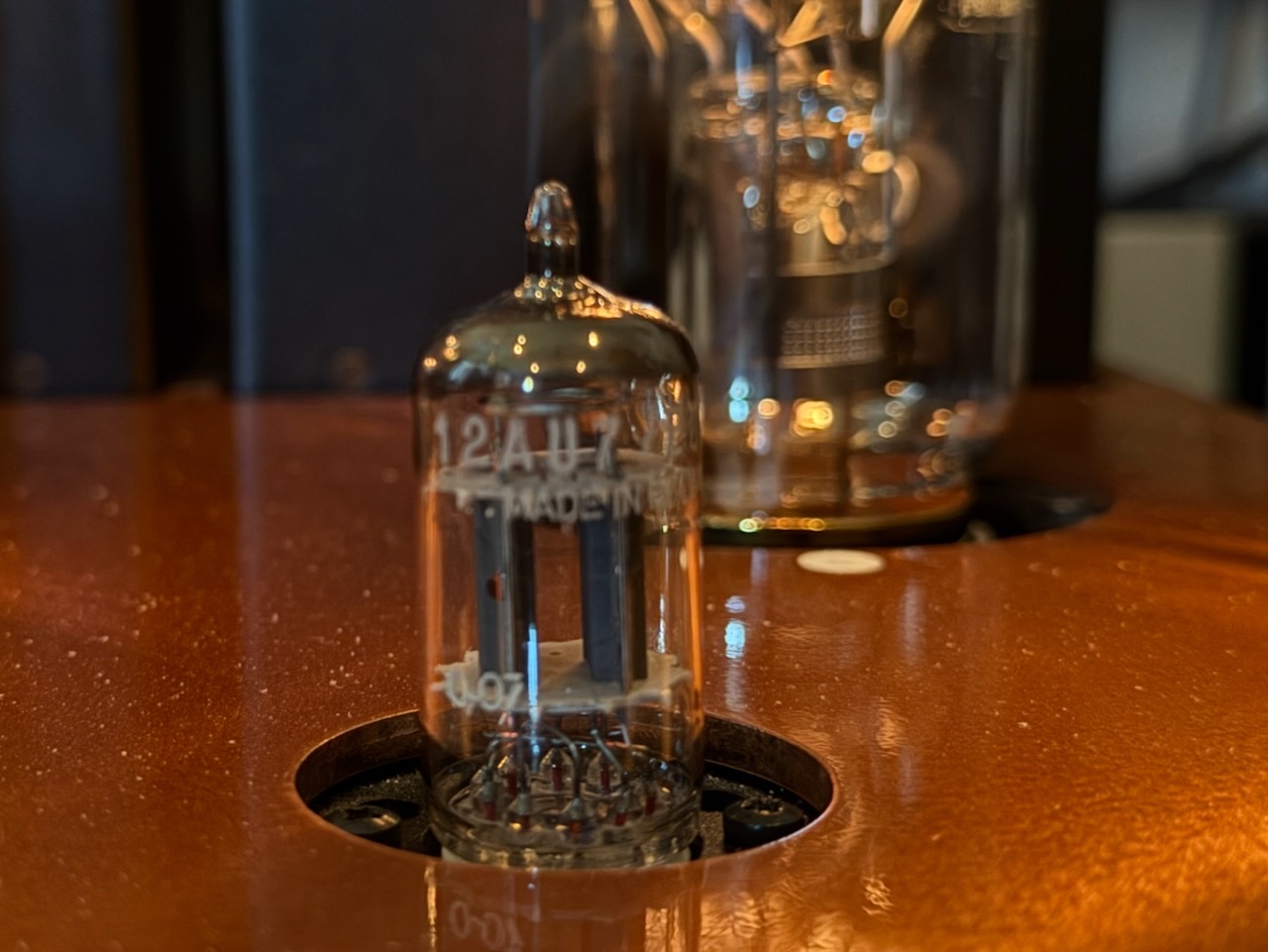
Above: NOS 12AU7 Amperex input valve.
On the front panel, you see the control knob for the TKD source selector switch on the left, and on the right is the control knob for an Elma stepped attenuator volume control that is populated with Audio Note (UK) tantalum resistors.
Now let’s flip the Ongaku over and take a look inside at the components that populate its circuits.
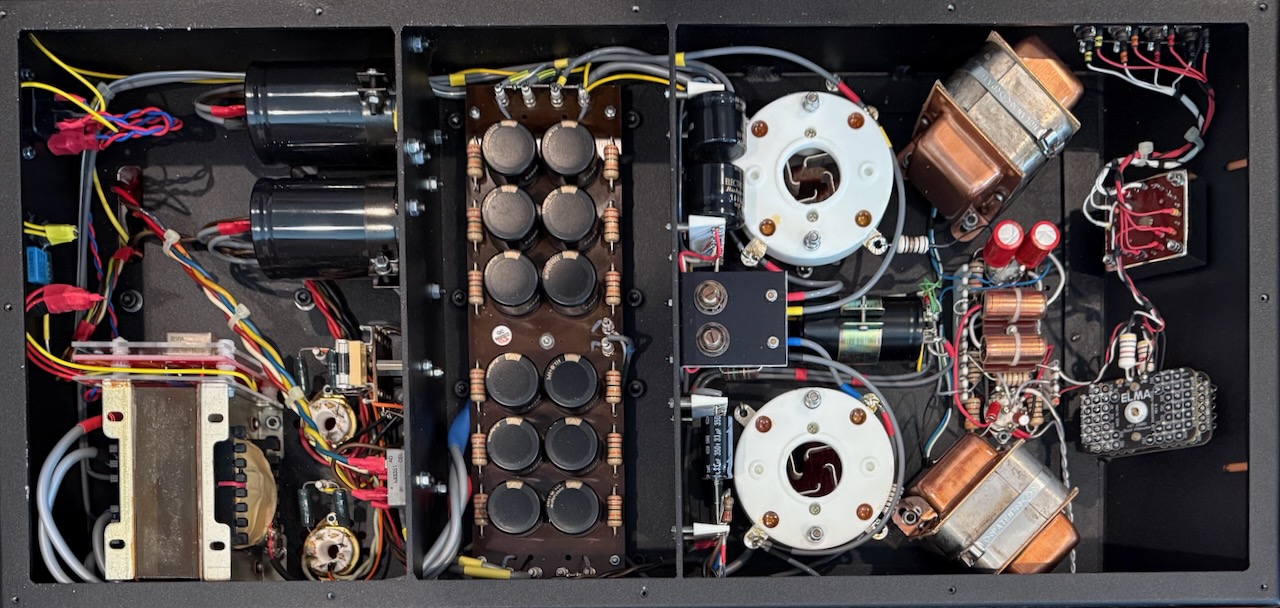
Above: Inside the Ongaku (bottom view).
The Ongaku utilizes Audio Note (UK)’s best-of-the-best custom circuit components, all chosen by ear for high contrast, high level of emotional engagement and sound quality, and the highest level of refinement.
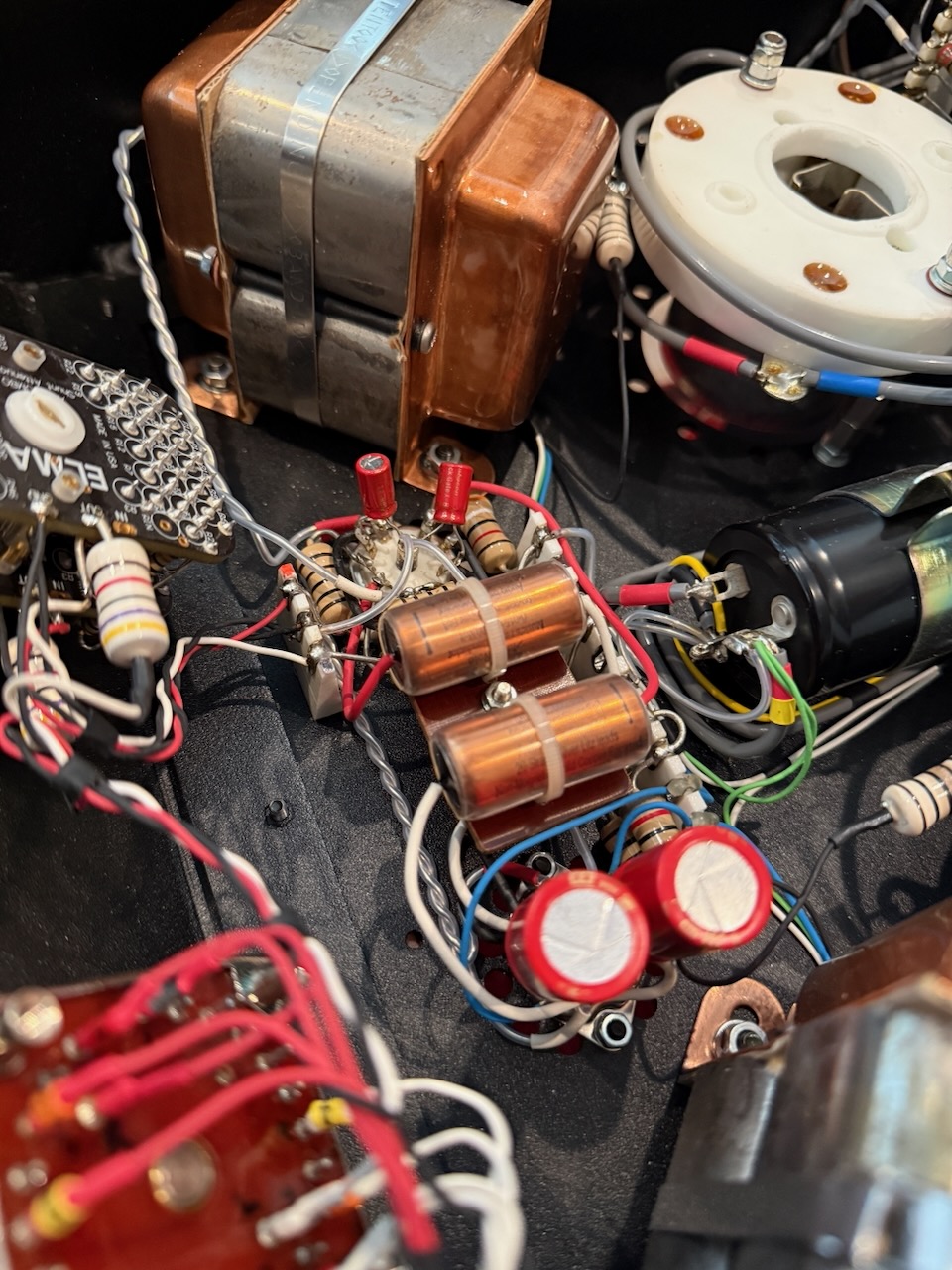
In the photo above notice the Audio Note (UK) silver wire used for internal wiring, the custom Audio Note (UK) in-house manufactured silver-wired AN-Perma 50 nickel C-core driver transformers, the Audio Note (UK) silver foil capacitors, the Audio Note (UK) 2 watt non-magnetic tantalum resistors (used throughout the Ongaku), and the Black Gate electrolytic capacitors.
Hint: Note that Peter’s Audio Note (UK) non-magnetic silver tantalum resistors are referred to as “tone kings,” and deliver improved tone, increased texture, a darker background, and a greater sense of immediacy compared to other fine resistors.
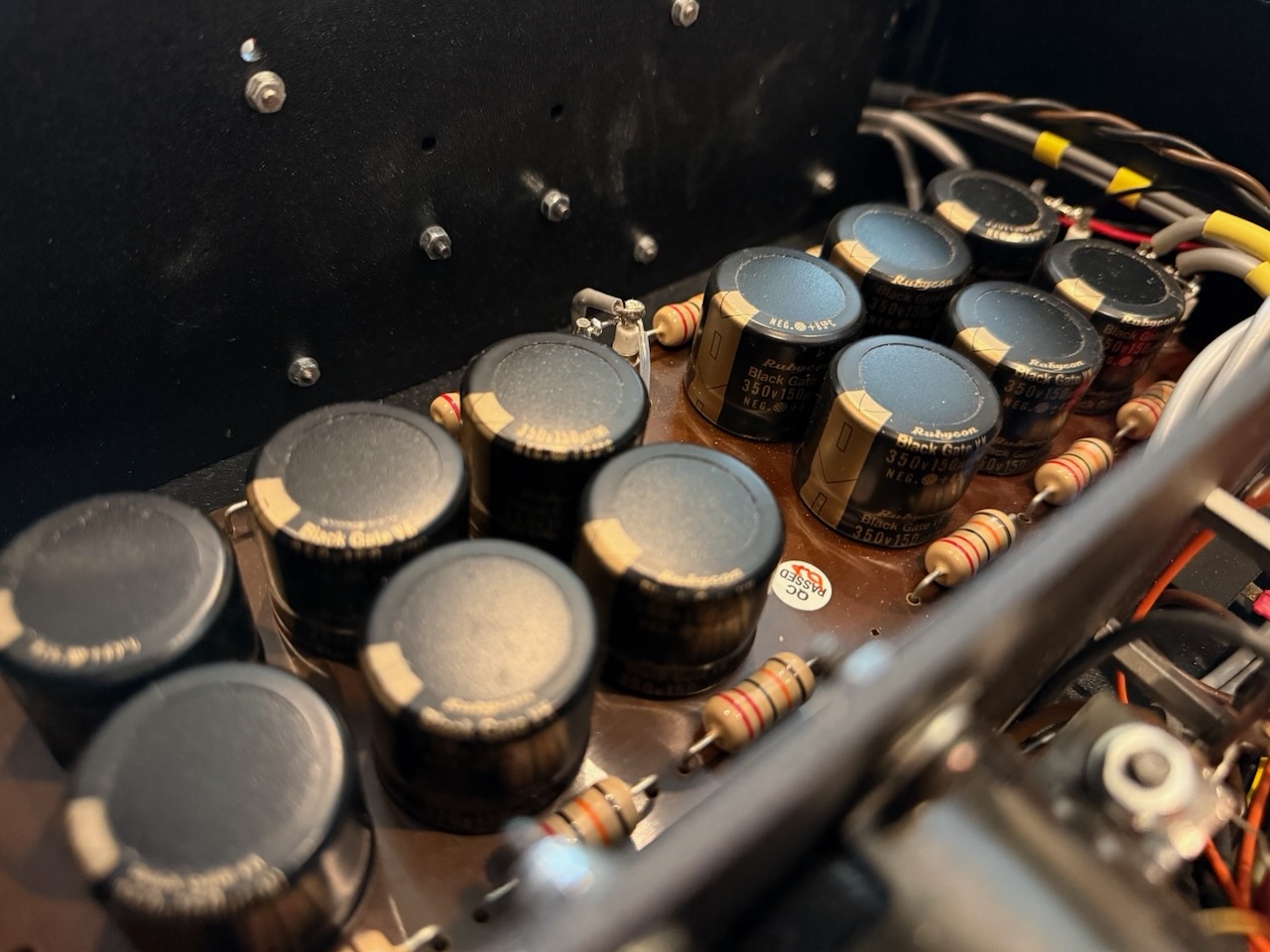
In the photo above, look at all those beautiful Black Gate capacitors in the power supply!
Now sadly out of production, Black Gate electrolytic capacitors were renowned for their performance in audio circles and were based on a theory called 'Transcendent Electron Transfer' and utilized fine graphite particles in their construction.
Black Gate capacitors were highly regarded for their ability to enhance the dynamic range, and to deliver a more authoritative, lively, and emotionally engaging portrayal of the music. Black Gate capacitors also provided a significant increase in overall clarity and detail across the audio spectrum that provided more insight into musical nuance, the timbre of instruments, which made it easier to accurately discern the contributions from individual instruments in more complex orchestral recordings. They were particularly notable for improving definition in the bass range, which gave more clarity and impact to the music throughout the low frequencies. The cherry on top was that Black Gate capacitors provided a smooth, liquid, natural quality to playback to give a more authentic live-like musical realism.
The revered Black Gate improvements to dynamic range, bass definition, clarity and detail, and sonic smoothness were their standout traits, so it should not be a surprise that the Ongaku also shares these traits. More about this in a moment.
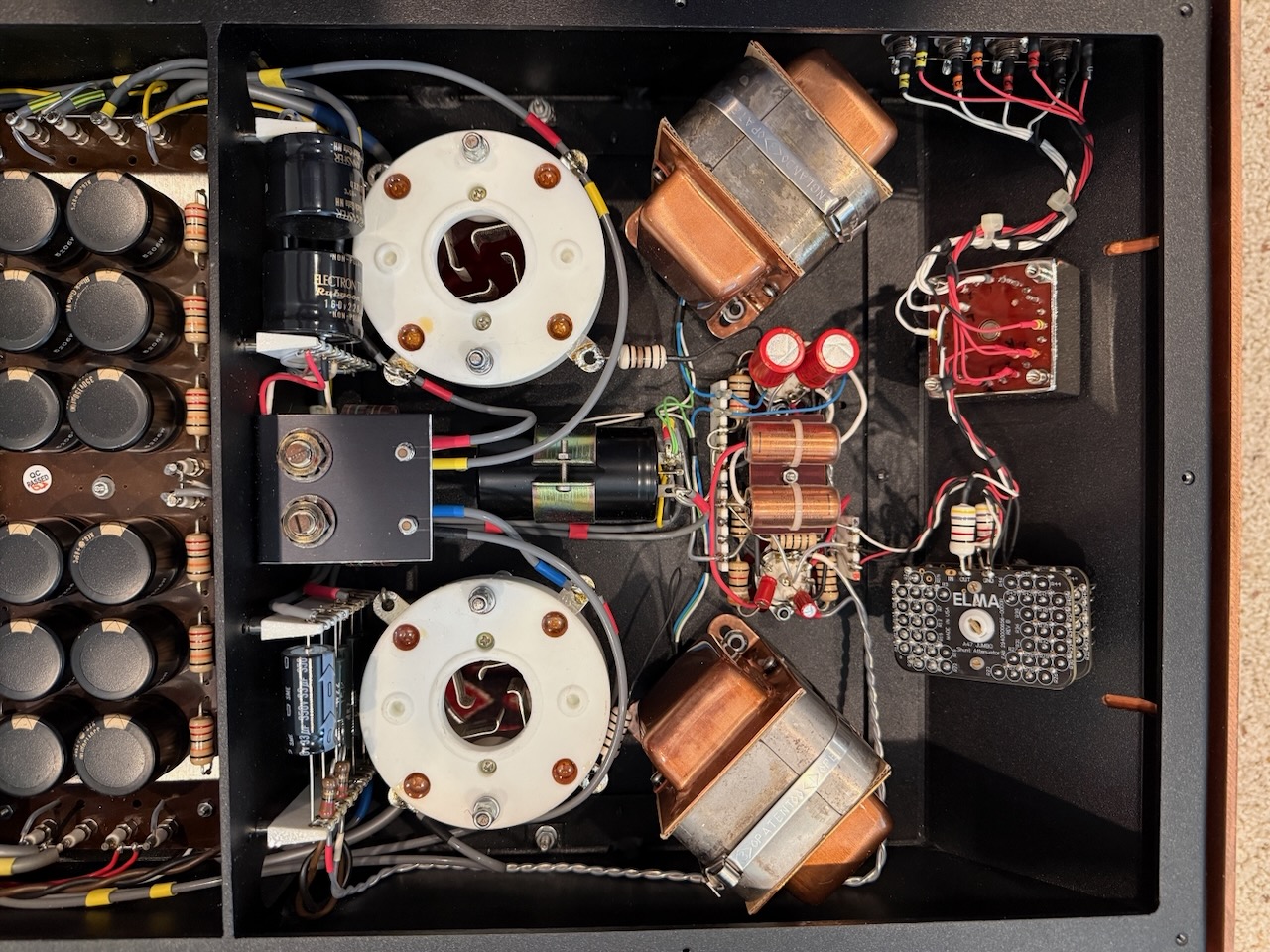
In the photo above, notice that all of the Ongaku’s capacitors are either Black Gate electrolytic capacitors (as in the power supply on the left), or Audio Note (UK) silver foil capacitors (as in the gold-colored capacitors between the driver transformers), depending on what’s best for a particular circuit location. Note the Audio Note (UK) 2 watt non-magnetic tantalum resistors in various circuit locations.
Towards the middle of the photo, are the custom Audio Note (UK) in-house manufactured silver-wired AN-Perma 50 nickel C-core driver transformers, which are just to the right of the Audio Note (UK) 211 valve bases (made from steatite and aluminum).
On the top right of the photo is a four-position TKD source selector switch, and on the bottom right is the Elma stepped attenuator switch that is populated with Audio Note (UK) tantalum resistors for volume control.
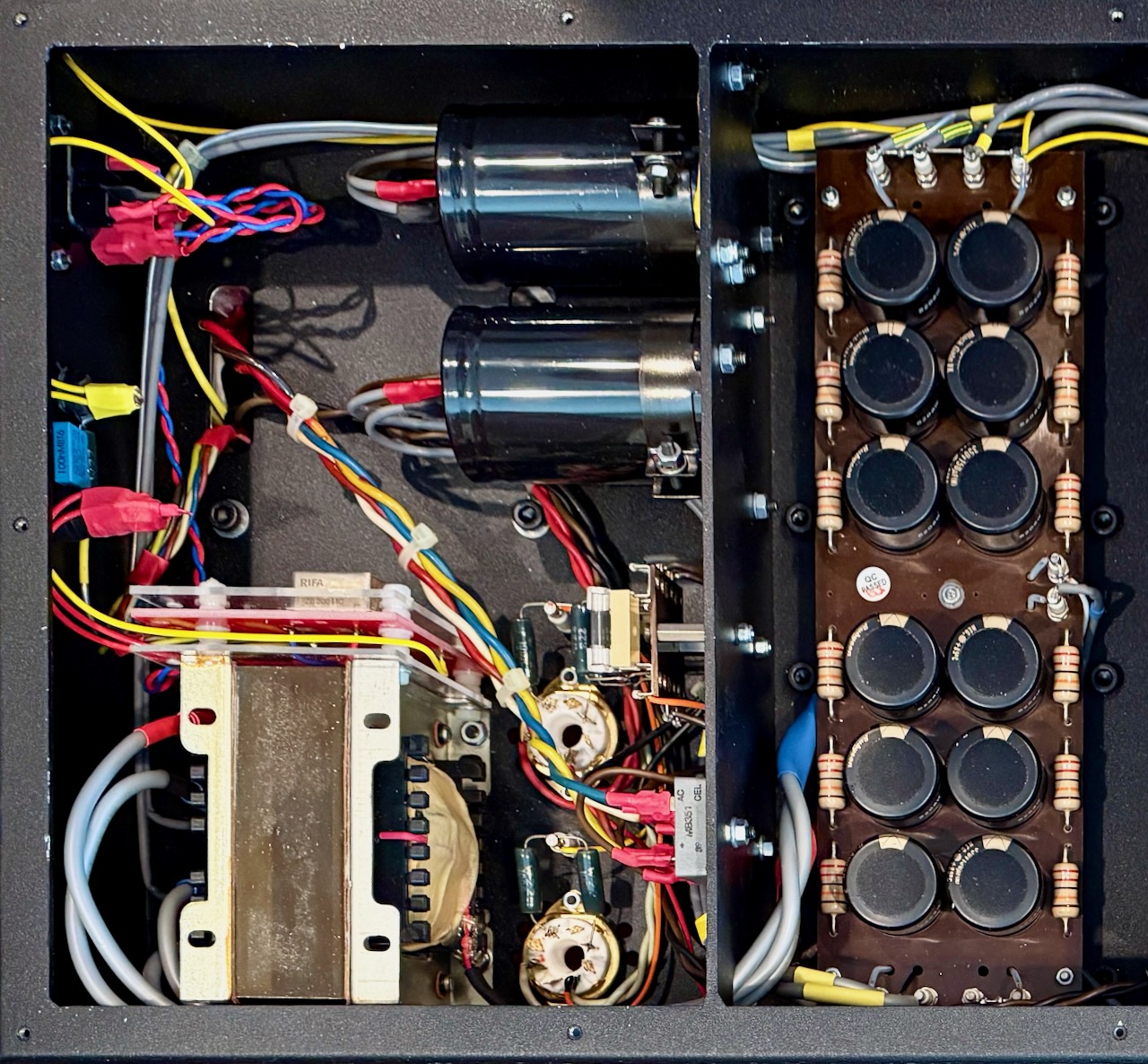
In the above photo, to the right is the aforementioned power supply with two banks of Black Gate capacitors, and at the middle top left of the you see two huge Black Gate capacitors that the Chatham Electronics JAN CAHG 5R4WGA rectifiers feed. Below that you see the valve sockets for the 5R4WGA, with the fully silver-wired HiB double C core mains transformer to its left.
Ok, so that’s my little “walk-through” of the Ongaku. Now let’s move on to my listening impressions.
Listening Impressions
Let me start with some of my general impressions and observations about the Ongaku.
First of all, I found the build quality of the Ongaku to be extraordinary, with the components that populate its circuits being the very best available, and most are custom-made by - or for - Audio Note (UK) out of exotic materials that perform well beyond the normal performance parameters one usually sees in high-performance audio.
When I turn on the Ongaku, I’m always delighted by the brilliant burst of light emitted by those large 211 output tubes. It feels like they’re joyfully illuminating my life as part of the Ongaku experience.
When I first heard the Ongaku in my audio system, I was essentially in a state of shock and awe at its level of performance.
I was so impressed that I didn’t know how to put into words what I was hearing and feeling while listening to music with the Ongaku.
I had to listen, listen, and listen some more, to try and understand what was happening. What I was hearing? What I was feeling? And how do I explain it, articulate it?
I pondered how this level of performance was even possible. In my nearly seven decades here on Planet Earth, I’d never encountered any amplifier doing what I heard the Ongaku doing. How was the Ongaku doing what it does?
Ok, that's all for now. In the next two to three weeks the full feature review of the Audio Note (UK) Ongaku 211 SET integrated amplifier should be published at Positive Feedback.
As always, thanks for stopping by, and may the tone be with you!