
Greetings friends, I hope you are well.
It's been a busy time here at Jeff's Place, but it's all good. I mean, how could it not be, with all the cool HiFi kit and music residing here at the moment: Acoustic Revive, Audio Note (UK), Duelund-Altec, and more!
Acoustic Revive Analog Stabilizer PS-DBLP
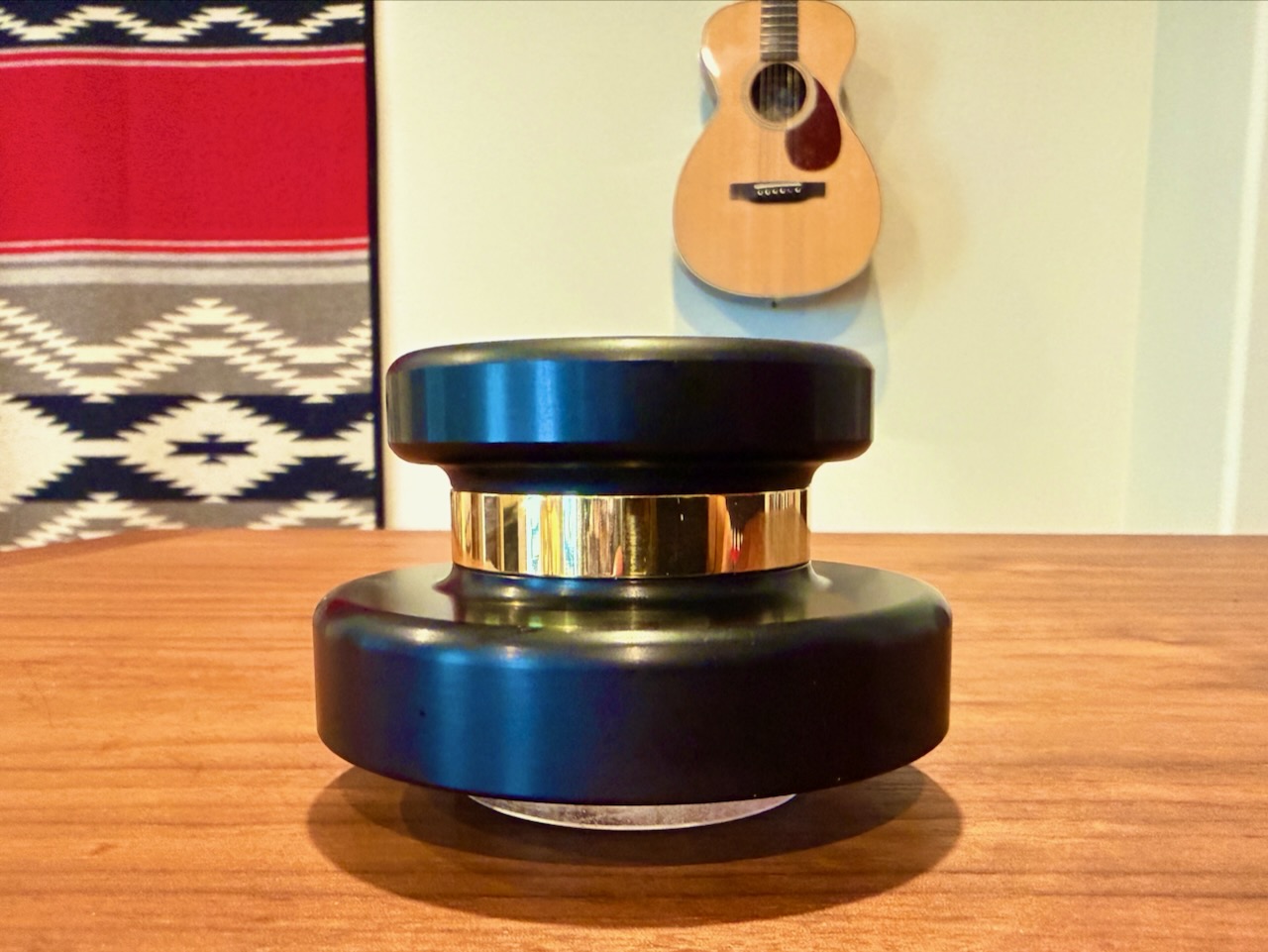
I've been entertaining myself gathering listening impressions with the Acoustic Revive Analog Stabilizer PS-DBLP, which is an active record weight.
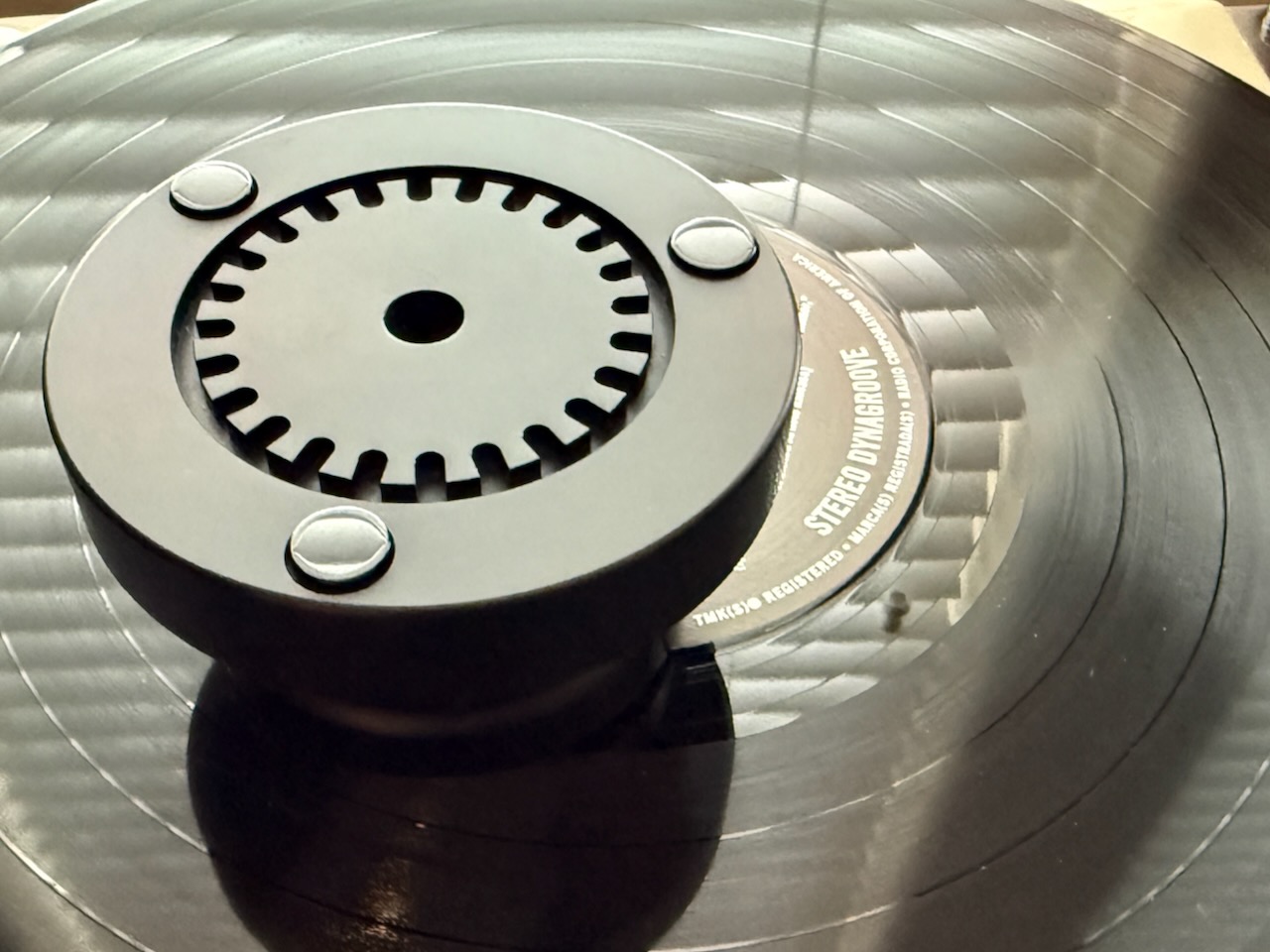
My buddy Alden stopped by for a visit, and I was telling him about the PS-DBLP being an active record weight. He had the same reaction I did when I first heard about active record weights: "It's just a record weight, what's active about that?"
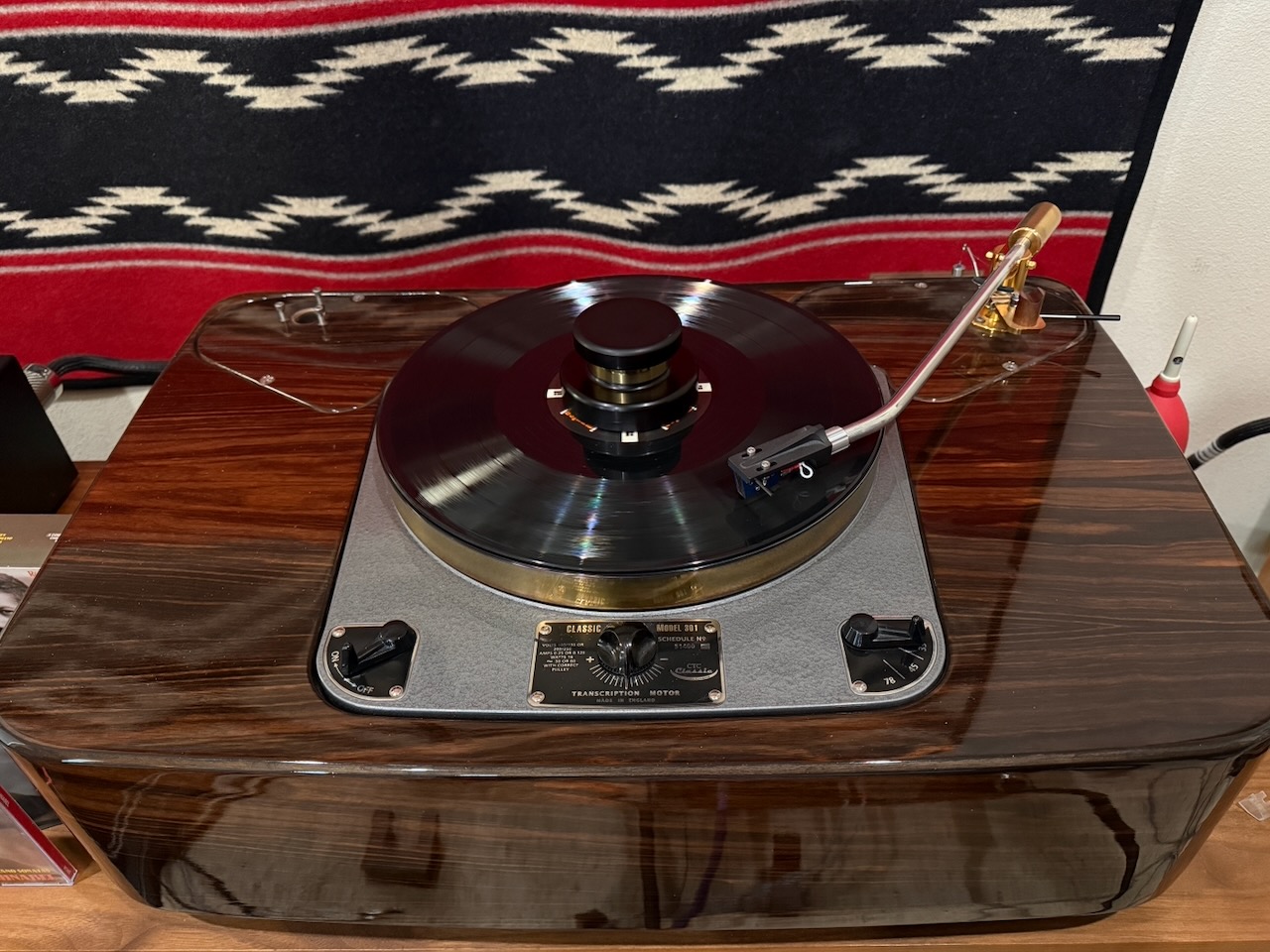
I'll tell you all about the ways the PS-DBLP works to reduce noise in my upcoming Positive Feedback article. Also, I've got two other record weights - one in aluminum, and one in brass - to compare it to.
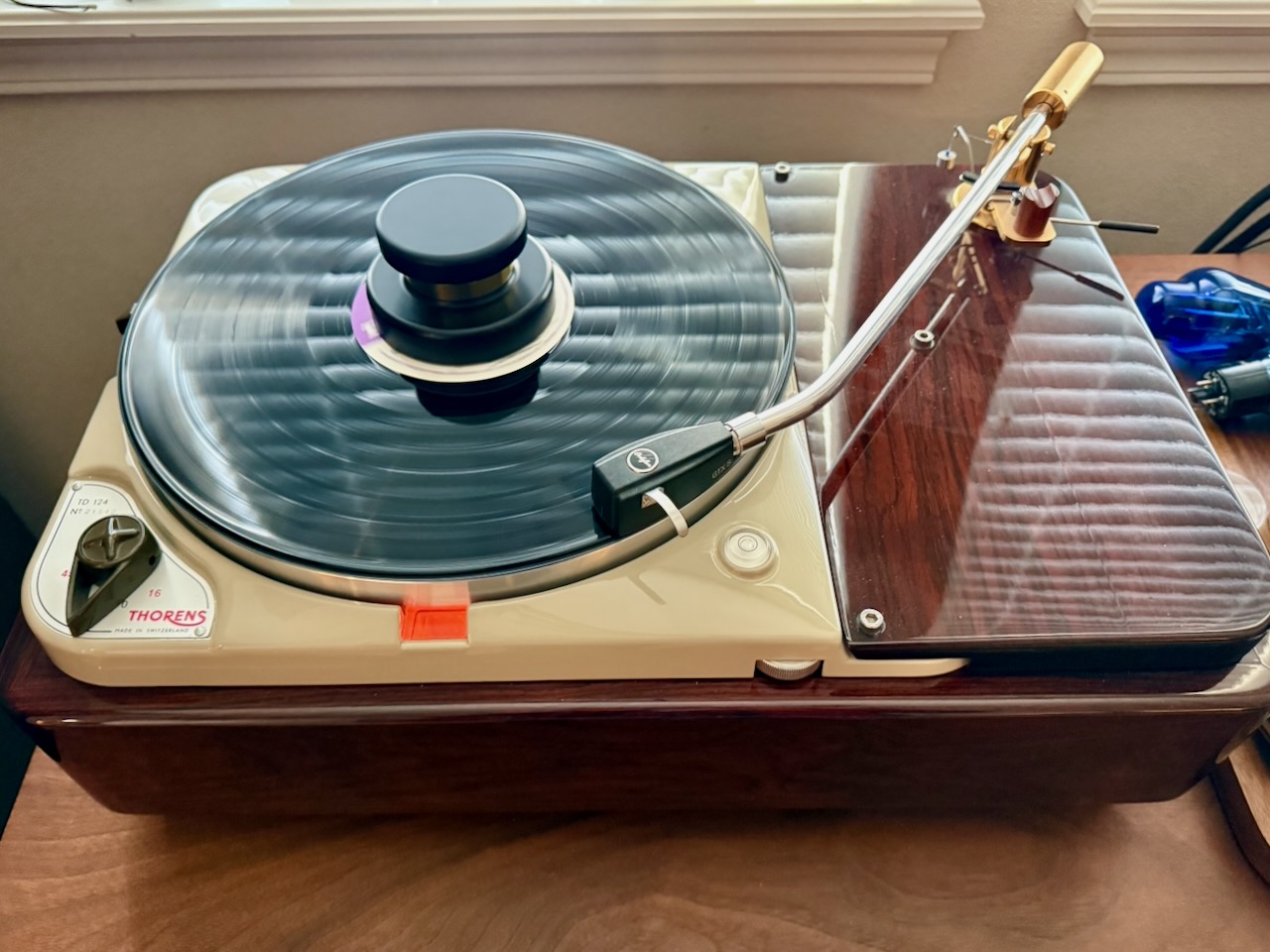
I've been going back and forth listening to the PS-DBLP on both my restored vintage Thorens TD-124 in my office system, and my CTC Garrard 301 in my living room system. The Acoustic Revive Analog Stabilizer PS-DBLP is the real deal, and it very noticeably improved performance.
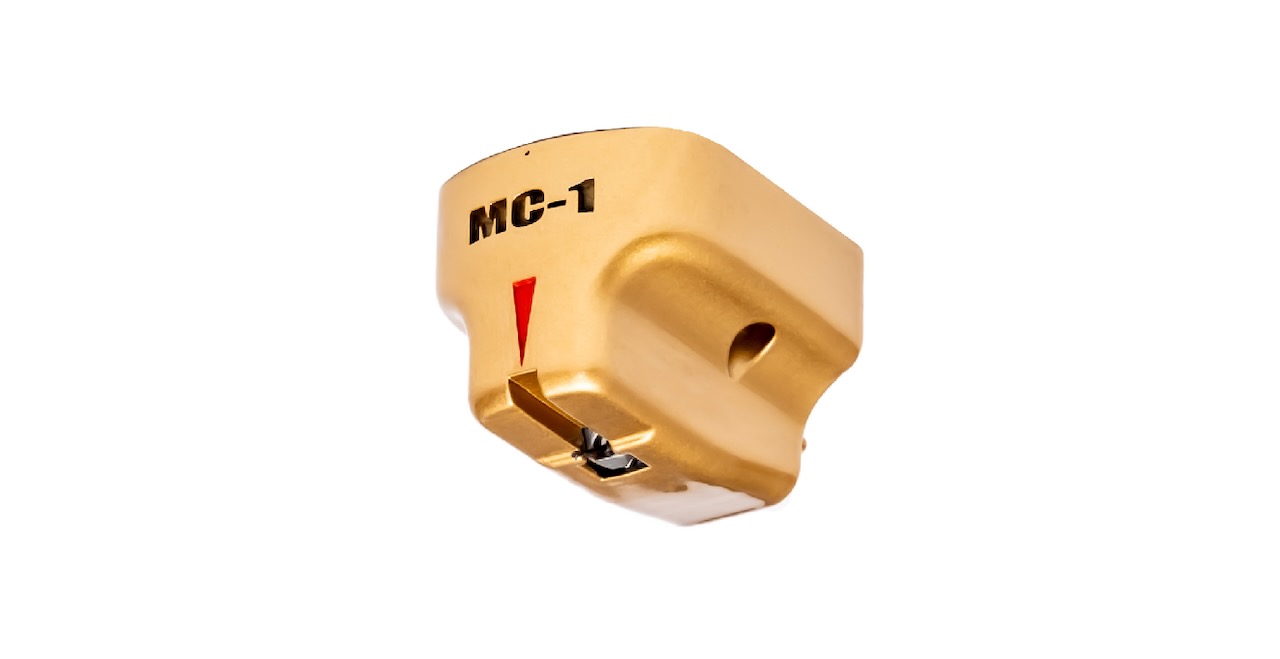
Also, in more exciting news, Ken-san at Acoustic Revive asked if I would like to give his new MC-1 moving-coil phonograph cartridge a listen, which he says is the only cartridge in the world to use PC-TripleC/EX wire in the coil. I'd love to give it a listen Ken-san!
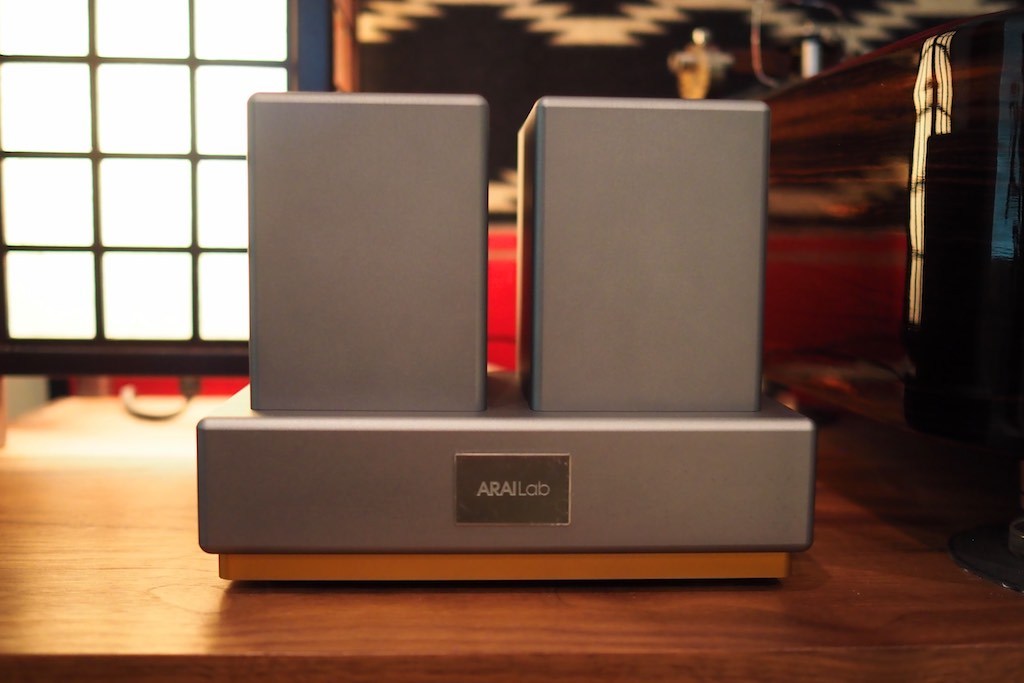
Ken-san will also be sending an Arai Lab step-up transformer to pair with the MC-1 as a complimentary match.
I've heard an Arai Lab SUT before during a previous review, and it was superb. The Arai Lab SUT is in the build phase now, so it will likely be a month or two before these two arrive, and I am really looking forward to giving them a listen!
Audio Note (UK)
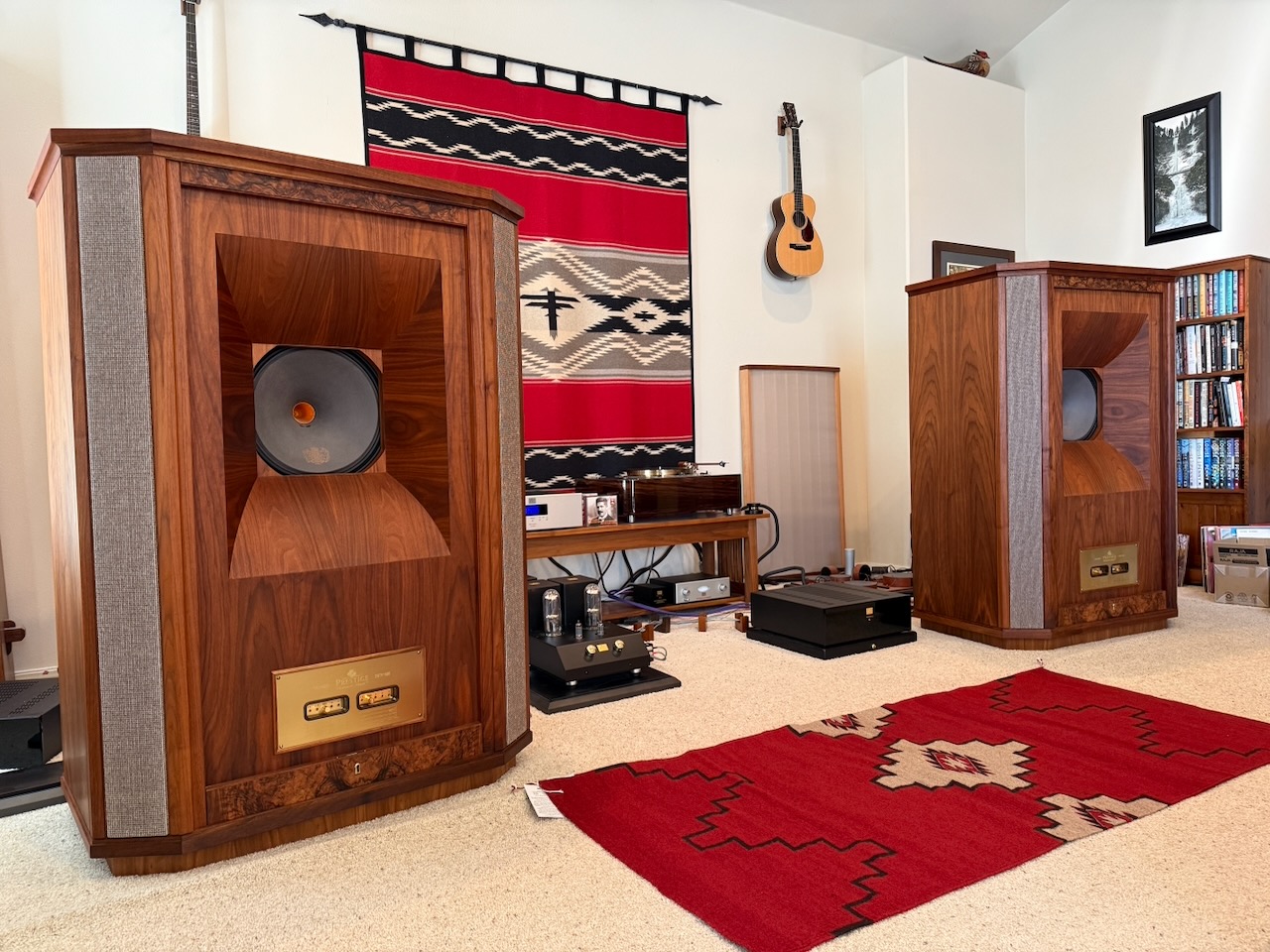
As a vinyl source I've been listening to the Audio Note (UK) IO I moving-coil cartridge feeding the AN-S8 SUT, which in turn feeds the M8 RIAA phono preamplifier, which drives the Tomei 211 SET integrated amplifier to power my Duelund-ized Tannoy Westminster Royal SEs.
I am in complete awe of the performance of this combination of Audio Note (UK) components. I've never heard anything finer for my tastes, and the sound quality, the visceral impact of the music, and level of emotive impact is just extraordinary.
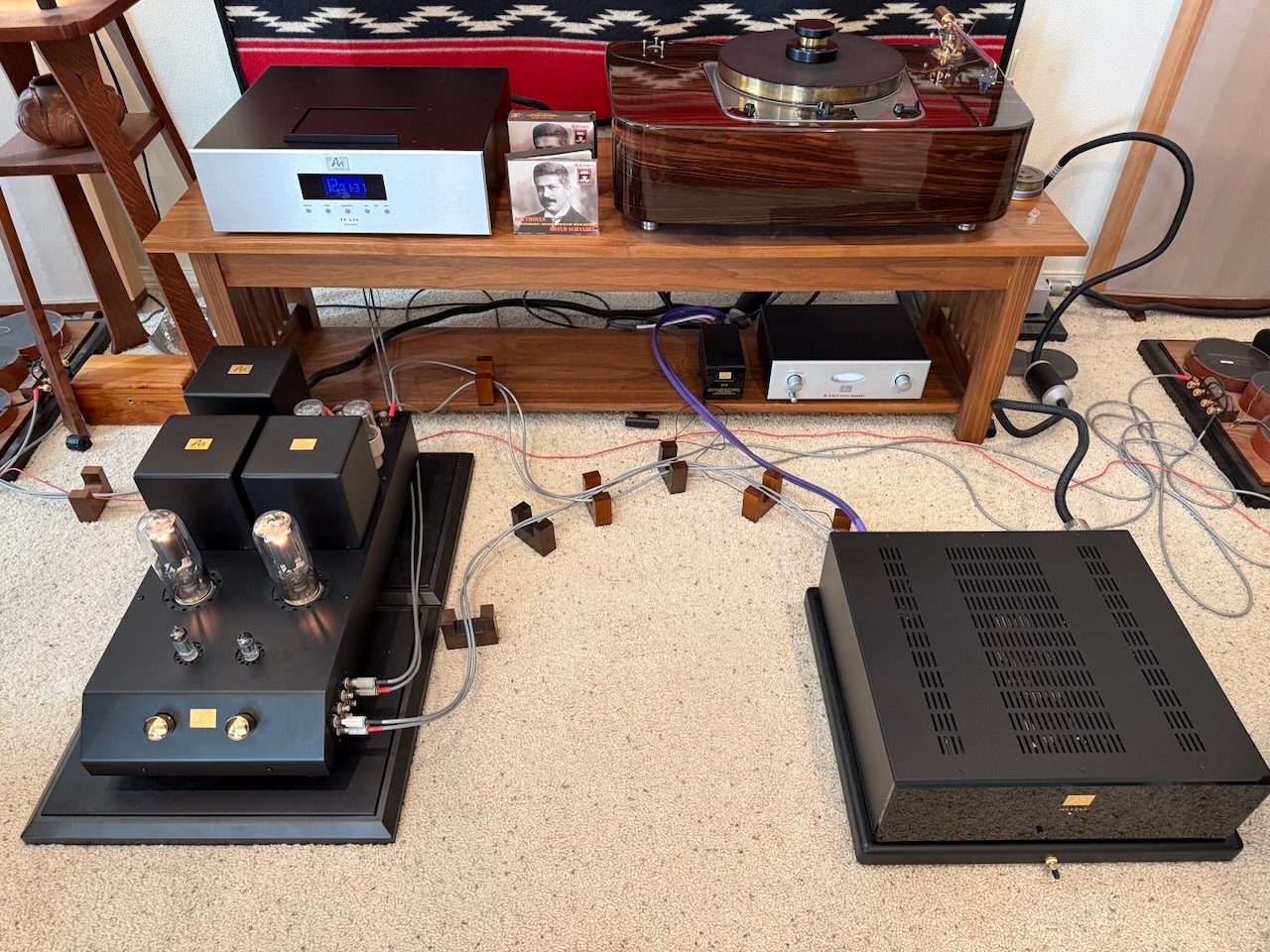
A friend, François, a symphony timpanist, asked me recently what my dream system would be. My response was that my dream system would be this very system with the Audio Note (UK) components. The performance level is so high I really am in awe. Awe.
As I was listening to the Analogue Productions 45rpm versions of Getz/Gilberto the other night, I was in a state of shock at how good the sound quality was, how utterly natural it was, how viscerally powerful it was, and how dramatically emotive it was. I've never ever heard anything this good before, and lust bumps were popping up all over my body at the performance level of this audio system.
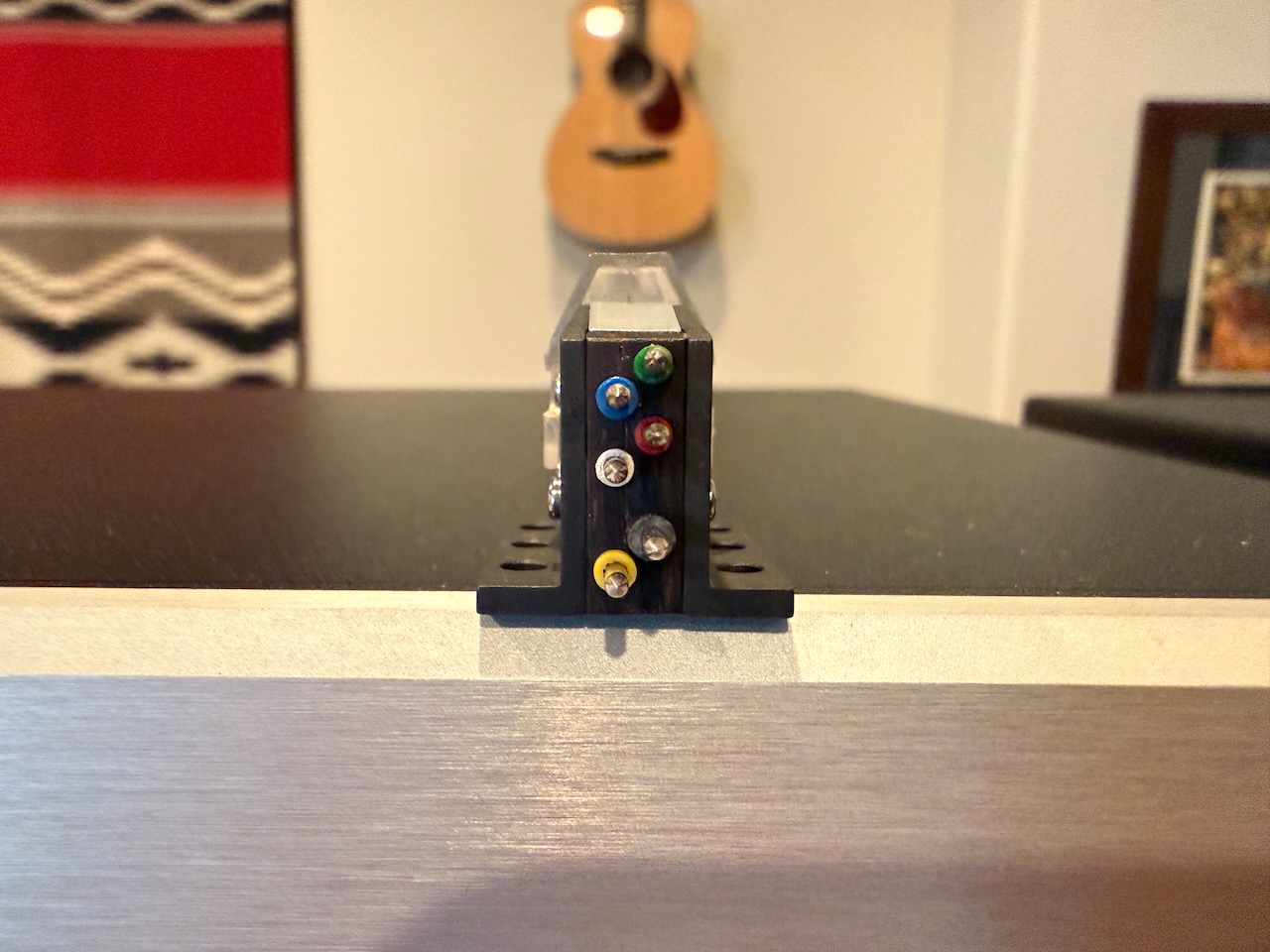
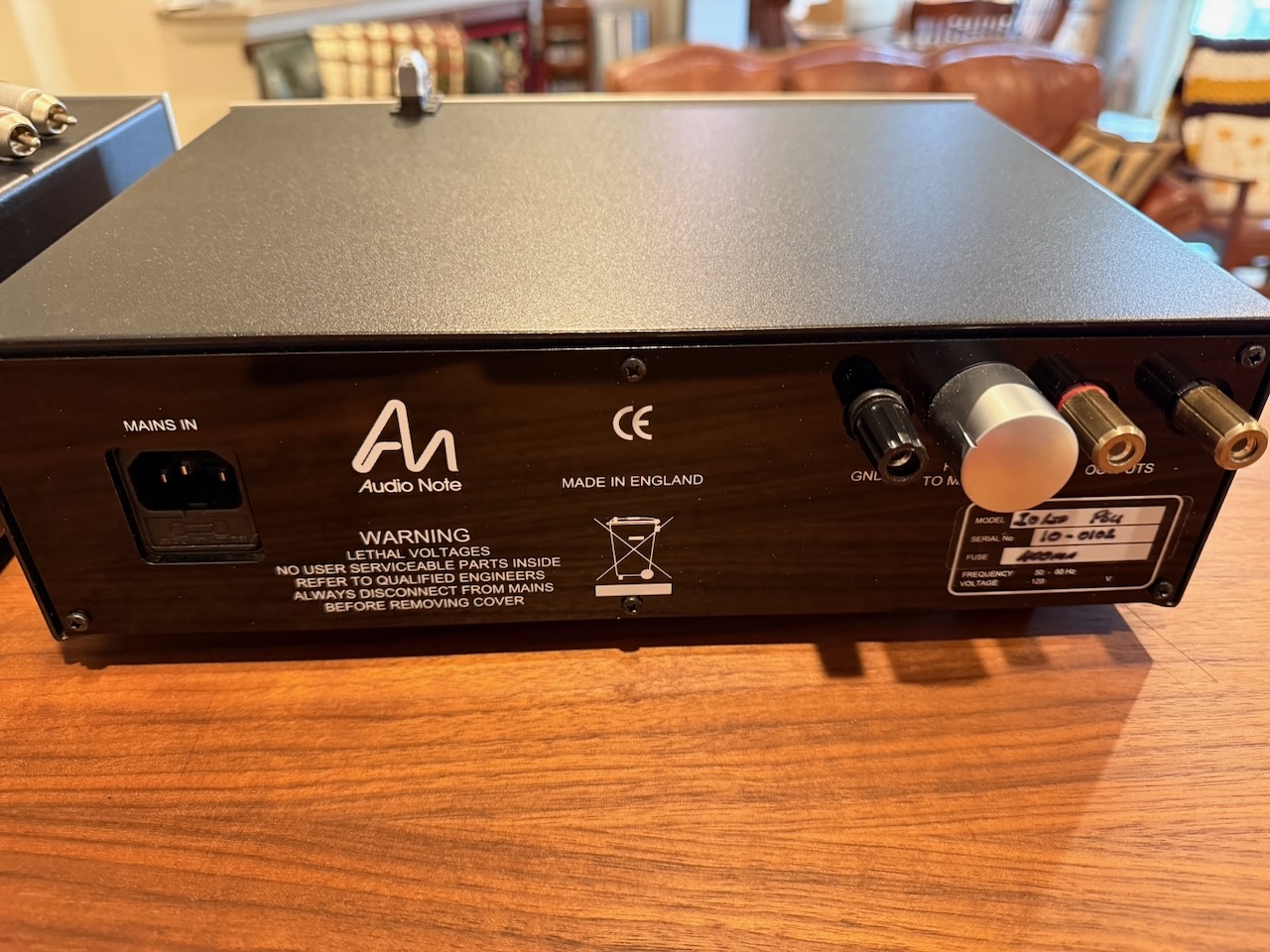
Have I mentioned that the IO Ltd. field-coil moving-coil phonograph cartridge has arrived? That's the back of it in the photo above.
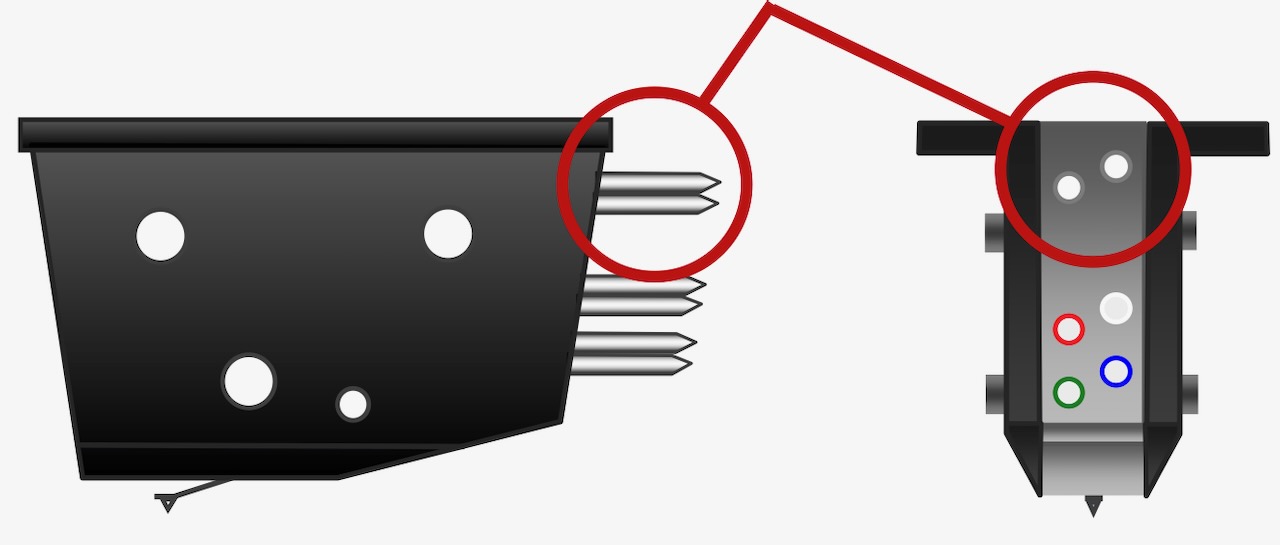
Notice the two extra connection points on the cartridge? That's where the leads from the field-coil power supply connects.
That's the power supply in the photo below.
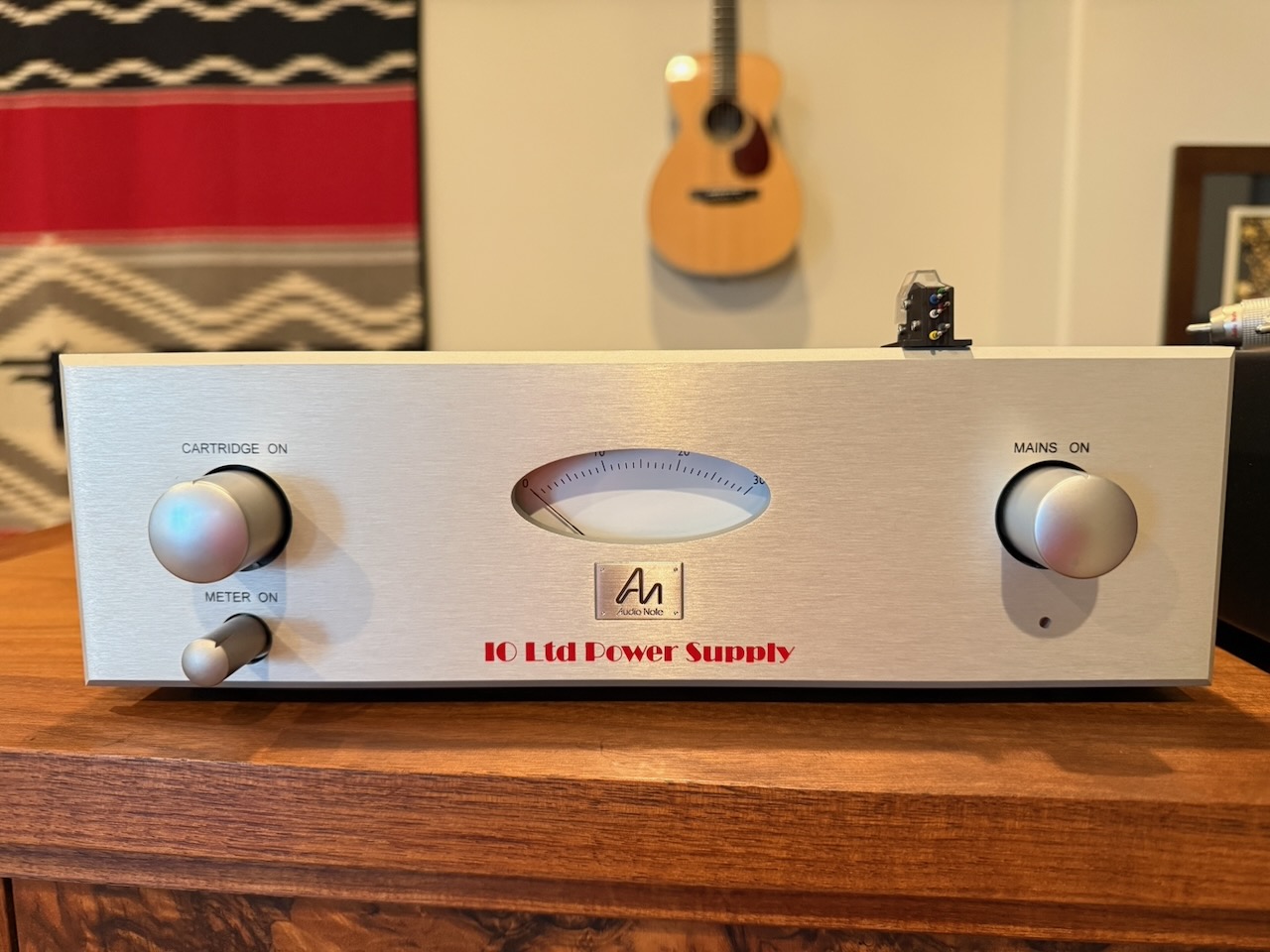
If you look at the photo below, you can see the two binding posts on the right where the cartridge's field-coil leads attach.
In reading the owner's manual, the process for adjusting the voltage is a bit intimidating, if you don't do it right - poof! - you just toasted the whole works.
Audio Note (UK) is building me the leads now that are the proper length for my Schick tonearm, and to reach the power supply where it will be in my equipment rack.
Soon as those arrive I'll get everything installed and setup to play some music.
Also, the IO Ltd. field-coil MC phono cartridge is to be paired with Audio Note (UK)'s top-of-the-line AN-S9 step-up transformer, which you can see in the photo below.
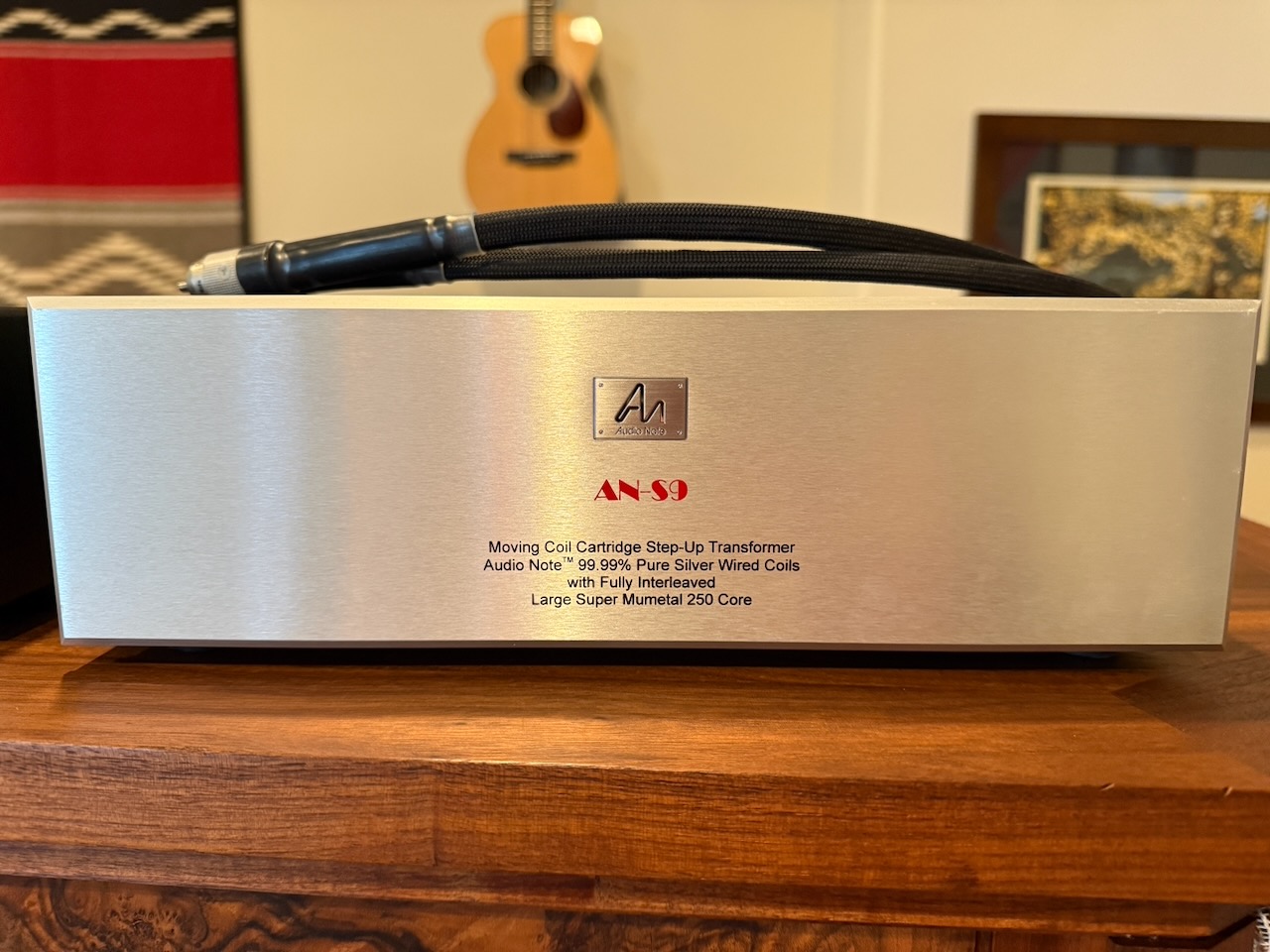
Audio Note (UK) says this about the custom silver transformers they build for the AN-S9 SUT:
"The internal transformers used in the AN-S9 are manufactured by Audio Note (UK) exclusively. They are the finest possible transformers available today, producing a level of information retrieval that is unsurpassed by any other such devices. They use our own interleaved Super Mumetal 250 cores, 99.99% pure silver wire and are housed in large Mumetal screening canisters to minimise noise and interference. The transformer cans are then secured inside the chassis with a solid copper clamp, offering the best possible support for these delicate devices."
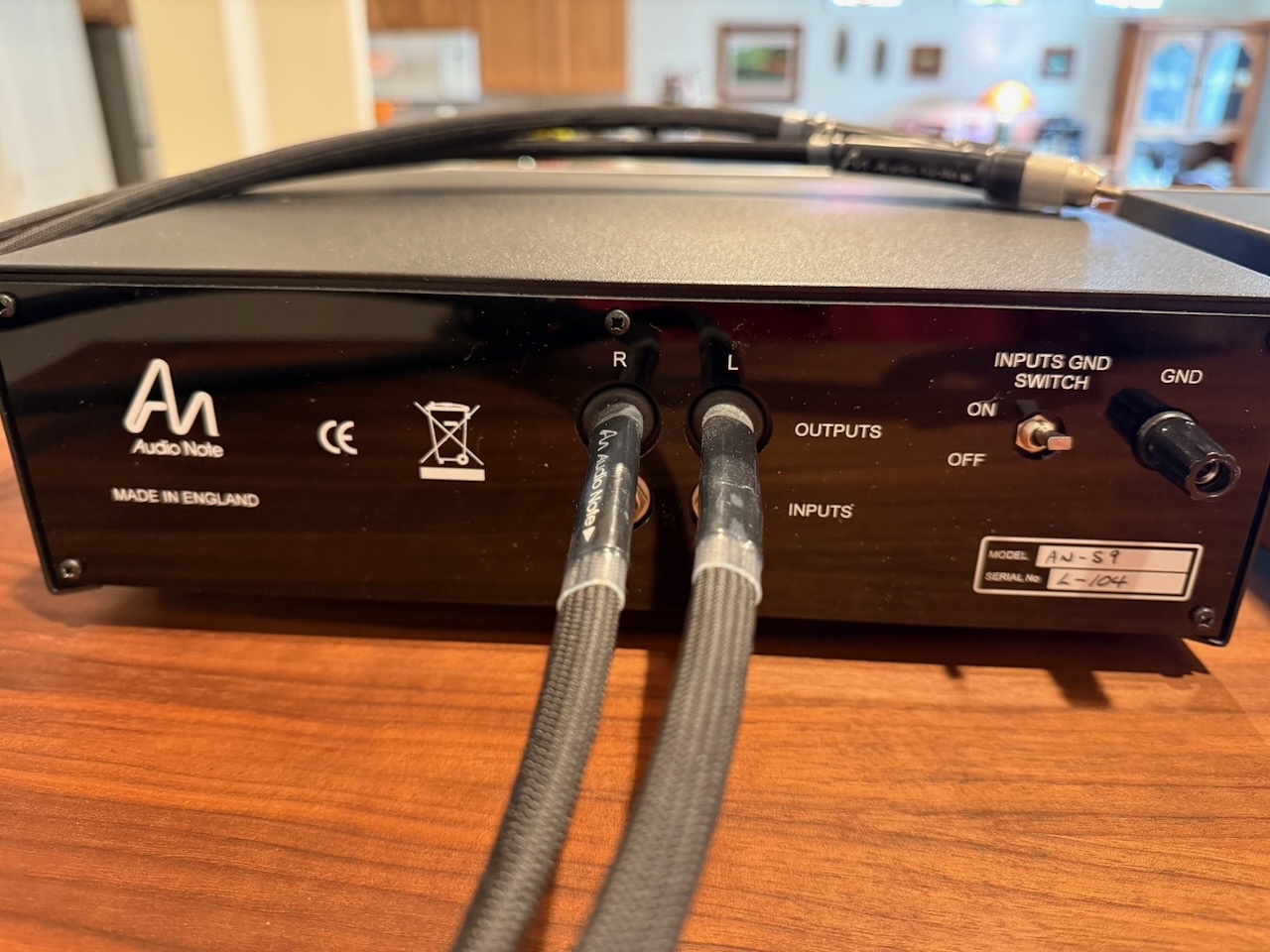
The output cables that go to the M8 RIAA phono stage are hard-wired to the AN-S9 SUT:
"Rather than installing the usual output RCA connectors, we decided to hard wire a pair of our PALLAS low capacitance cables directly to the outputs of the transformers."
Reports to me from the field tell me that impressions about the combination of the IO Ltd. field-coil MC phono cartridge and the AN-S9 have been nothing but superlatives, so I'm really looking forward to giving them a listen, and telling you about it.
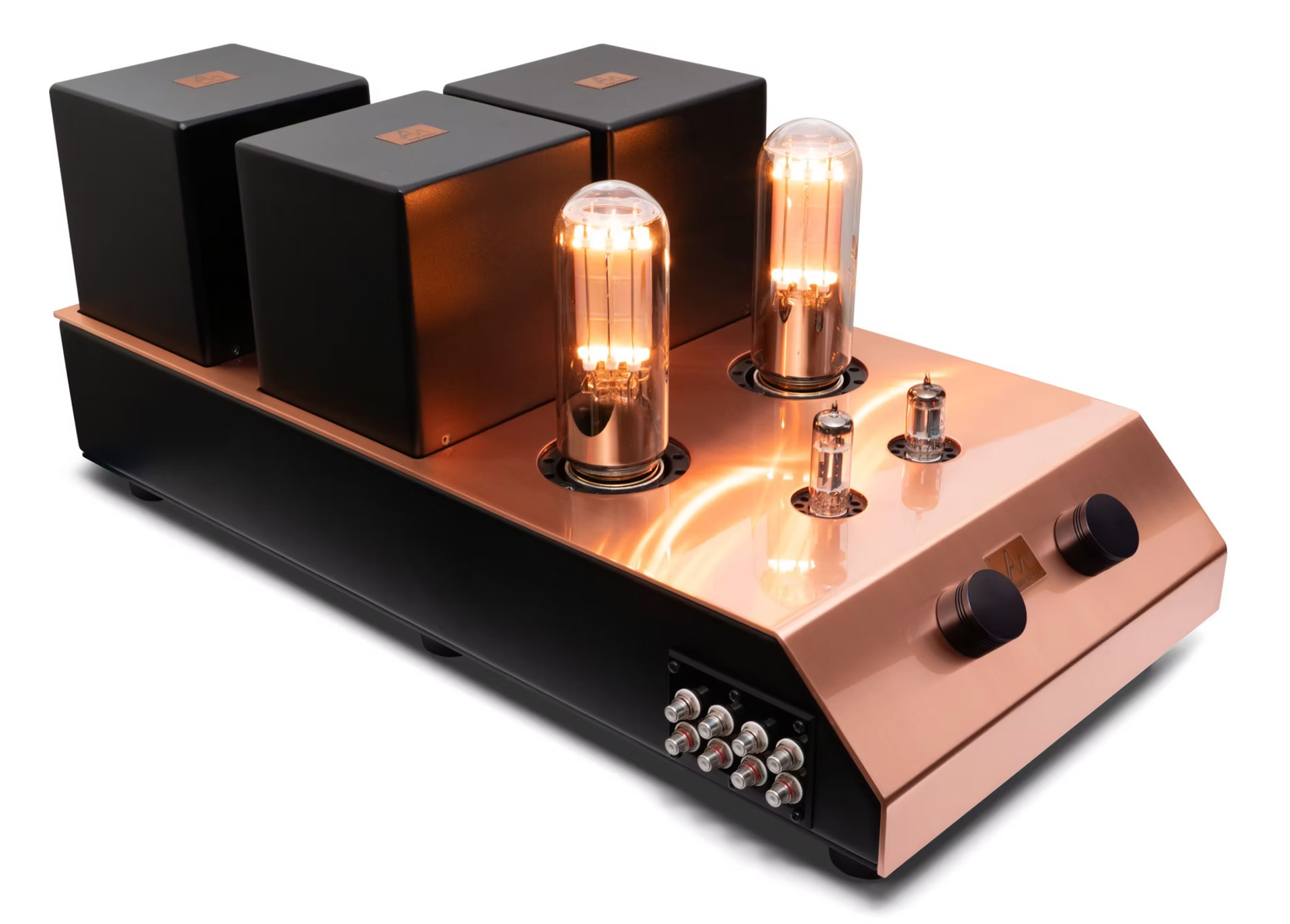
The Audio Note (UK) Ongaku 211 integrated amplifier is running a bit late, but should be here before too much longer.
Well, I may have to revise my "Dream System" after hearing these!
Duelund-Altec 832A Corona Loudspeakers Project
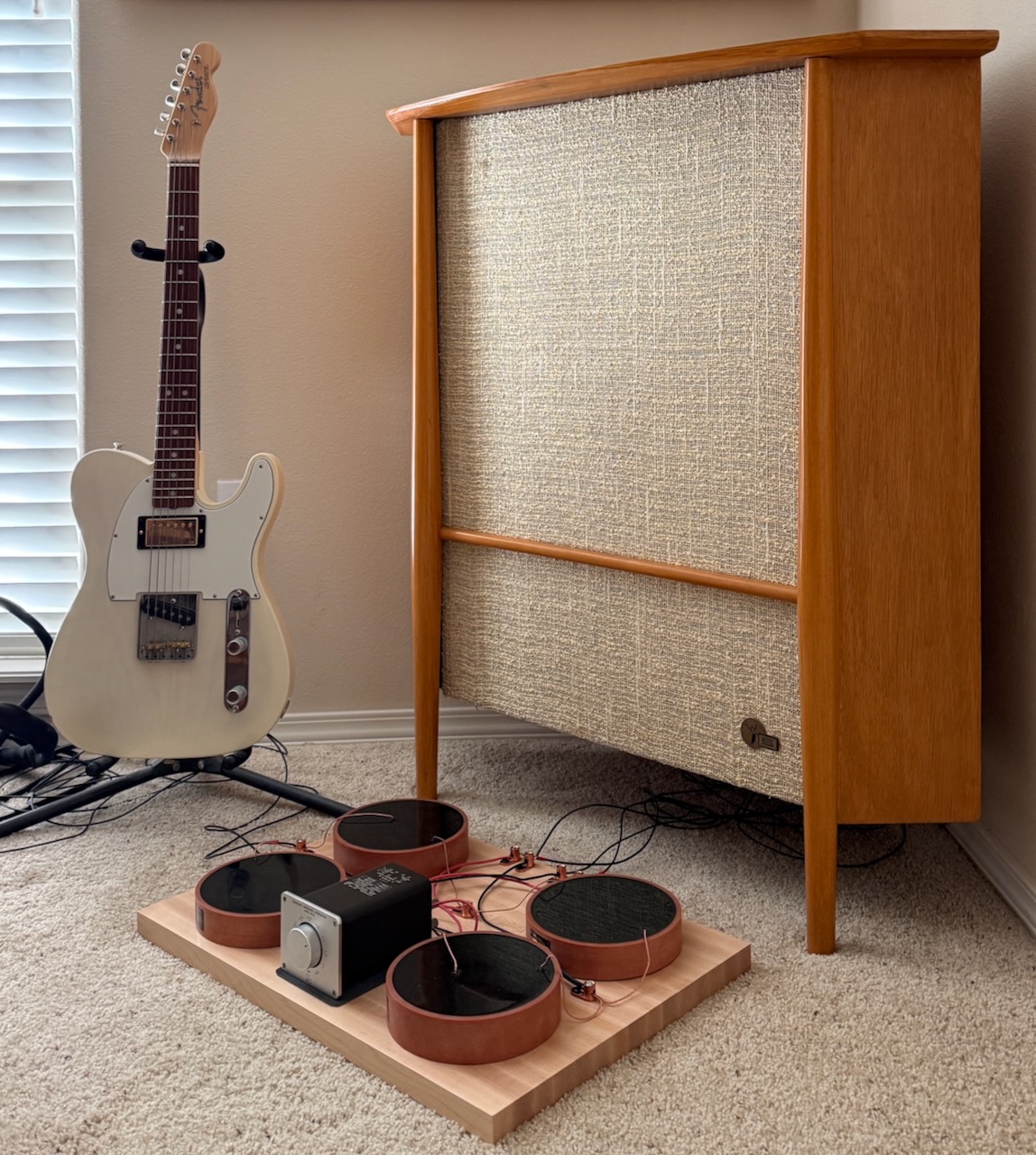
I have been having so much fun with my vintage Altec Corona 832A loudspeakers. These mid-1950s California Modernist loudspeakers push all my musical buttons in ways that really thrill me.
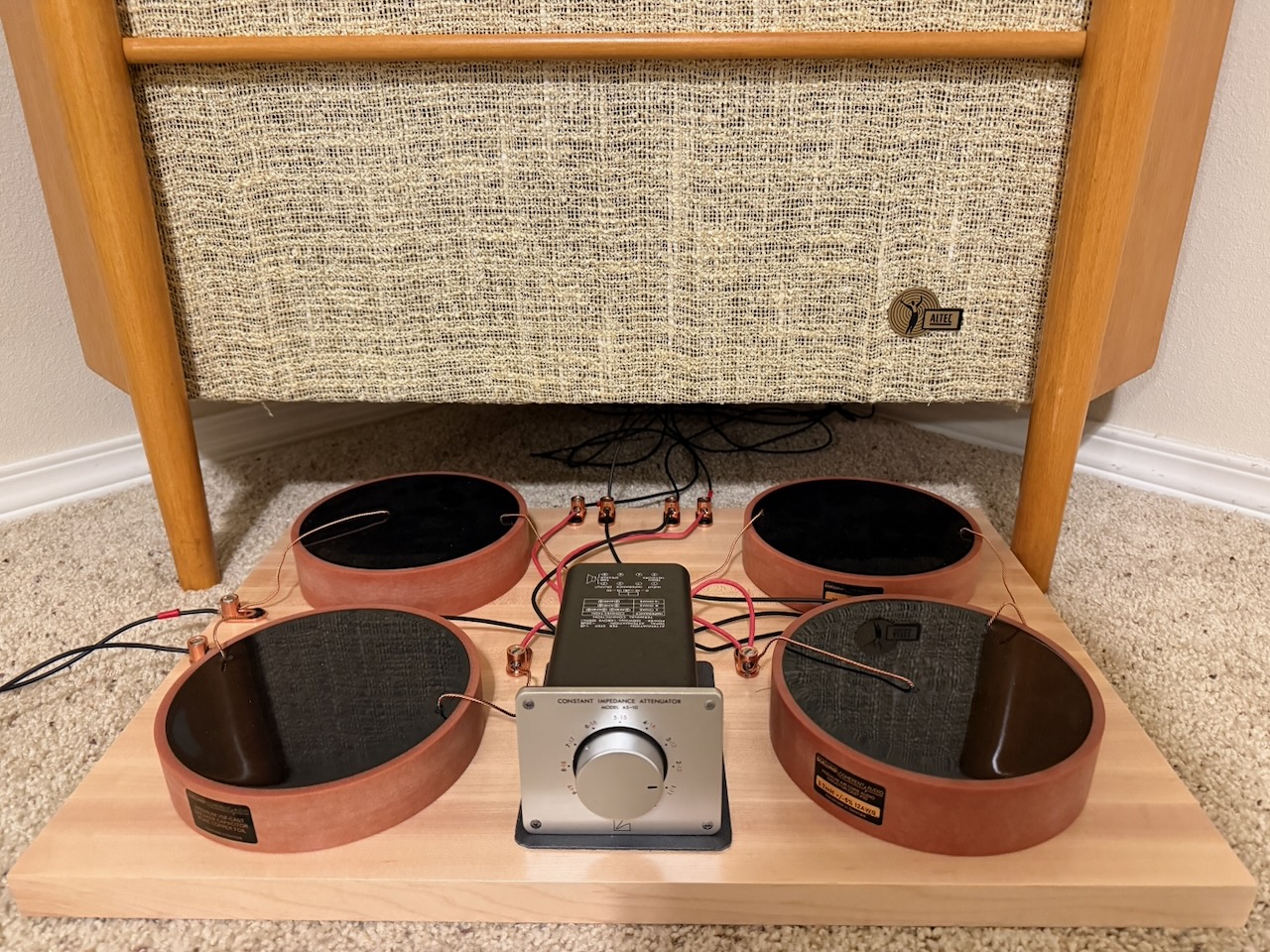
The crossovers are the result of Frederik Carøe's (Duelund Coherent Audio) and my collaboration on building custom Duelund CAST copper crossovers for my beautiful vintage Altec Corona 832A loudspeakers, which you can read all the details about in The Duelund-Corona 832A Project - Serendipity to Ecstasy! at Positive Feedback.
The resulting innovative Duelund CAST crossover performs at such a lofty level that I am just thrilled with the outcome.
I was so enamored with the heavenly performance of my Corona 832A loudspeakers that I purchased a Herman Miller Eames lounge chair for enjoying laid-back evening listening sessions.
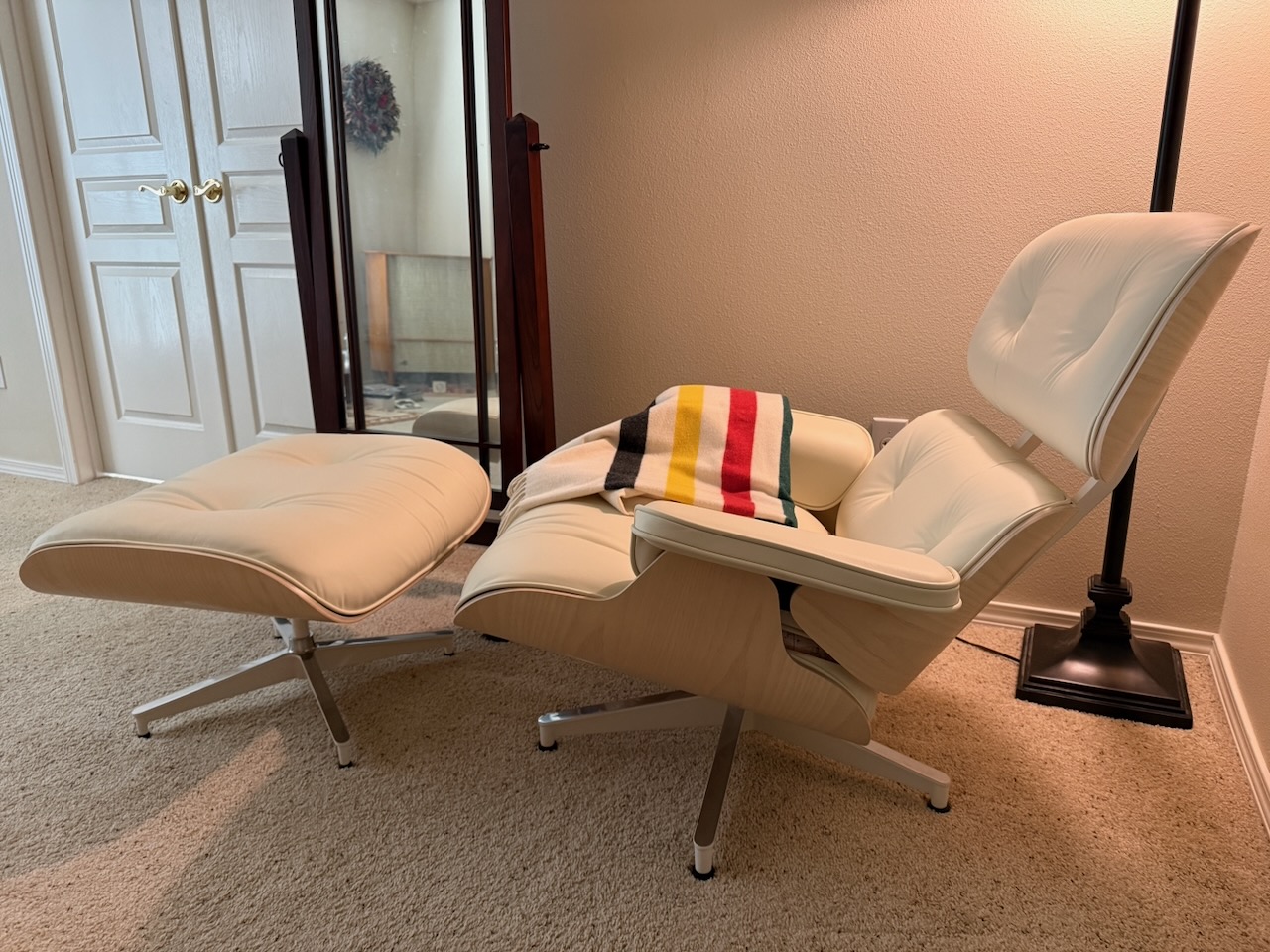
If you remember, one of the cool aspects of the Corona 832A loudspeakers is that they had custom cabinets built for them by the furniture craftsmen at Glenn of California, in the California Modernist style, that was popular in the architecture and furniture design movements of the 1940s and 1950s.
The Eames Lounge Chair and Ottoman were introduced in 1956 by Herman Miller, about the same time as my Altec Corona 832A loudspeakers were built, so they were contemporaries way back when. So the Eames Lounge Chair and Ottoman are a period correct listening chair addition. The Eames Lounge Chair and Ottoman were designed by Charles and Ray Eames, now have iconic design status, and are part of the permanent collection of New York's Museum of Modern Art. Cool eh? Yes, and very comfy too!
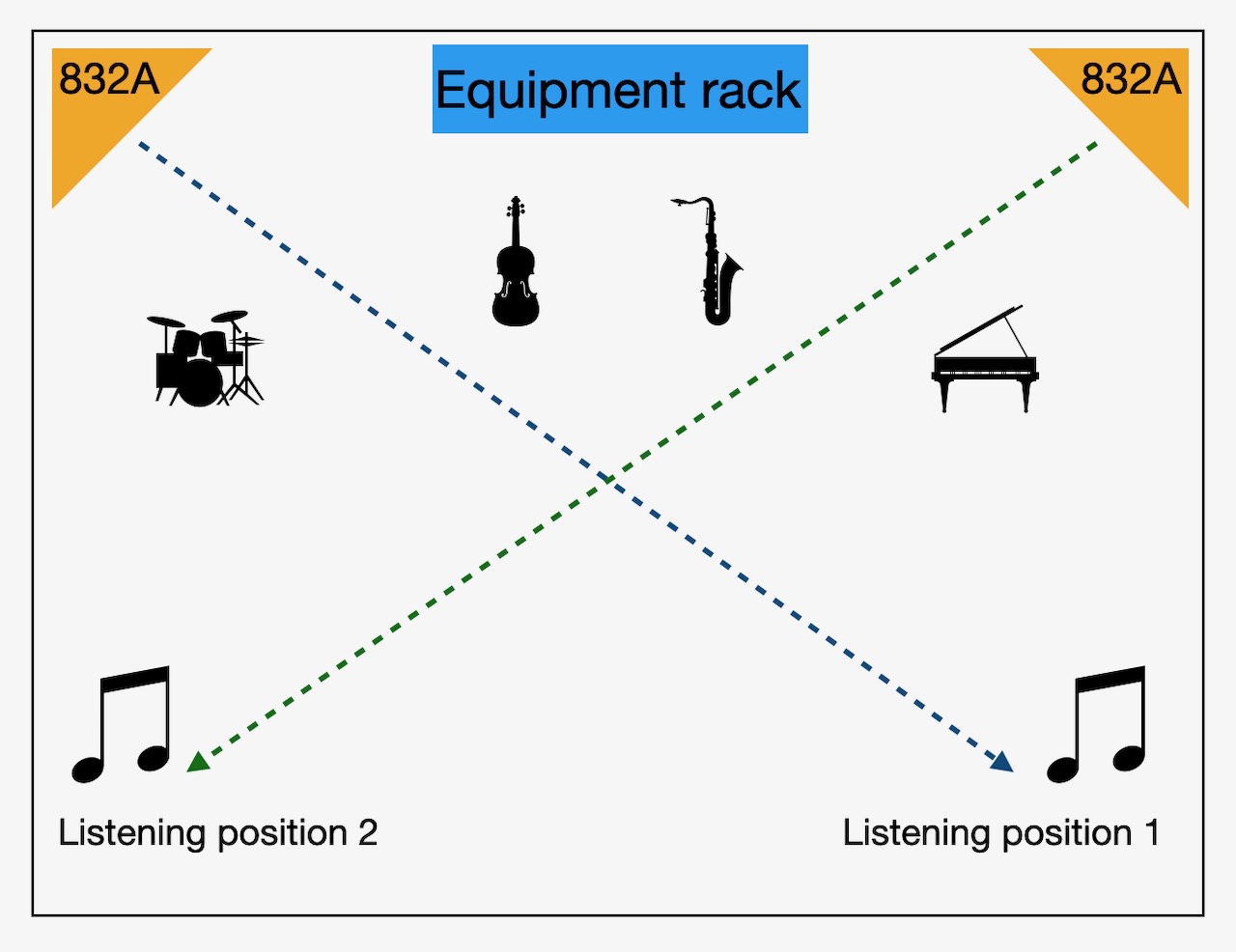
In the diagram above the Eames Lounge Chair and Ottoman are in listening position 1, so when I am listening to music I am directly facing the left loudspeaker, and the right loudspeaker is off to my right.
Now, as I've mentioned before, the Altec Corona 832A loudspeakers were some of the first loudspeakers in audio history that were designed specifically for room boundary placement (i.e. in room corners).
One of the things that is amazing me about this listening setup - a new exciting discovery for me - is that with the Corona 832As in room corners, they provide a wall-to-wall soundstage between the loudspeakers, and project the soundstage plus images out into the room a good six or seven feet.
Before this Duelund-Altec adventure, I didn't realize one could get that kind of soundstage performance from a room boundary positioning of loudspeakers, so that aspect really impressed me.
The loudspeakers have to be designed for room boundary positioning to work like this, of course, and I have to sit as indicated in the diagram, but wow, what an outcome. I'm not sure if it is the nature of my room, or the Coronas' high-frequency horns, or the Duelund CAST crossovers, but the result is addictive with its life-size soundstage that fills the room.
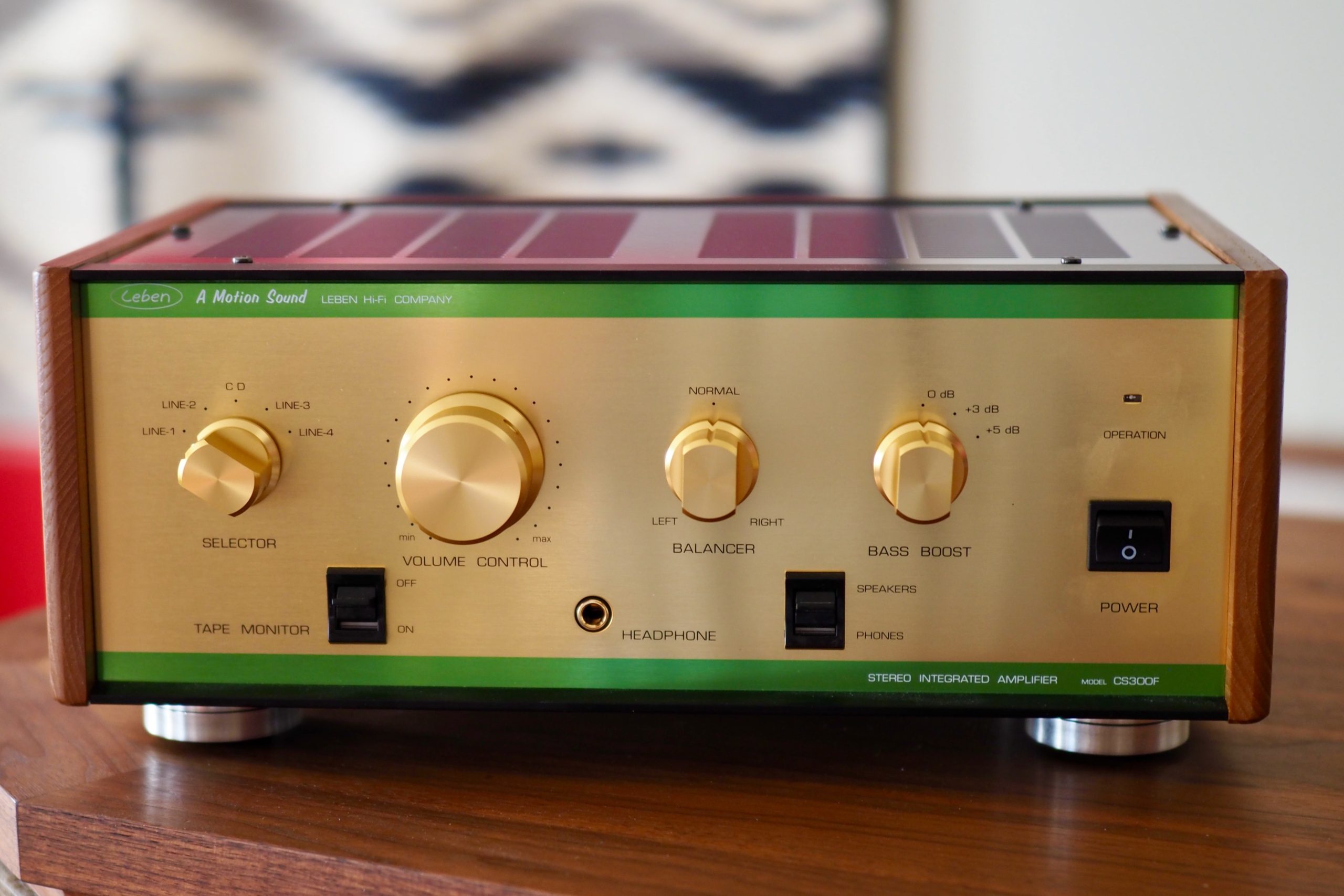
I've been powering the Coronas with a beautiful little Leben CS300F vacuum tube integrated amplifier, which is a really nice match for them.
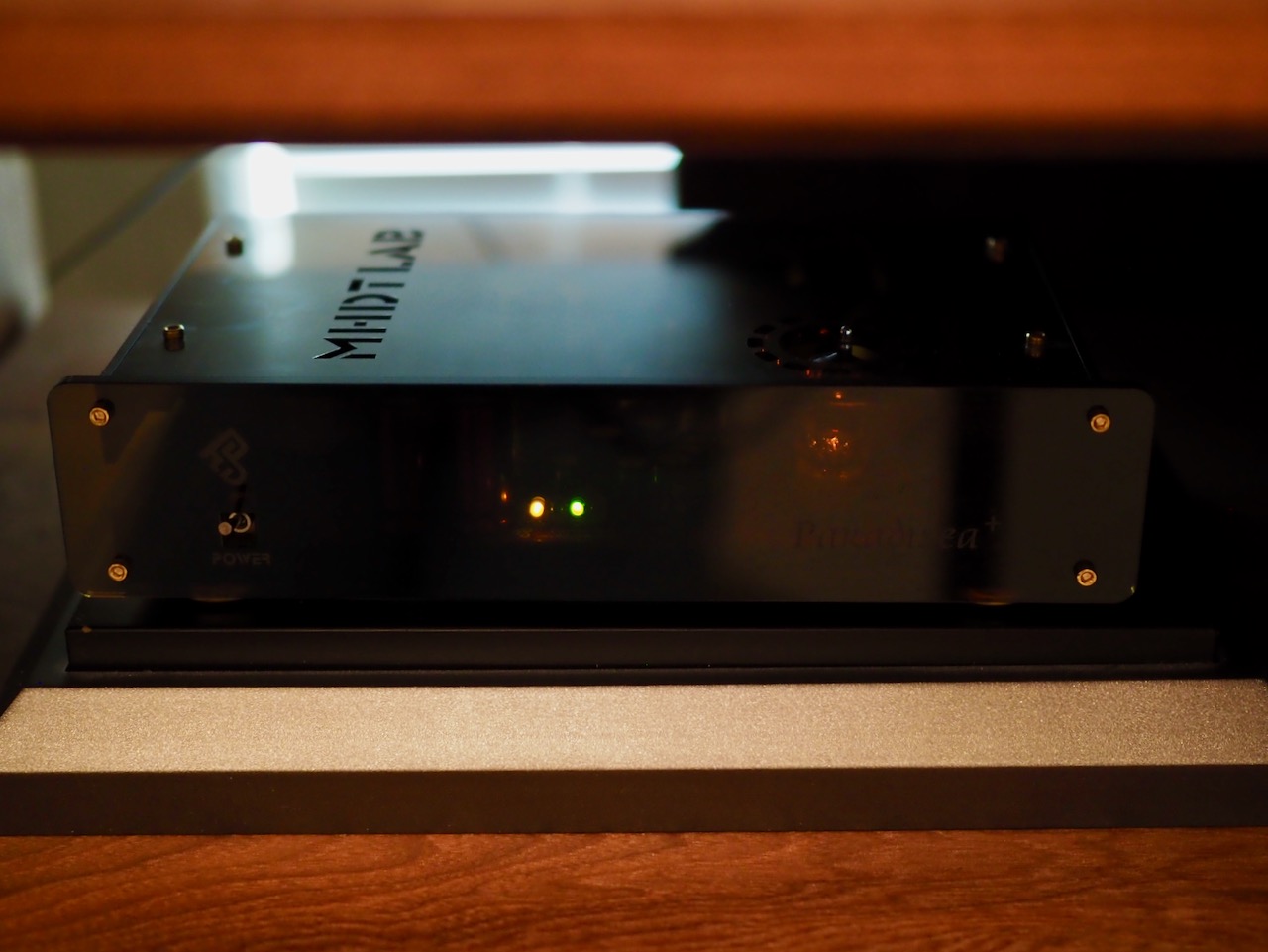
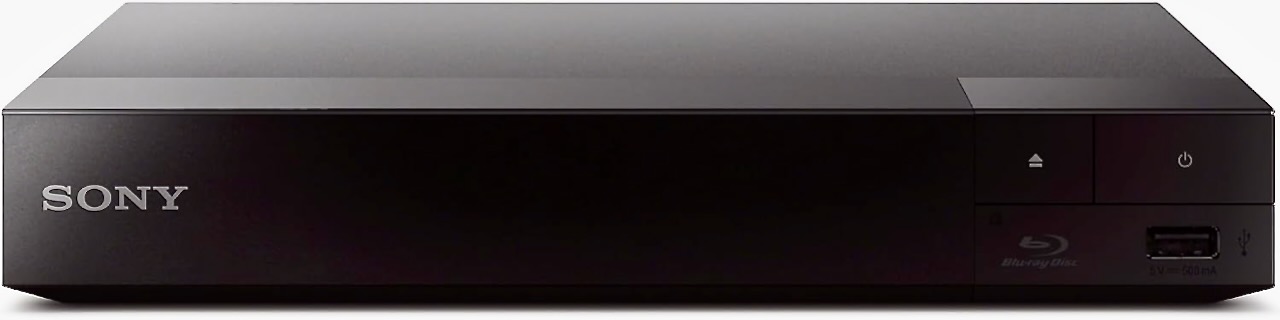
I'm using an inexpensive Sony Blu-ray player as a transport to feed a vacuum tube Mhdt Lab Paradisea+ DAC, and this combo punches way above its modest weight.
I recently replaced the Belden 8402 microphone cable interconnects I was using to connect the Paradisea+ to the Leben CS300F, with Duelund Dual DCA16GA interconnects, and that really made everything sound just right: transparent, rich, beautifully emotive, and timbrally natural.
I'm using the Duelund DCA16GA as speaker cables too, the crossover is wired with DCA16GA, and now with the Duelund Dual DCA16GA interconnects the music is totally immersive and incredibly beautiful.
All four of my audio systems are performing at such a high level I have to pinch myself to make sure I'm not dreaming, as that isn't something that happens all the time.

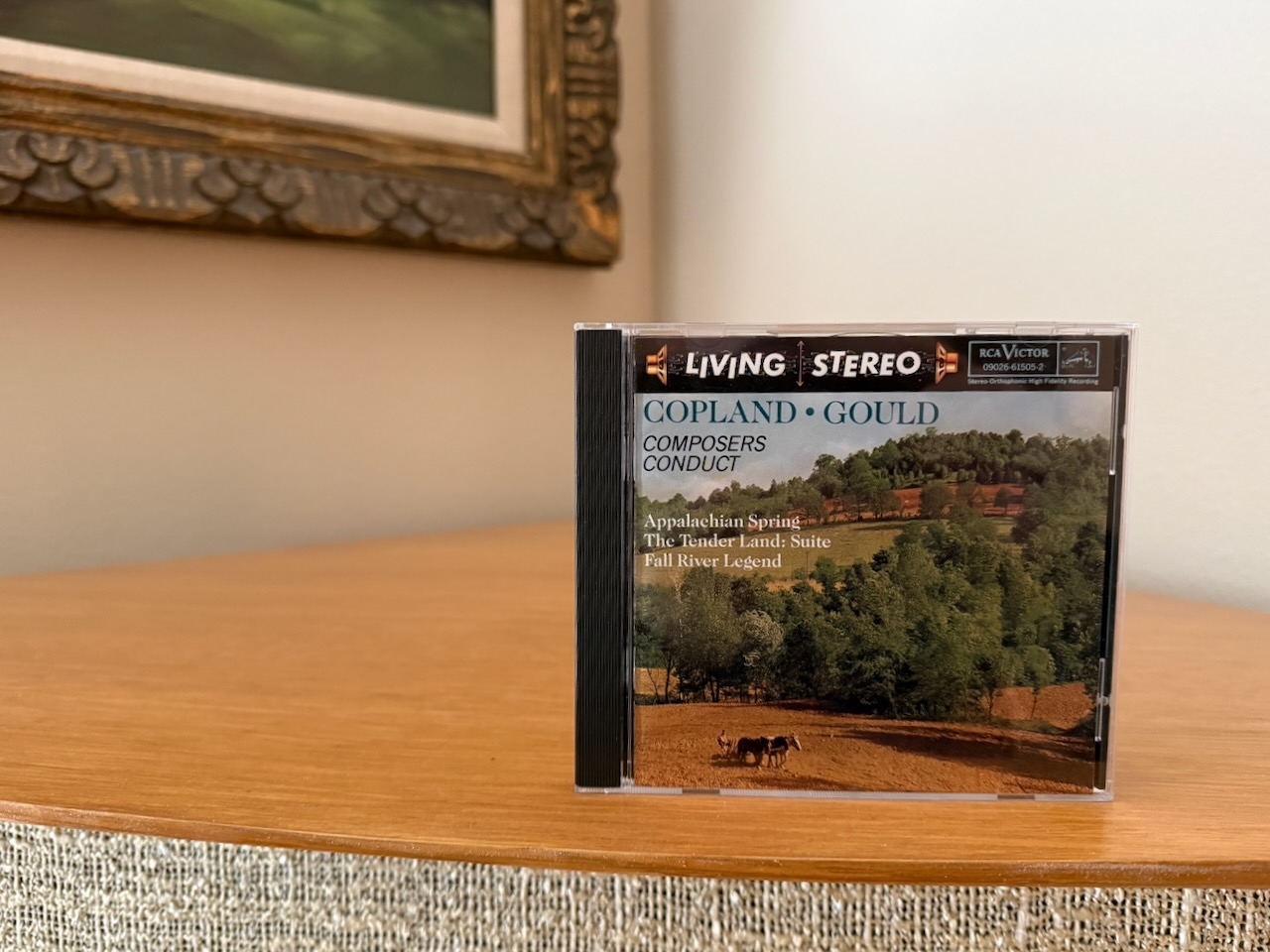
François told me that he just played in a concert of Copland's Appalachian Spring suite, so I was inspired to get out my RCA Living Stereo CD of Appalachian Spring and give it a listen.
It's really an incredible performance, and it highlighted to me that I need to get the complete collection of these RCA Living Stereo CDs.
Ok, that's the going ons of late. I actually have quite a bit more to tell you about, but that's all the time I have this morning for writing.
As always, thanks for stopping by, and may the tone be with you!