Greetings friends, I hope you are well!
I spent a couple of hours this morning replacing a Lorlin-UK selector switch in my Triode Lab 45 EVO SET integrated amp that had failed. It happens.
Upside: It gave me a chance to work on my soldering skills, which haven't been getting much of a workout lately.
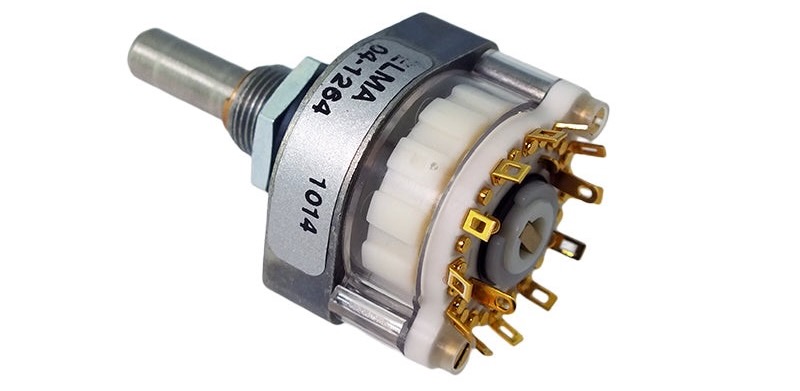
Also, I put in a better switch that Frankie at Triode Lab recommended to me, a Swiss-made Elma with gold-plated copper contacts, that I bought from Parts Connexion in Canada.
They're good people, and for those in the USA, know that they are absorbing the costs of Mr. T's tariffs. They've also got a 25% Holiday sale going on now, so if you need something, now's the time.

I get a bit of ribbing from some of my audio pals for putting my gigantic vintage custom Altecs, made for Conductor Leopold Stokowski way back when, in my rather small office.
They're placed in the room boundary positions (i.e. corners), and I've got my equipment cabinet squeezed in between them.
Those choices of gigantic speakers positioned in room corners of a small room with an equipment cabinet between them - gasp! - are sins of the highest order against audiophile orthodoxy. "It can't work!" I'm told.
That's partly true, as the truth is you can't take just any pair of loudspeakers and put them in room corners and expect them to work well, they need to be designed for that positioning.
One of the cool things about vintage Altec loudspeakers is because of their pro sound reenforcement background, they had adjustable crossovers so you could set the high-frequency output to match the low-frequency output to balance them in nearly any size of room, or any loudspeaker positioning in the room, to get excellent sounding results.
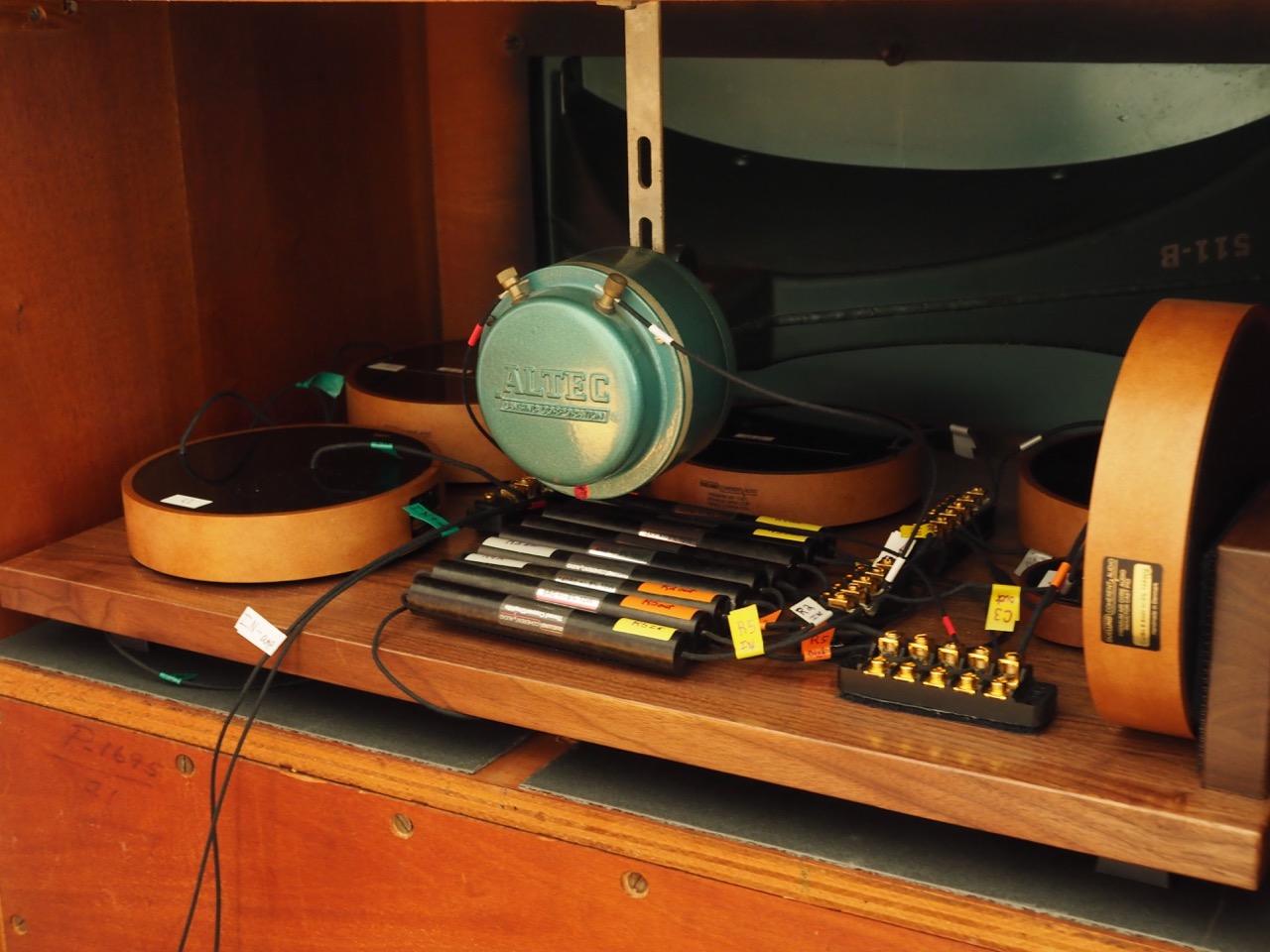
However, when Frederik and I did the Duelund-Altec "Dare to Dream" Project with his newly developed line of incredible CAST tinned-copper crossover components, I decided to skip the adjustability feature for the high-frequency resistor circuits in the Hiraga-style crossovers we built.
But now I wanted that adjustability back, so I had to remove a couple of strategic Duelund "Jeffistors" in the high-frequency resistor circuit to get more high-frequency output, and for output adjustability I installed a pair of vintage Luxman AS-10 transformer-based constant impedance attenuators.
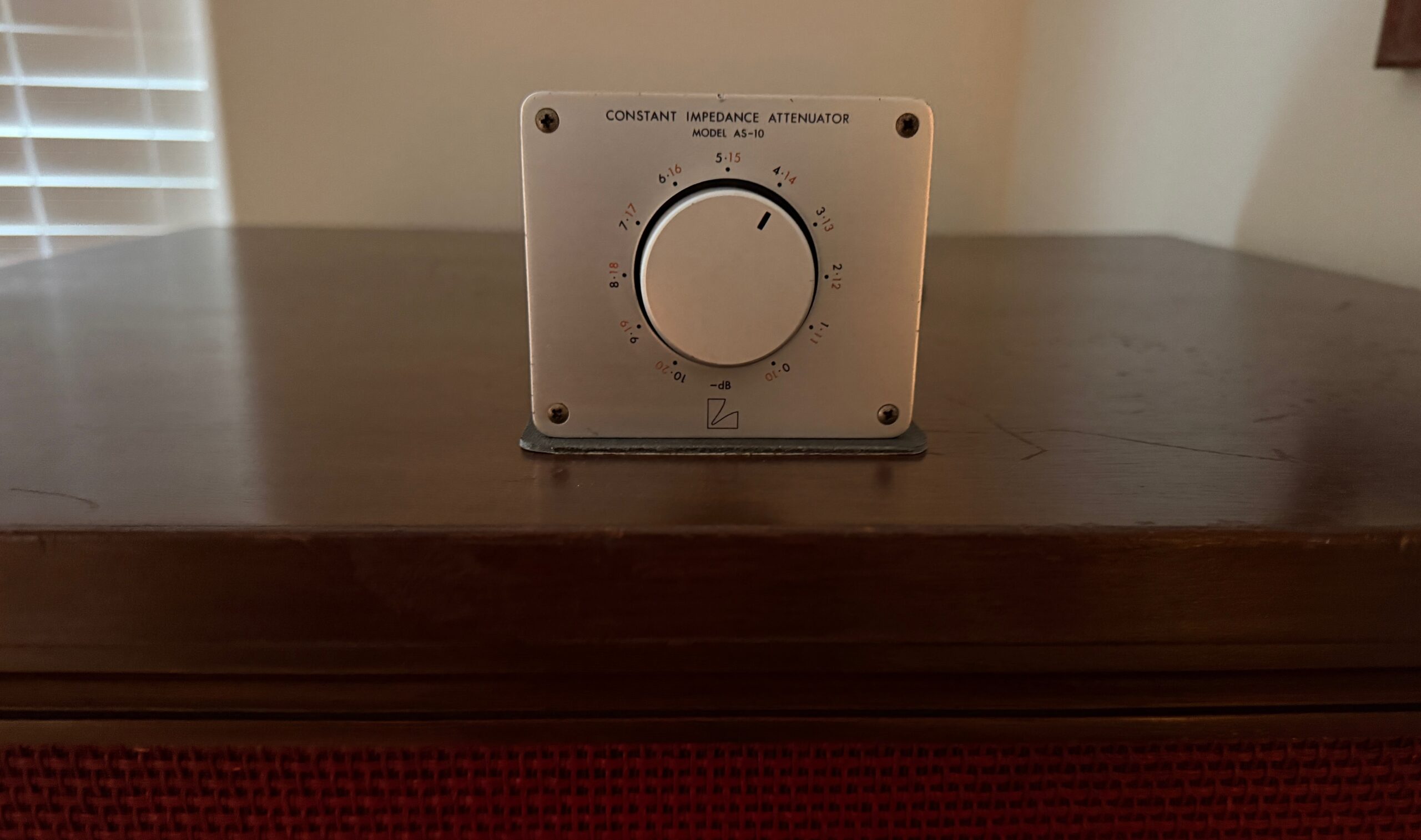
Yazaki-san told me about the vintage Luxmans, as he was using a pair for attenuation in his loudspeakers. They were sold mostly in Japan and are hard to come by these days, but they are magic attenuators if you desire adjustable crossovers.
The advantage of the Luxman AS-10 transformer-based constant impedance attenuators is that they not only allow for adjustability, but they reduce or eliminate the sound quality degradation in the high-frequencies caused by resistors or L-pads, depending on the nature of the crossover's high-frequency circuit.
Sometimes one can completely eliminate the crossovers high-frequency resistor circuits and replace them with the Luxman AS-10s, which gives an astonishing improvement in the amount of musical information that is passed through, as in the Duelund CAST copper crossovers for my Altec Corona 832A loudspeakers (shown below).
As with my Stokowski Altecs, I was able to remove a couple of resistors - but not all - from the crossovers high-frequency circuits, add in the Luxmans AS-10s, and get a meaningful improvement in musical information coming through. And of course the benefit of adjustability.
Using the Luxmans is essentially the same principle as using a step-up transformer with a moving-coil cartridge, but in reverse. The tiny output of a moving-coil cartridge is stepped-up through the transformer in a very transparent way, preserving all the nuance in that tiny signal on its way to your phono preamplifier.
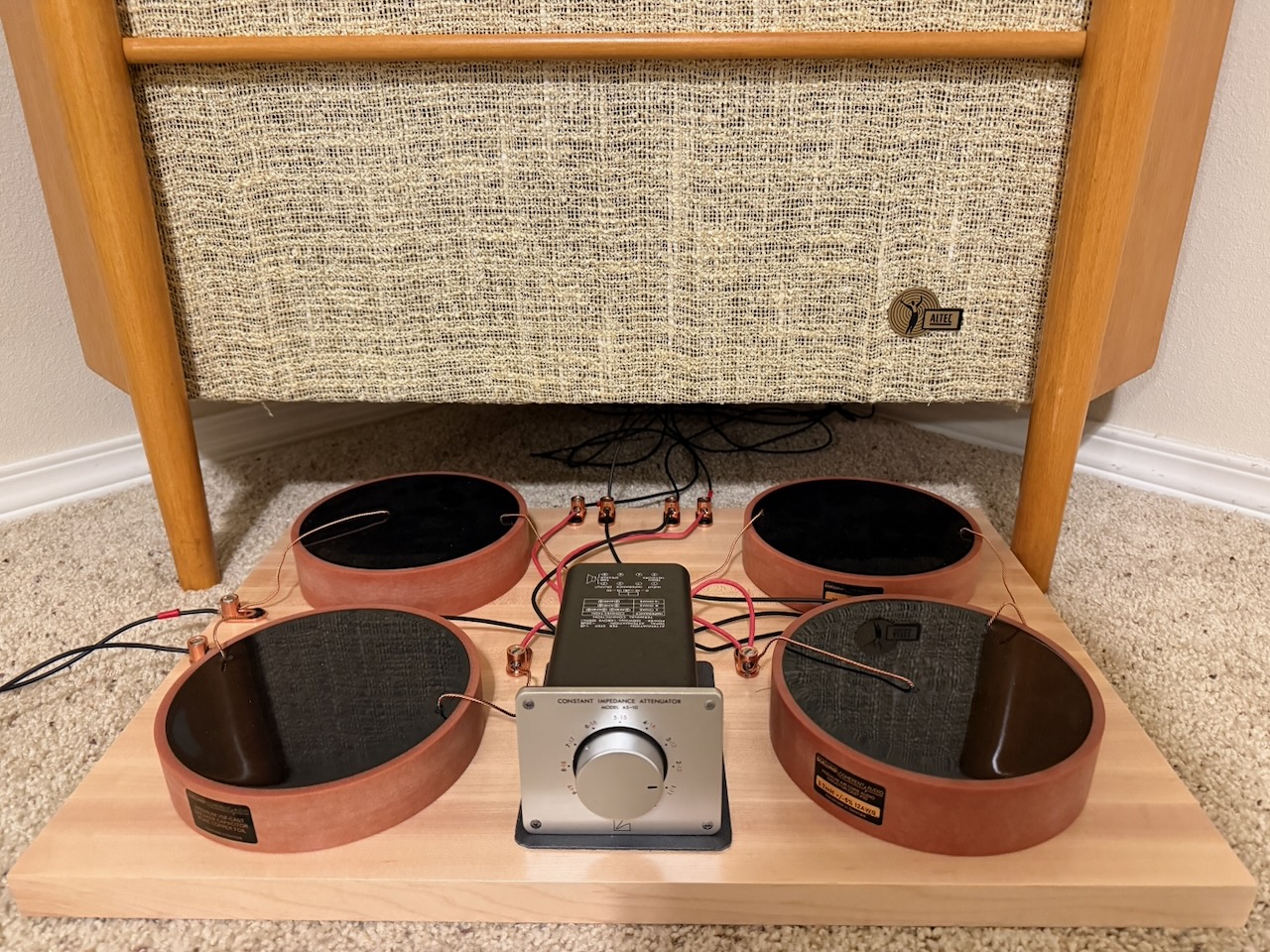
In the same sort of way, using transformers to attenuate high-frequency output, all the nuance is preserved. The transformers have much less impact on sound quality than an L-pad, or discreet resistors, and as I found in the Duelund-Corona 832A Project that Frederik and I did recently, the additional amount of musical information coming through dramatically improved the sound quality over the L-pads I had tried. I was astounded by the improvement.
I was so impressed with the results I bought a second pair of Luxman AS-10 transformer-based constant impedance attenuators to use with the Duelund CAST tinned-copper crossovers of my Stokowski Altecs.
The Luxmans allow me to balance the high-frequency output to match the low-frequency output in 1 dB steps, and that's the key to getting the big Altecs dialed in perfectly in the room corners of my small room.
There's an additional benefit too: recordings can vary all over the place in the way they were mastered. Sometimes they sound too forward or brash, sometimes withdrawn and kind of dull. With the Luxmans adjusting the high-frequency attenuation by a dB or so you can be your own mastering engineer and dial in those errant albums to perfection.

Given the small room, my listening position is relatively near-field, about 8.5 feet from the front plane of the loudspeakers, which gives a very impressive level of musical involvement. Near-field listening is the bonus you get with small rooms.
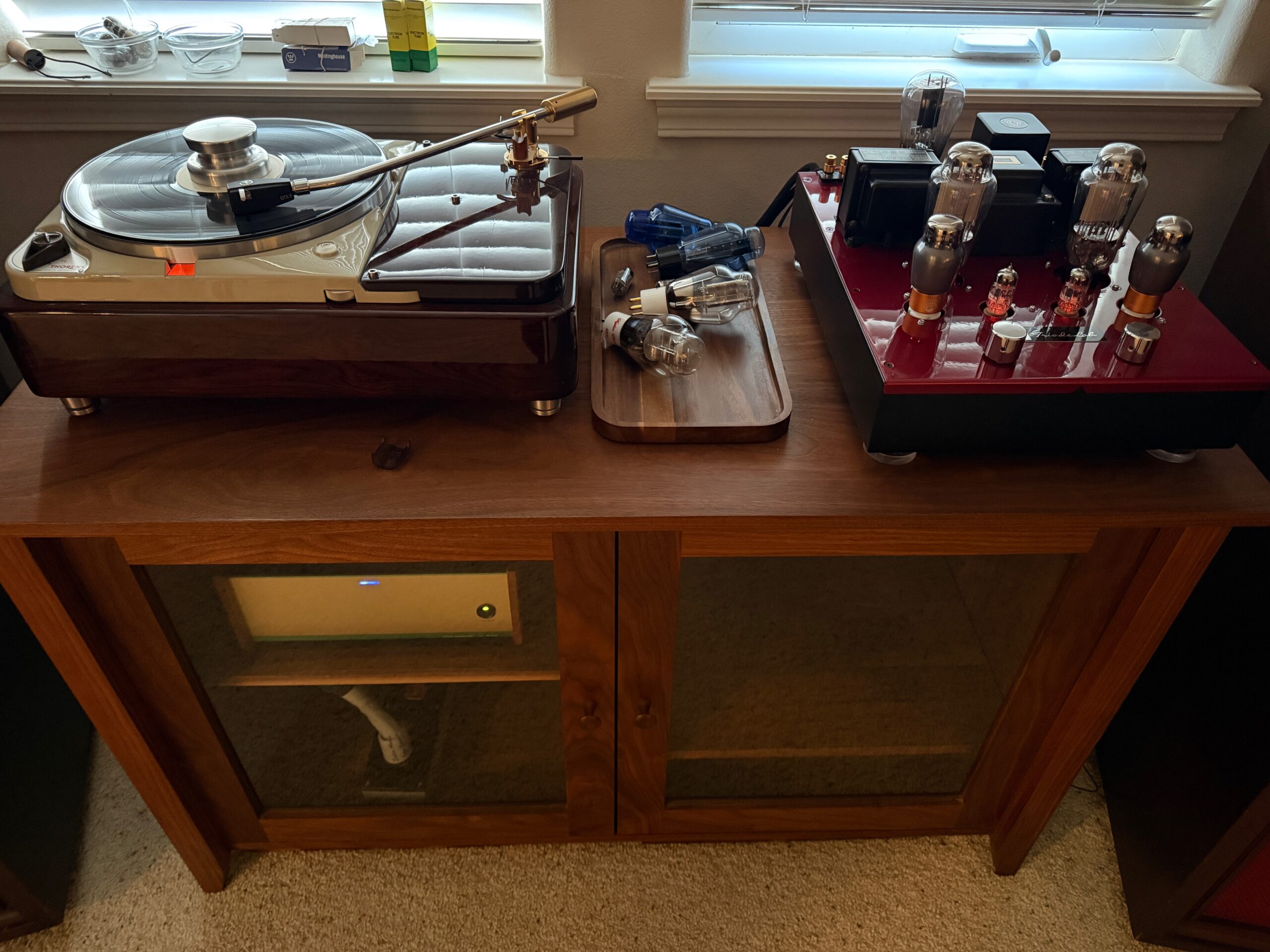
I'm using my Artisan Fidelity restored Thorens TD-124 turntable, with a Schick tonearm and an Ortofon SPU GTX S moving-coil phonograph cartridge, for the source.
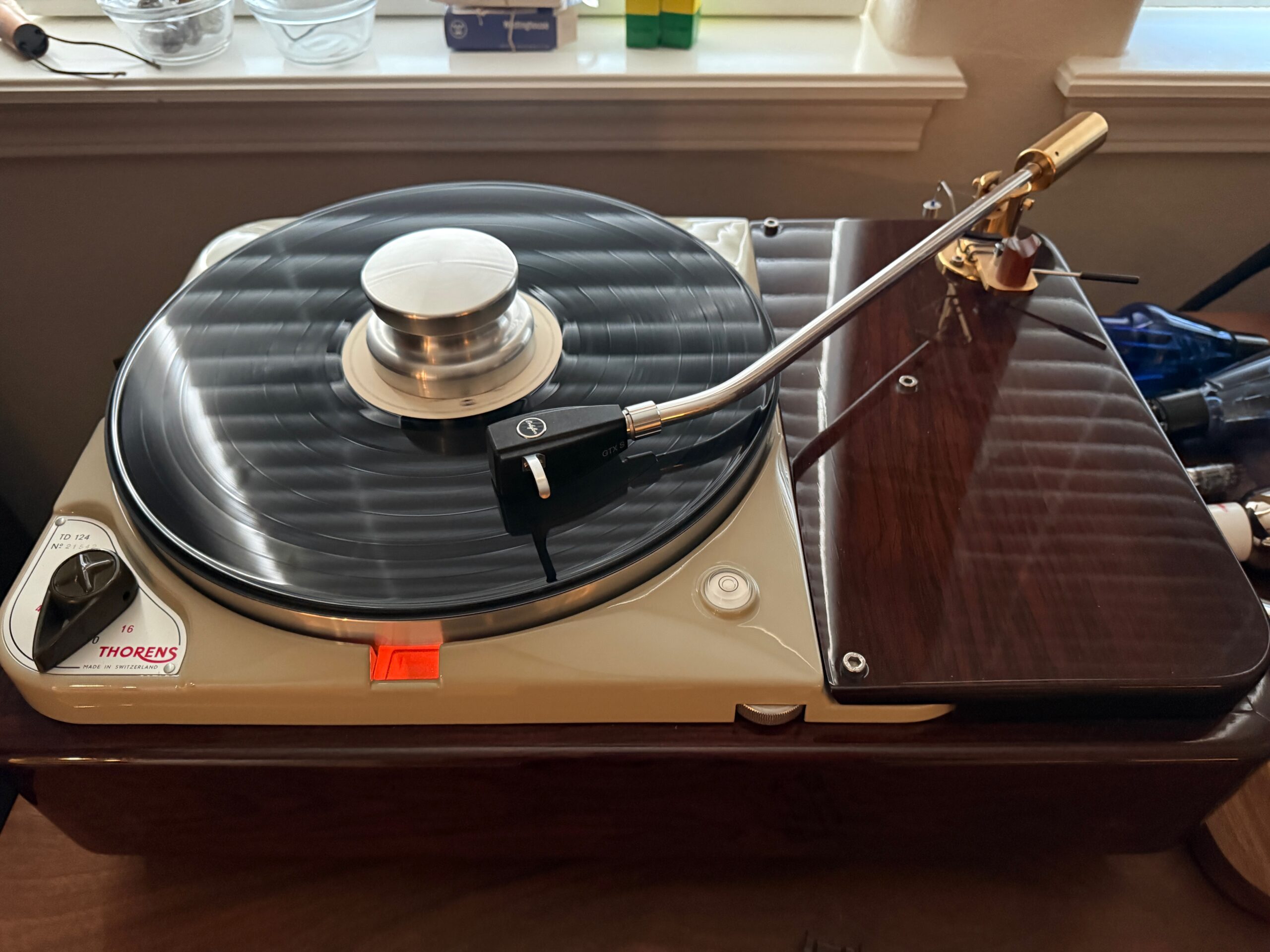
The Ortofon SPU GTX S moving-coil phonograph cartridge has a micro-SUT built into its shell so you don't need an outboard SUT. I absolutely adore this cartridge, and I bought the review sample after I reviewed it. The SPU GTX S is a bargain for its affordable price. Review HERE.
The Schick tonearm leads go straight into my Leben RS-30EQ phono equalizer, and from there to the Triode Lab 45 EVO SET integrated amplifier via a pair of Acoustic Revive RCA Absolute FM interconnects. The speaker cables from the 45 EVO to the Altecs are Duelund DCA16GA tinned-copper.
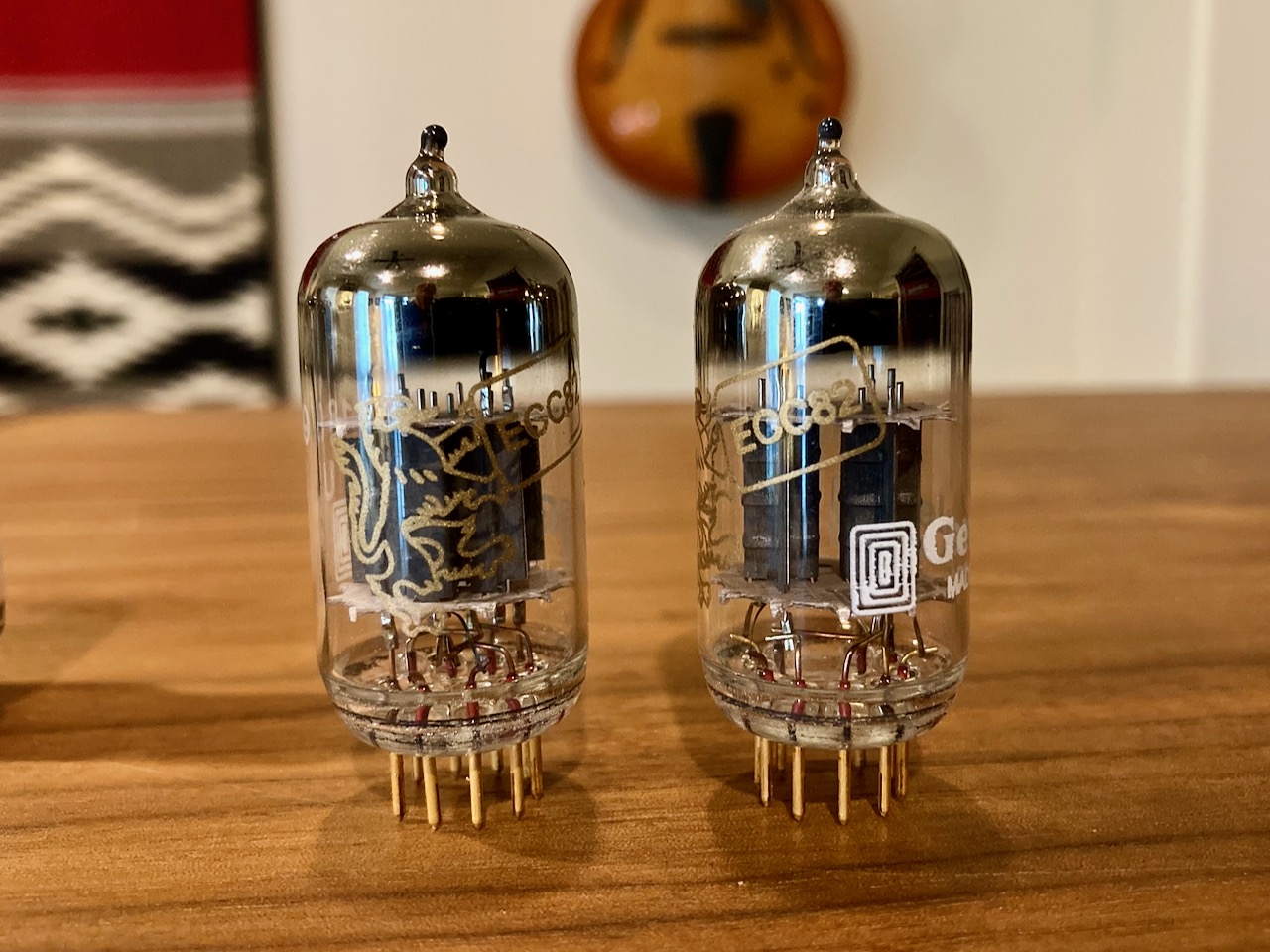
After doing a little listening I decided my vintage Bugle Boy 12AU7 inputs were sounding a little funky due to getting a bit tired, so I replaced them with a pair of Genelex Gold Lion 12AU7s, and now the Triode Lab 45 EVO SET integrated amp is really singing.
I mentioned that I get a bit of ribbing from some of my audio pals for putting such gigantic vintage Altecs into a small room, but oh the results are out this world, which a couple of audio pals validated for me when they heard them first hand. Minds blown. Not that many years ago I would have never considered this as a viable approach, but I'm sure glad I tried it! Sometimes you don't know what you think you know, and this audio system is a perfect example of that.
The combination of a vintage Thorens TD-124 turntable, Schick tonearm with an Ortofon SPU GTX S moving-coil phonograph cartridge, a Leben RS-30EQ phono preamp, a pair of Acoustic Revive RCA Absolute FM interconnects, a 2-watt 45 SET amp driving my highly-sensitive Altec loudspeakers with Duelund CAST crossovers equipped with Luxman AS-10 transformer-based constant impedance attenuators, through Duelund DCA16GA tinned-copper speaker cables, is absolutely magic.
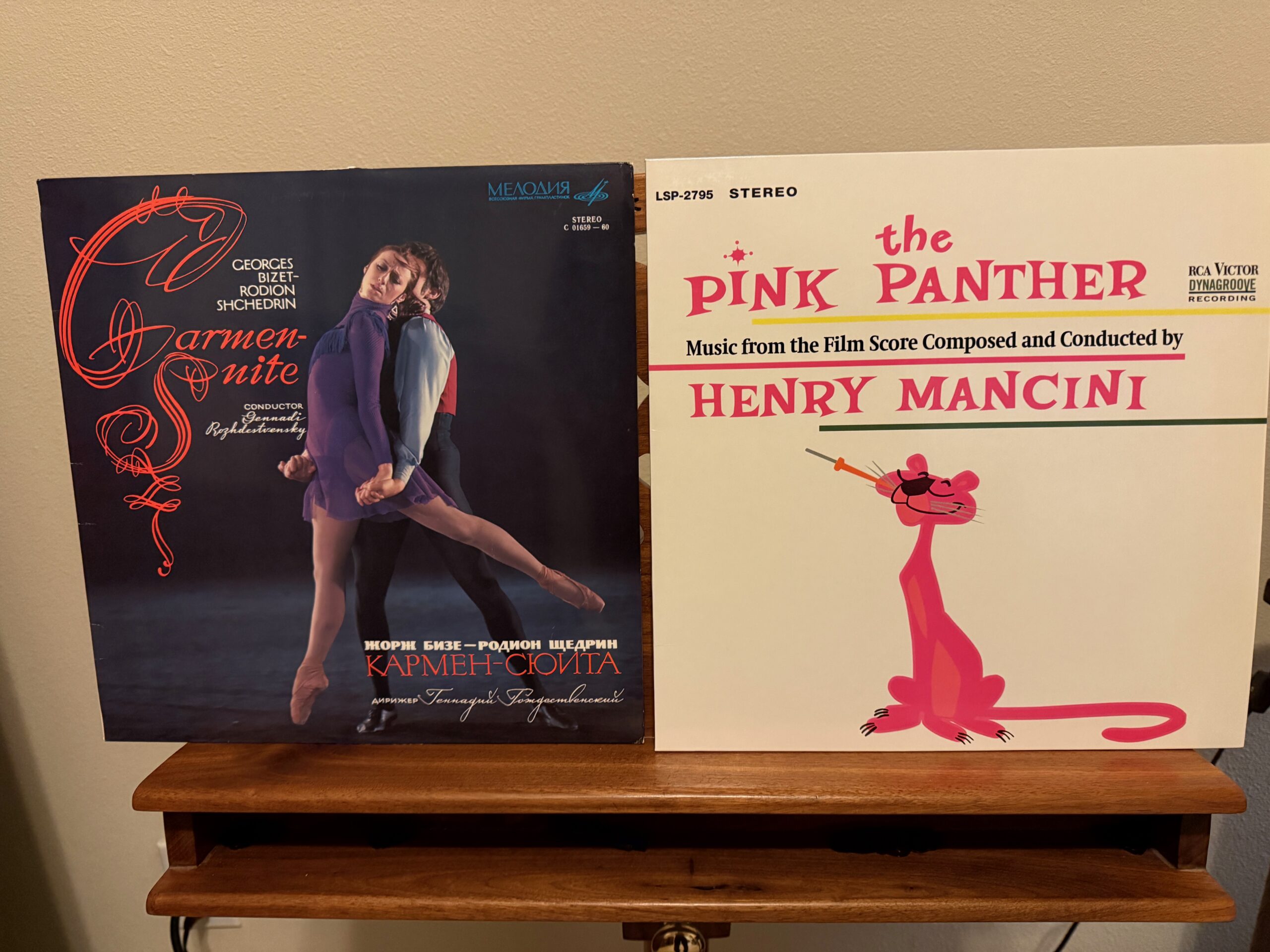
Whether I was listening to classical or movie music ...
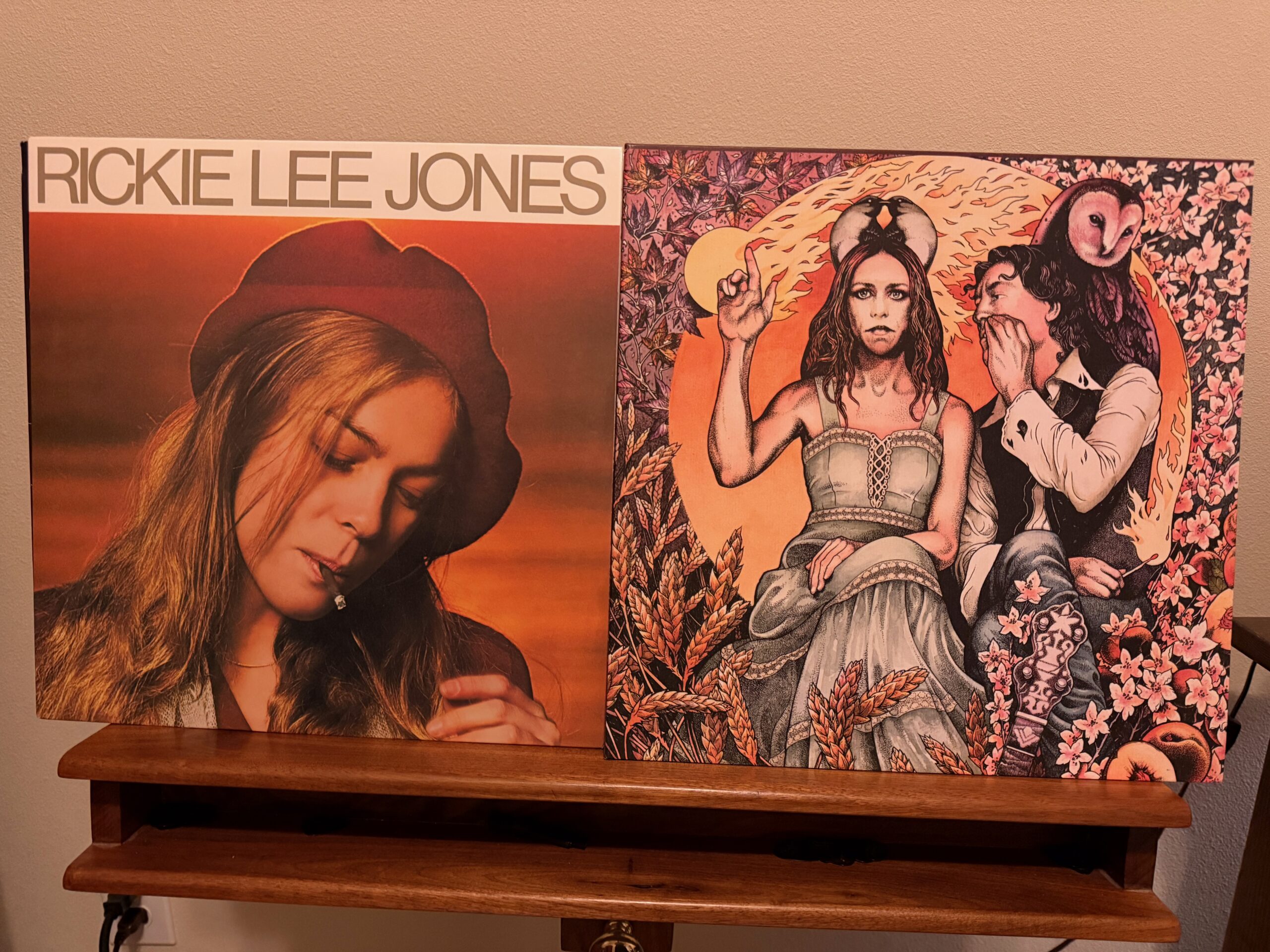
... or pop or folk ...
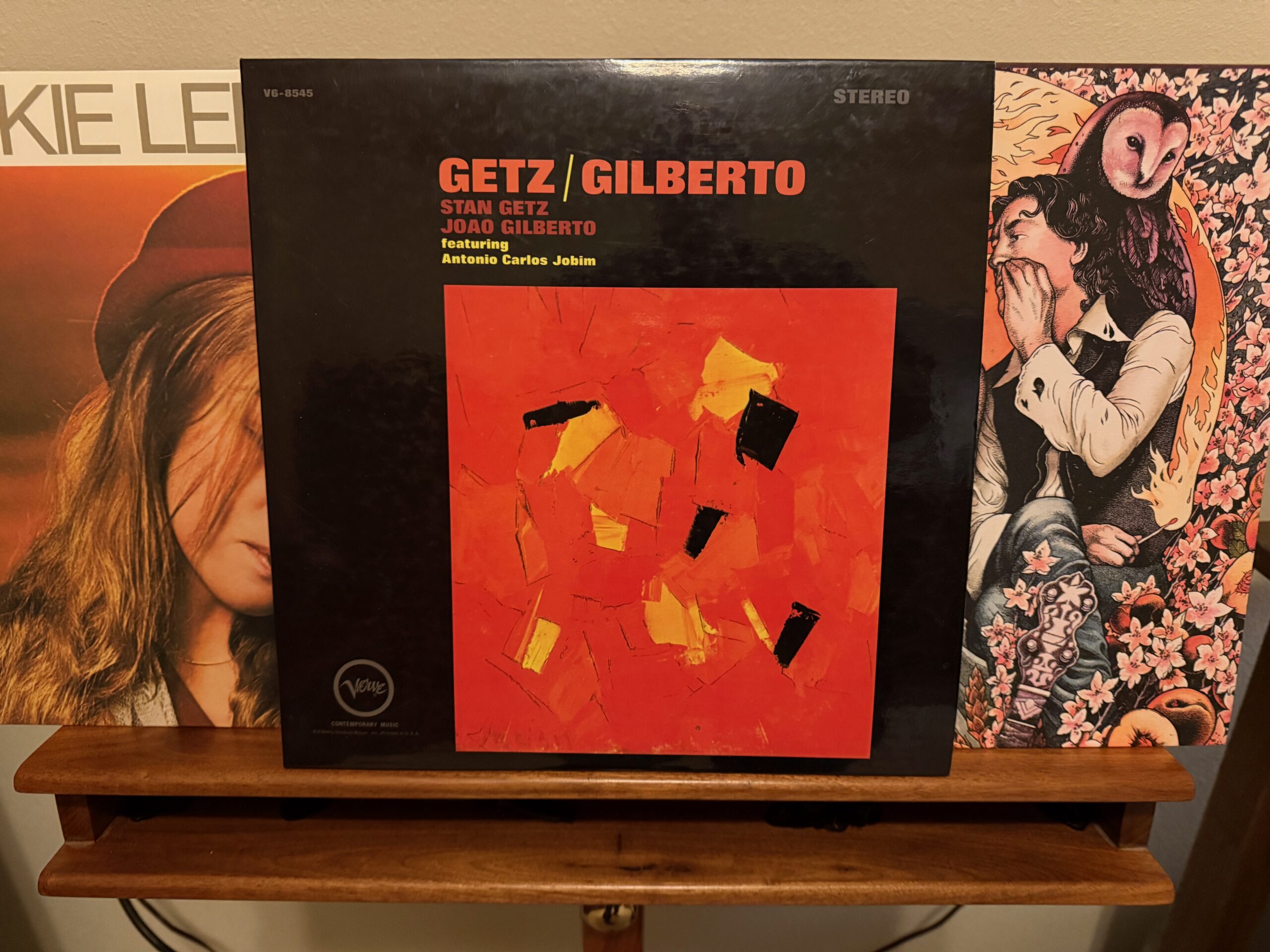
... or jazz, my small room was completely filled with the music and ambient space of the recording, with timbrally rich, detailed, natural sounding, dynamic, and exciting musical performances. The soundstage was wall-to-wall, and imaging was superb and spacious.
It sounds and feels like you are in the recording, sitting in with the musicians. A very vivid and and visceral presentation that put goosebumps on my goosebumps.
Magic combinations do exist, and this is one of them.
As an aside: it is easier to get a magical result when you are using highly-sensitive loudspeakers with adjustable high-quality crossovers, single-ended-triode amplification, a good phono pre, and a decent vinyl source. Magic.
Also, if you have a small room, and you're concerned about getting awesome performance out of your hifi, don't fret, it is possible with a magic combination of equipment.
It's uncanny, really, that such a result is possible - it's magic!
As always, thanks for stopping by, and may the tone be with you!