Greetings friends, I hope you are doing well.
My digital "there and back again" journey started with some ye olde digital sources - the PlayStation PS-1 and the Mhdt Paradisea+ DAC - compared to newer ones - Yazaki-san's Improved Douk Audio U4 streaming DAC and the formidable Audio Note (UK) CD 5.1x CD player, which you can read about at the links below:
Jeff Checking In: A digital "there and back again" journey! Part 1. (The PS-1, Mhdt Paradisea+, and Improved Douk Audio U4.)
Jeff Checking In: A digital "there and back again" journey! Part 2. (The Audio Note (UK) CD 5.1x CD player.)
The short take: The PS-1 was well-regarded back in the day, and it could sound decent on well-recorded, mastered, and produced CDs.
However, the PS-1 crashed and burned on anything of middling to lower-fidelity to the extent that I couldn't listen to it for more than a few moments before wanting to shut it down.
The PS-1 has a narrower listening window compared to every other digital source I've listened to, which is its Achilles' heel.
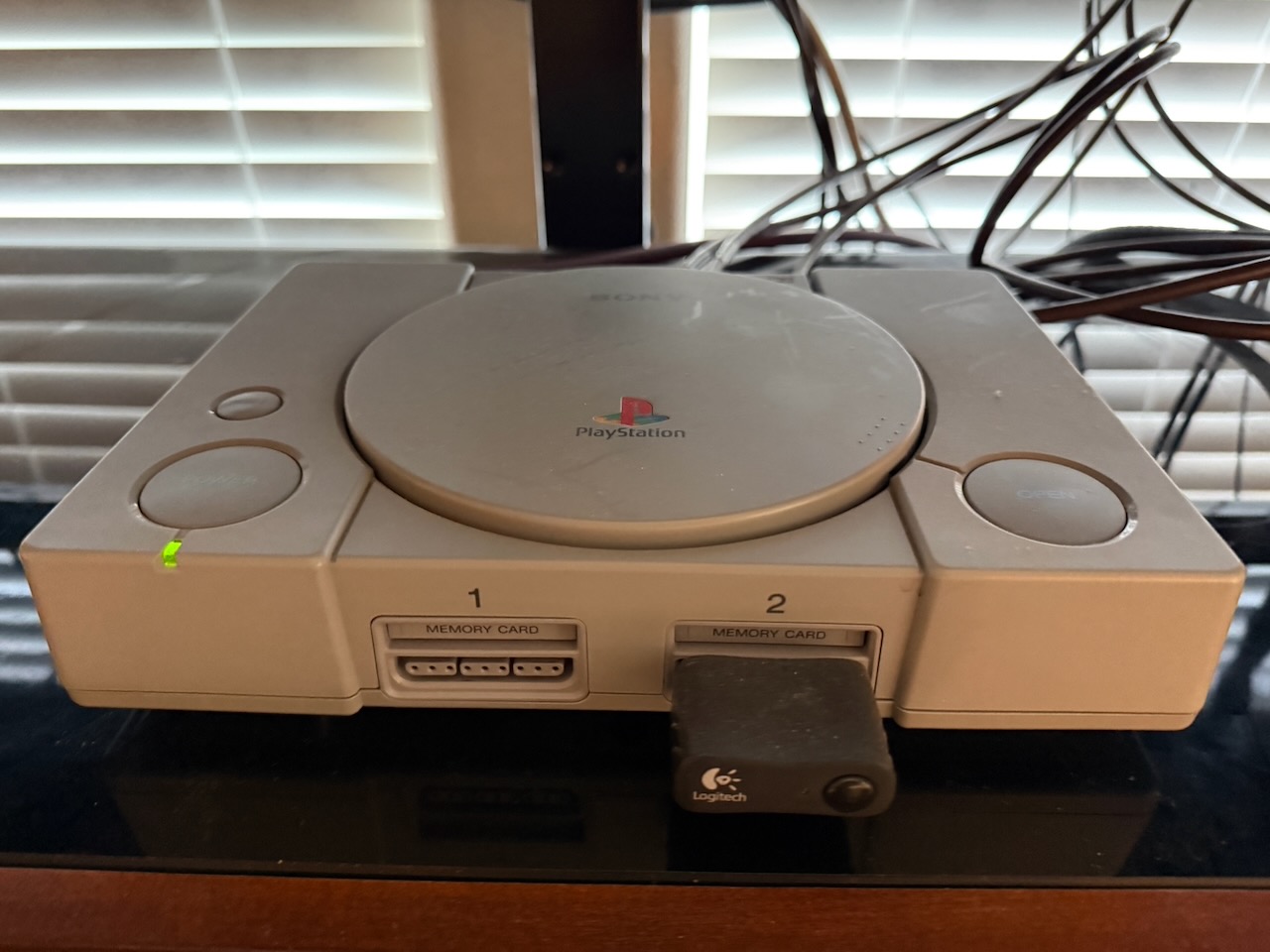
PlayStation PS-1
Next up was the combination of the Sony BDP-BX650 Blu-ray player used as a transport for the Mhdt Paradisea+ DAC (from 2008).
The Paradisea+ DAC sounded exceptional playing well-recorded, mastered, and produced CDs. However, it too struggled to deliver the musical message from poorly-recorded, mastered, and produced CDs.
In terms of the listening window width I'd rate the Paradisea+ a "medium" or a little less, as poorer soundings CDs were not something I'd want to listen to for very long.
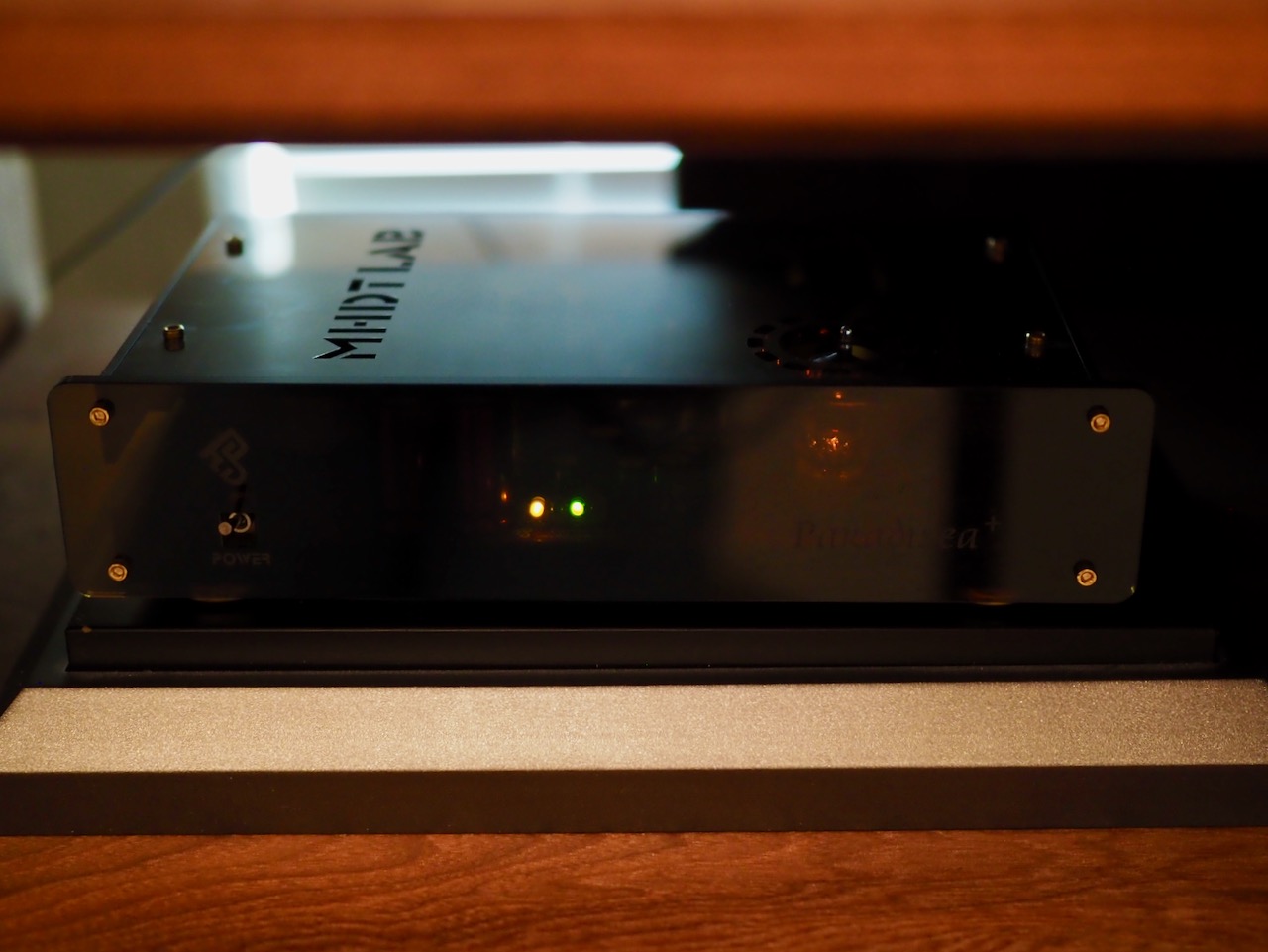
Mhdt Paradisea+ DAC
Then I compared Yazaki-san's Improved Douk U4 Bluetooth streaming DAC in combination with his Improved Power Supply to the Paradisea+ DAC.
Given this is a comparison of playing CDs with the Paradisea+ DAC versus Bluetooth streaming from Qobuz with the Improved U4 DAC & Improved Power Supply, it is not exactly an apples-to-apples comparison. Still, I think it gives a reasonably valid comparison of overall performance.
The Paradisea+ DAC offered higher-fidelity playing CDs than the Improved U4 did streaming the same music from Qobuz.
Where the Improved U4's performance bettered the Paradisea+ DAC was by having a wider listening window (i.e. tolerated low-fidelity recordings better), and of course by streaming from Qobuz you have a remarkable amount of albums to listen to.
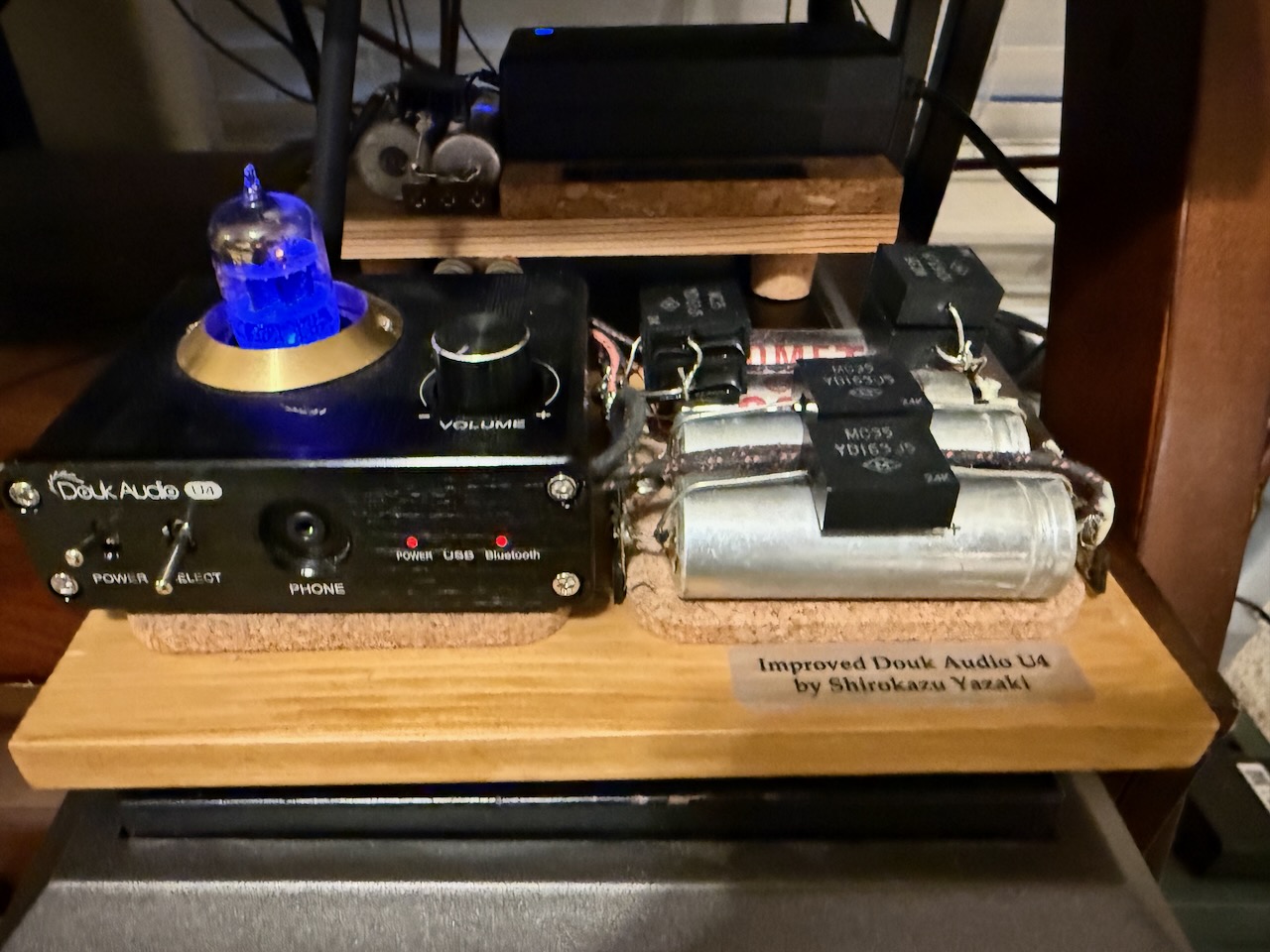
Yazaki-san's Improved Douk U4 Bluetooth streaming DAC in combination with the Improved Power Supply
In Part 2 the Audio Note (UK) CD 5.1x CD player crushed all of the above digital sources in terms of high-fidelity sound quality and musicality, and as a double smack down the CD 5.1x also had a very wide listening window that could play almost any crappy sounding CD and turn it into an enjoyable listening experience, which is the CD 5.1x's superpower.
To be fair, the CD 5.1x costs more than many enthusiasts spend on an entire audio system at about $31K, so one expects it to excel, and it does.
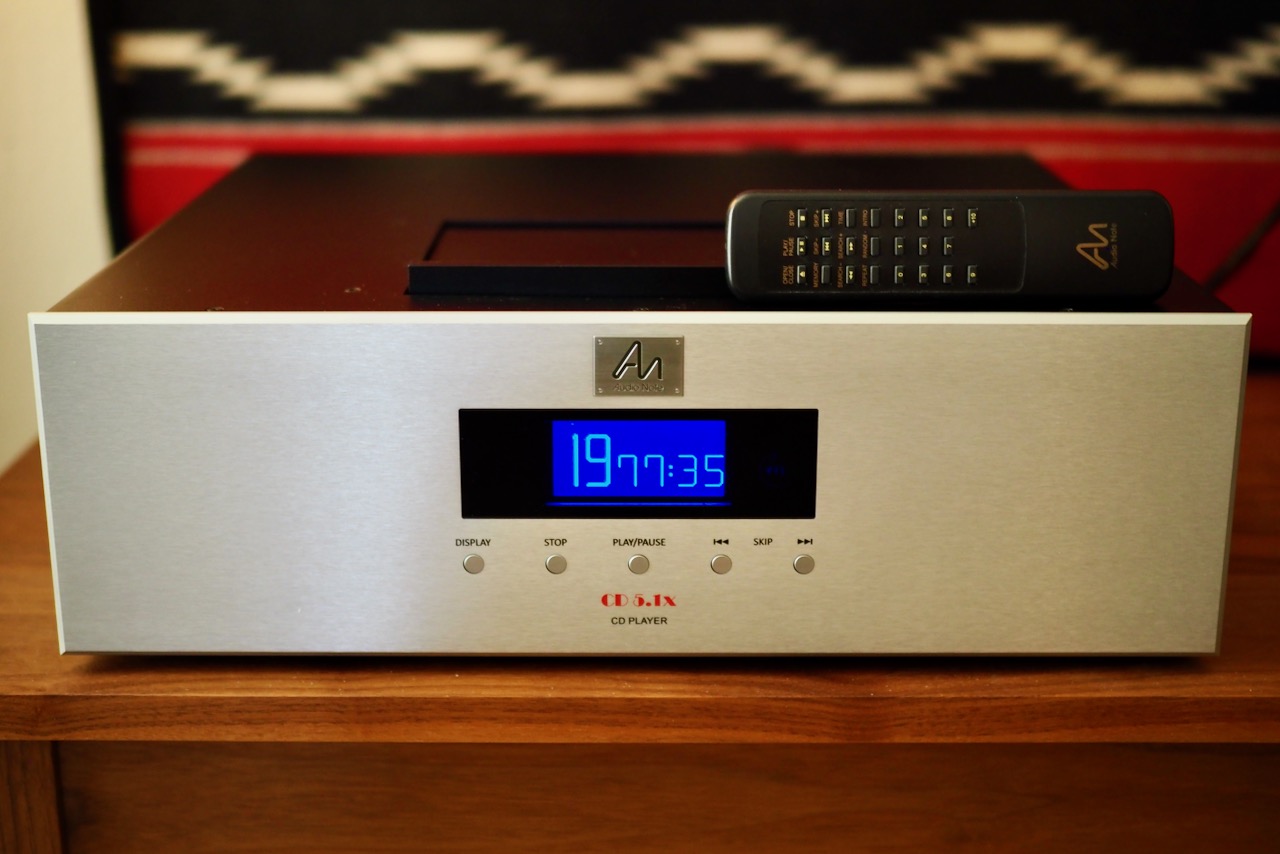
Audio Note (UK) CD 5.1x CD player
Next up is the Gold Note DS-10 EVO streaming DAC & PSU-10 EVO power supply at about $5100. (More HERE)
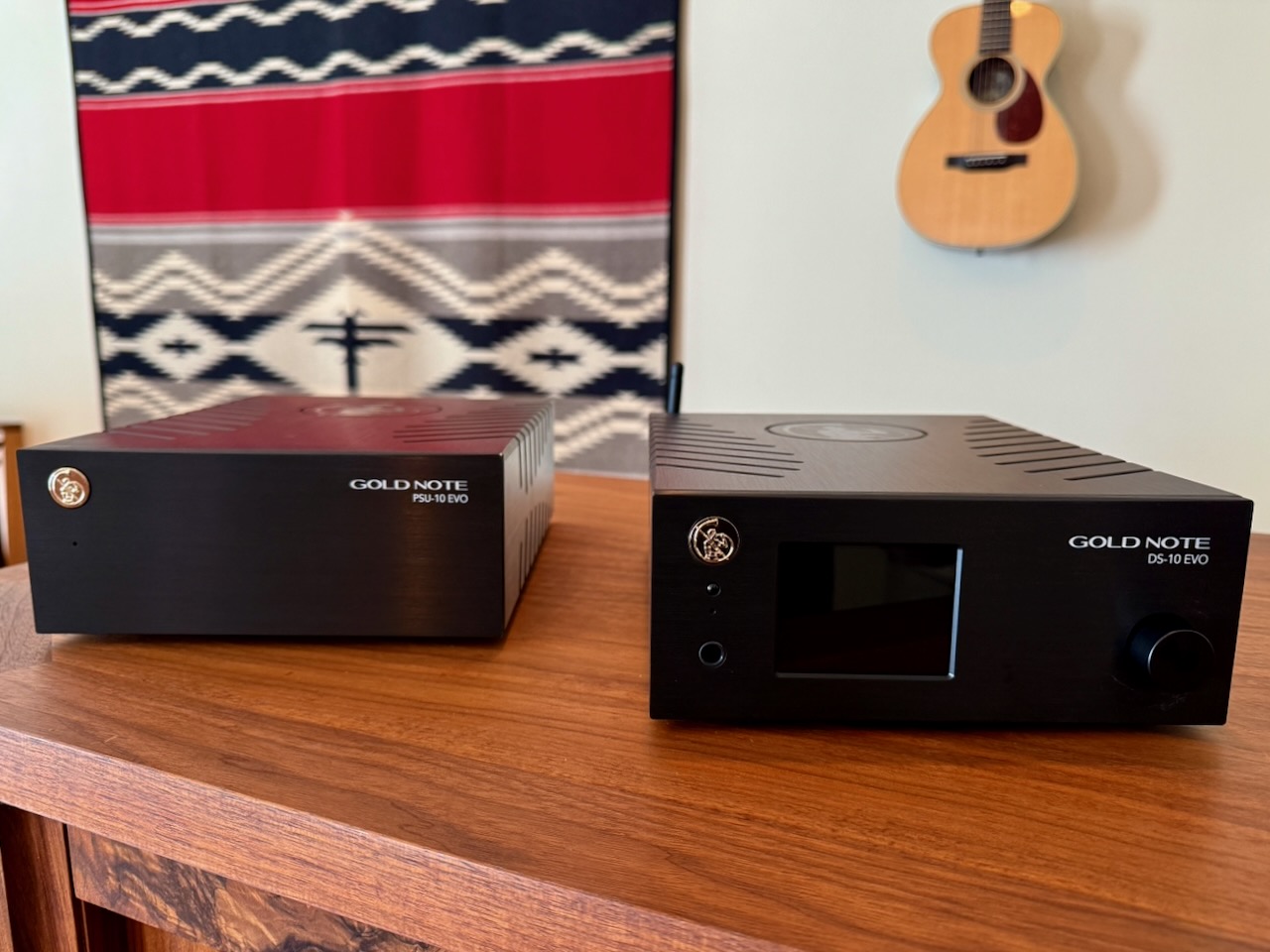
Gold Note DS-10 EVO streaming DAC & PSU-10 EVO power supply
The Gold Note DS-10 EVO streaming DAC can play basically any digital stream that an audiophile might want to listen to, like PCM at Red Book resolution, or high-resolution PCM, as well as the high-resolution DSD streams.
The Gold Note DS-10 EVO streaming DAC & PSU-10 EVO power supply combination have a quality feel to them, and are built to a high standard. They are not built internally to the exotic level of the $31K CD 5.1x, but for the price they are very nice indeed.
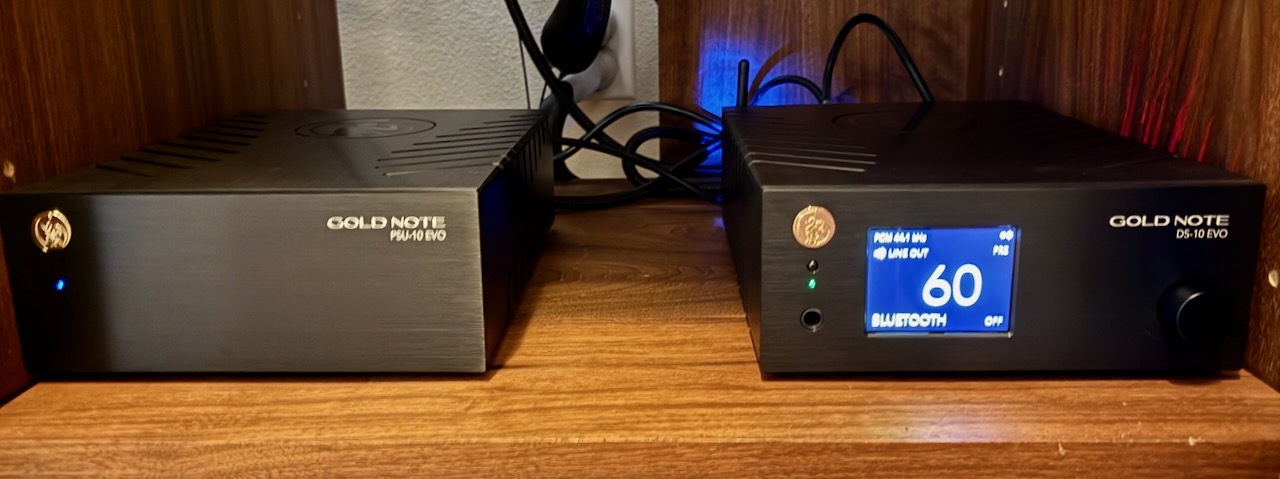
I've been listening to the Gold Note DS-10 & PSU-10 combo in my office system (HERE) and have been impressed with their performance.
With high-resolution PCM the Gold Note DS-10 & PSU-10 combo came very close to the performance of records played over my Thorens TD-124 fitted with a Schick tonearm and Ortofon GTX S moving-coil phonograph cartridge.
The Gold Note DS-10 has a fascinating and useful "voicing feature" where you can select a number of PCM digital filters to tailor the sound quality to your preference.
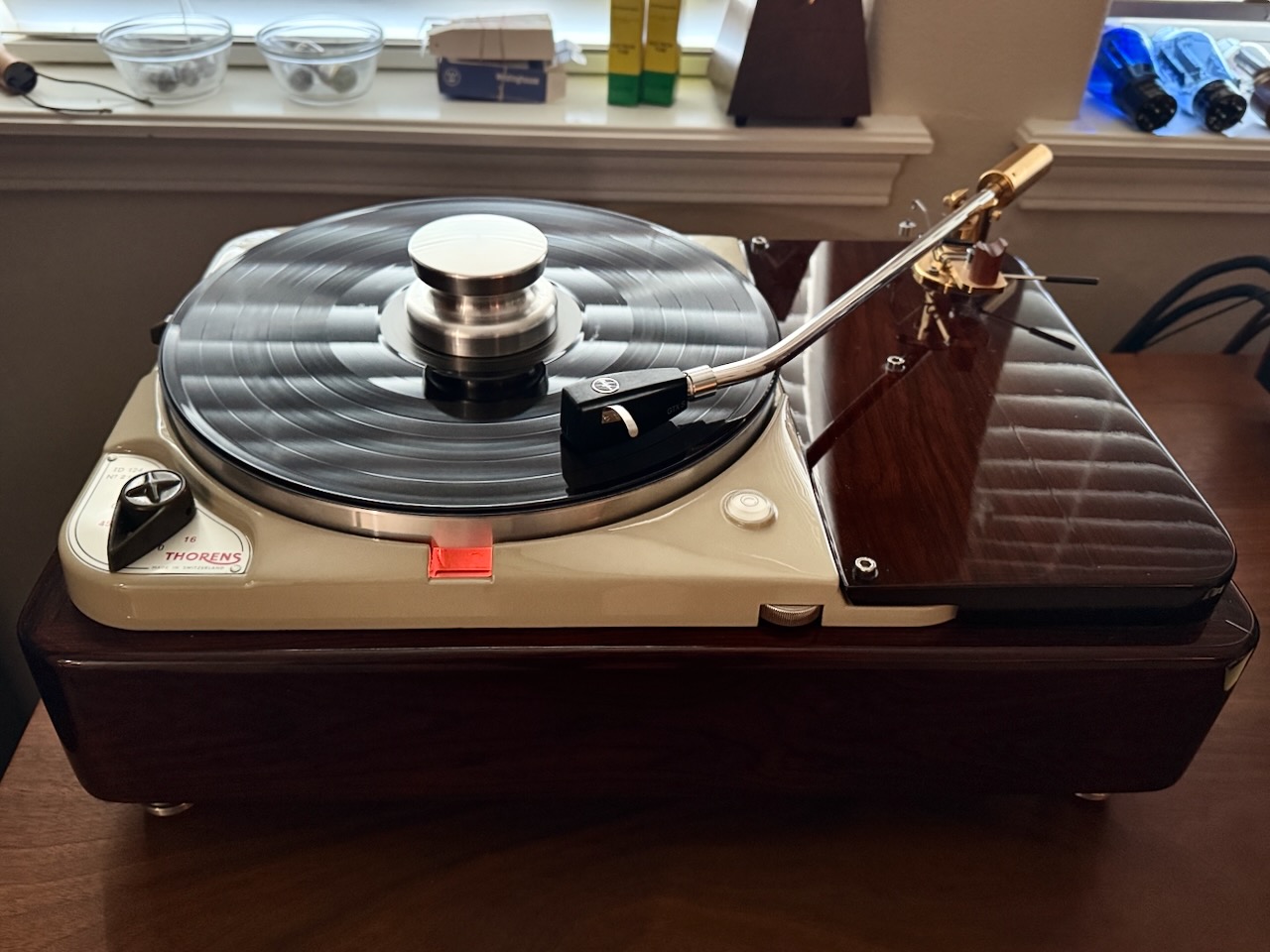
One of the filters provided a nearly identical sound quality to that of my Thorens TD-124 / Schick tonearm / Ortofon GTX S moving-coil phonograph cartridge source when playing LPs.
That impressed me. The DS-10 did fall a little short of the turntable in terms of performance, but not by much.
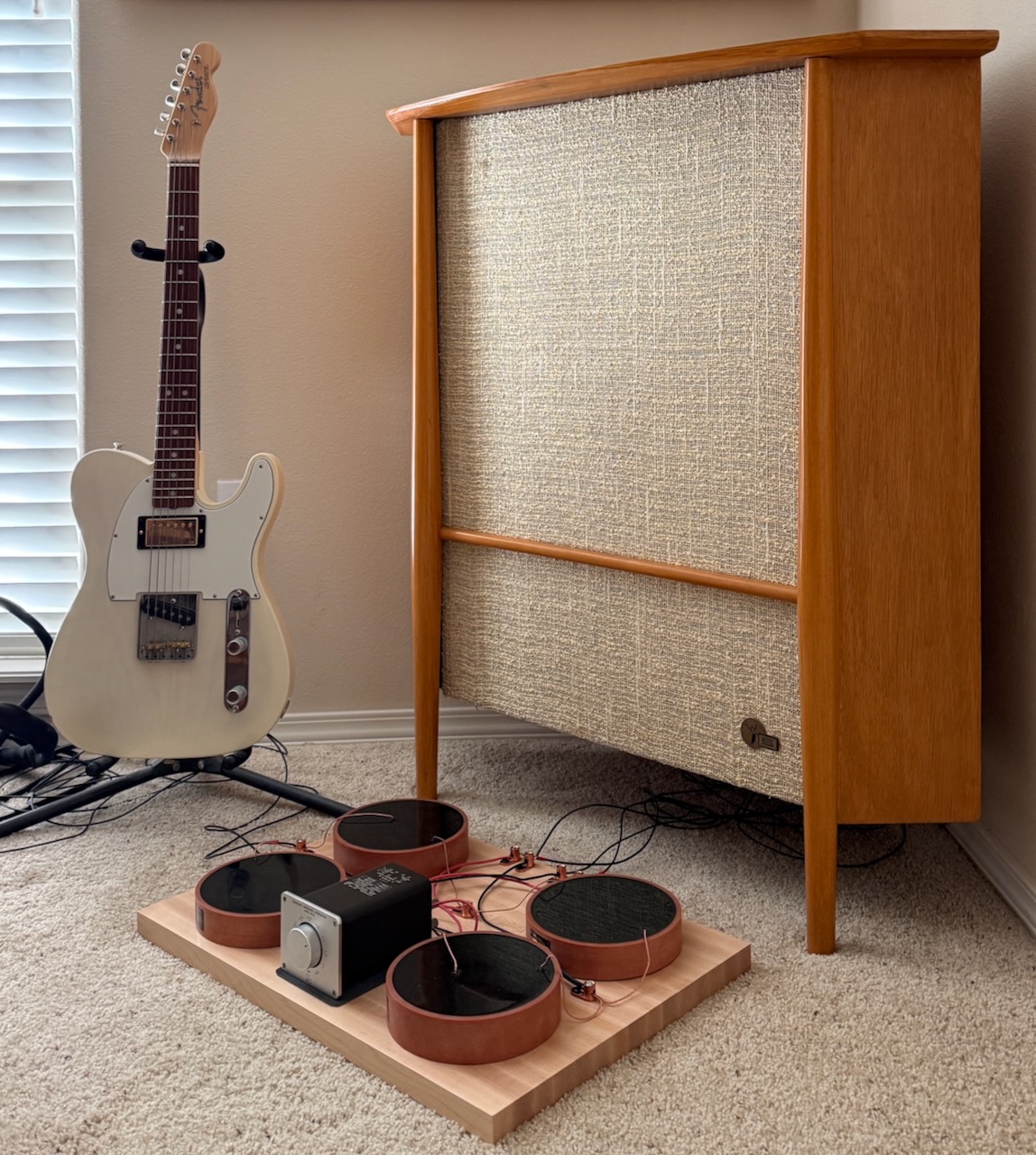
For this Part 3 article, I moved the Gold Note DS-10 & PSU-10 combo into my audio system with my vintage Altec Corona 832A loudspeakers with their Duelund CAST crossovers, so I could get a reasonably valid comparison to the above digital sources.
First up was comparing the Gold Note DS-10 to the Paradisea+ DAC. I tried a number of the Gold Note DS-10's PCM digital filters, and the one that came closest to the Paradisea+ DAC was the "low dispersion delay" filter.
I also matched the volumes of the Paradisea+ and and the Gold Note DS-10 as close as I could get them so I could switch back and forth between them to compare the sound quality and the width of the listening window.
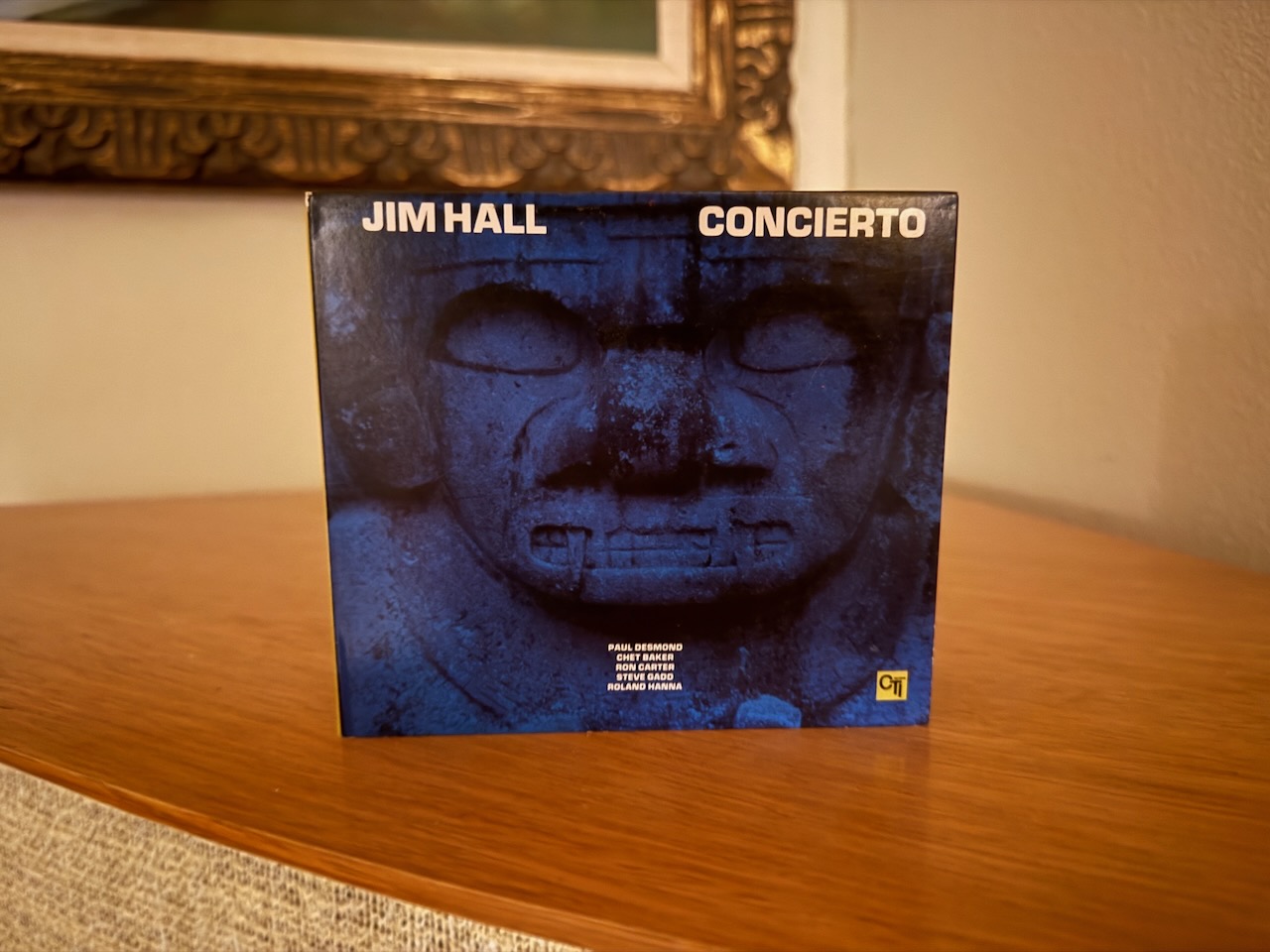
I compared Jim Hall's Concierto CD featuring Jim Hall (guitar), Paul Desmond (alto sax), Roland Hanna (piano), Ron Carter (bass), and Steve Gadd (drums), to the Qobuz stream of Concierto with PCM at 44.1 kHz.
With Concierto the Paradisea+ bested the DS-10 & PSU-10 combo by having a more open, detailed, and spacious soundstage, with more resolved bass response, but not by a lot. Both sounded very musically engaging and enjoyable to listen to.
I expected that the DS-10 & PSU-10 combo would exceed the performance of the Paradisea+, but that turned out not to be the case with Concierto, with the Paradisea+ having a slight but noticeable performance advantage.
Next I thought I'd compare the DS-10 & PSU-10 combo to Yazaki-san's hot-rodded U4 with the Improved Power Supply.
With the DS-10's PCM filter set to "low dispersion delay," Concierto sounded very nearly identical on both streaming DACs, with the difference being I was streaming Concierto from Qobuz via Bluetooth on my iPhone 16 Pro Max to Yazaki-san's U4, and from Qobuz via at network connection to the DS-10. Both were at a PCM of 16 bit / 44.1 kHz.
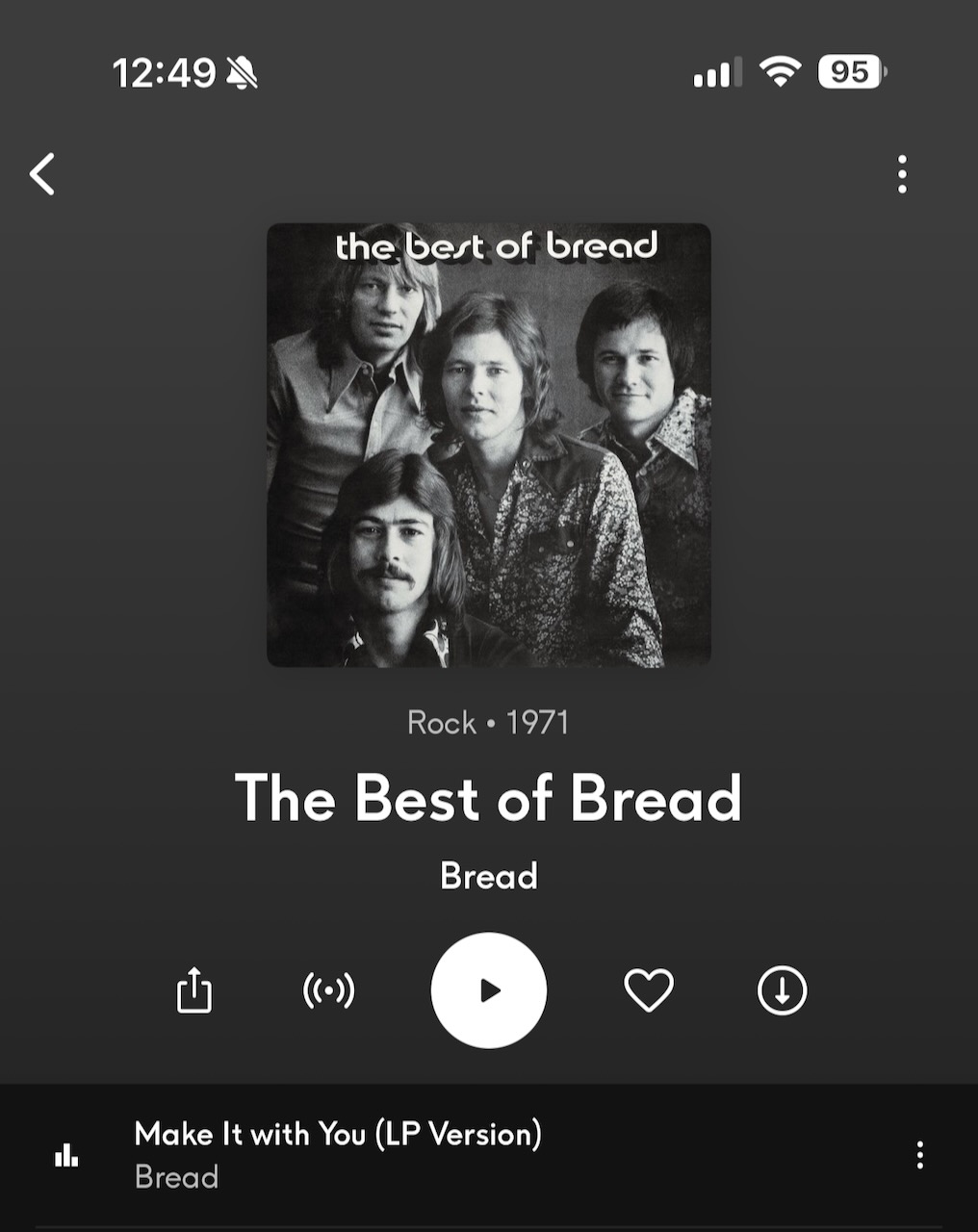
Next I thought I'd test the DS-10's width of the "listening window" by playing a dodgy sounding album, in this case The Best of Bread, as I did with the Paradisea+ and Yazaki-san's U4 in my Part 1 comparisons.
I streamed PCM at 16 bit / 44.1 kHz from Qobuz, with the U4 a Bluetooth stream from my iPhone, and to the DS-10 with a network connection.
On "Make It with You," Yazaki-san's hot-rodded U4 with the Improved Power Supply slightly bested the DS-10 in listening window width, but not by much. Both sounded very similar, having a medium or a little less listening window width.
What does the listening window width results mean? A medium or less width means one won't want to listen to dodgy albums for long, which narrows the amount of albums one can listen to and enjoy. Well-recorded / mastered / produced albums still sound excellent.
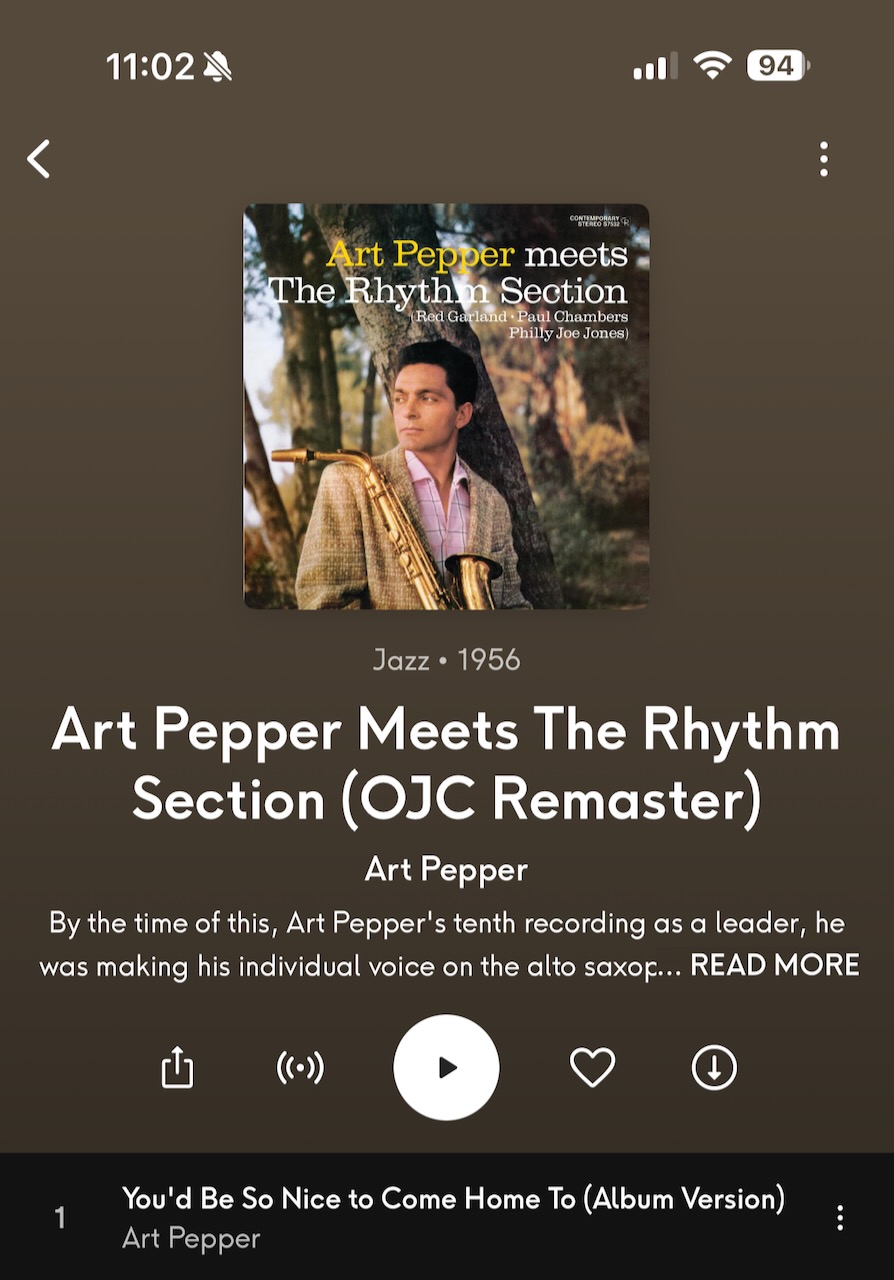
Next I thought I'd compare the performance of Yazaki-san's hot-rodded U4 with the Improved Power Supply to the DS-10 & PSU-10 combo with a 16 bit / 44.1 kHz PCM stream from Qobuz, and then compare the U4 with the 16 bit / 44.1 kHz PCM stream to the DS-10 with high-resolution PCM and DSD streams.
I had found in my office system that with the DS-10 & PSU-10 combo, high-resolution PCM sounded much better than than Red Book standard digital streams, so I was curious what I'd hear in this system comparing Red Book, high-resolution PCM and DSD streams.
I chose Art Pepper's Art Pepper Meets The Rhythm Section (1957) featuring Art Pepper (sax) with Miles Davis' rhythm section of Red Garland (piano), Paul Chambers (bass), and drummer Philly Joe Jones (drums).
First I played "You'd Be So Nice to Come Home To" with the 16 bit / 44.1 kHz PCM Qobuz stream from the OJC remastered version (above), which swings very nicely and sounds great on Yazaki-san's U4 and the DS-10, and as before both sounded nearly the same.
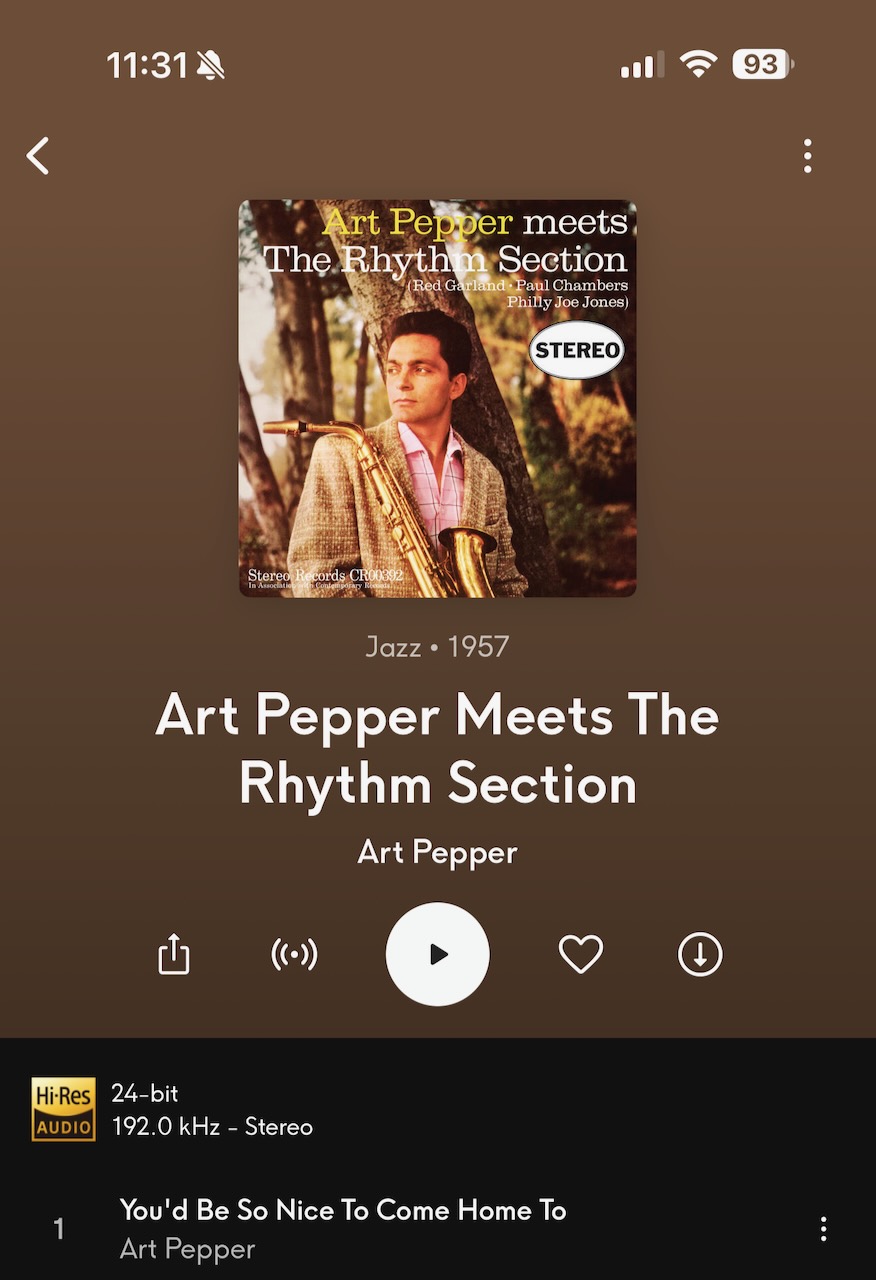
Next I streamed the 24 bit / 192 kHz PCM version to the DS-10 and compared it to the U4 playing the 16 bit / 44.1 kHz PCM version.
The DS-10 playing the 24 bit / 192 kHz PCM version sounded way better than the U4 playing the 16 bit / 44.1 kHz PCM version.
The sound quality was more relaxed and analogue sounding, more spacious, more tonally rich, and images sounded more vivid and had more presence like live music. Essentially, playing the 24 bit / 192 kHz PCM version of "You'd Be So Nice to Come Home To" was a complete slap-down of the 16 bit / 44.1 kHz PCM version.
That's the same sort of performance difference I heard in my office system between Red Book and high-resolution PCM. The difference is not at all subtle.
To listen to the DSD64 version of "You'd Be So Nice to Come Home To" I changed the Preset function of the DS-10 DAC from the PCM filter set to "low dispersion delay," to "DSD" to play the DSD64 files.
When I played "You'd Be So Nice to Come Home To" with DSD64 resolution, streamed from Roon on my MacBook Pro, and compared it to the 24 bit / 192 kHz PCM version streamed from Qobuz I was rather shocked to hear that the difference between them was even greater than I heard between Red Book PCM and high-resolution PCM at 24 bit / 192 kHz PCM.
The difference was one of those "night and day" experiences, with the DSD64 offering way more of everything: musicality, sound quality, and a live-like presence that gave my goosebumps their own goosebumps. Impressive.
There was more way more clarity, more analog naturalness, and the presence of instruments in my listening room was dramatically more vivid, with imaging and soundstage. It really took me by surprise.
This was my first foray into DSD with the DSD64 stream. Just like PCM, DSD comes in different resolutions: DSD64 (2.8 MHz) is the standard format, with DSD128 (5.6 MHz), DSD256 (11.2 MHz), DSD512 (22.4 MHz), and DSD1024 (44.8 MHz) being the higher resolution versions. Each higher resolution of DSD is said to offer higher sound quality.
I have DSD album files that include DSD64, DSD128, and DSD256, but not for DSD512 and DSD1024. I'll be giving each of those a listen and will report back with more thoughts.
It was clear to me in my listening that even the lowest-resolution DSD64 was much better sounding than the highest-resolution 24 bit / 192 kHz PCM.
Summing Up
This has certainly been an illuminating experience listening to the high-resolution formats of PCM and DSD in comparison to the Red Book standard.
A question I want to investigate is, "How does the Gold Note DS-10 EVO & PSU-10 EVO combo playing DSD compare to vinyl playback with a really good vinyl front end like that in my Westminster Royal SE loudspeakers based system?"
My sense is that really good vinyl playback is still better than DSD, but we'll test that assumption when I listen to them back-to-back.
I suspect that DSD playback may meet or exceed the performance of vinyl playback on my restored vintage Thorens TD-124 in my office system, which is a good vinyl front end, but not at the rarefied performance level of that in my Westminster Royal SE loudspeakers based system. I'll need to test that assumption too.
In case you are wondering, none of these digital sources are even close to the same level of performance that the Audio Note (UK) CD 5.1x achieves when playing the Red Book Standard of 16 bit / 44.1 kHz PCM. I haven't compared them to the CD 5.1x when playing high-resolution PCM or DSD yet, but will do that in the future.
For someone like me, who places high value on listening to the great recordings from the acoustic and electric eras of the recording arts that are available only on CD these days, that means a good Red Book CD player is still essential.
Certainly, after hearing the Gold Note DS-10 EVO & PSU-10 EVO combo playing albums in DSD, I'm overcoming my reluctance to embrace high-resolution digital formats.
A few details you might find to be useful: I used the Qobuz subscription service for streaming PCM from my iPhone 16 Pro Max. For DSD I've set my MacBook Pro up as a Roon server, store the DSD album files on a Samsung 2T T7 SSD, and use Roon to stream the DSD files via a network connection to the Gold Note. That approach seems to work well, and it sure is an easy way to do things.
To give you an idea about storage of DSD files: I’ve got 537 albums of great music in DSD on a T7 SSD that’s about the size of a credit card, but thicker. It’s like what I imagine it would be like to have a library of master tapes at my fingertips that I can listen to with the touch of a button. It’s pretty cool.
There are also additional costs beyond the hardware: A subscription to Roon to manage DSD files is about $15/month, and of course there's the expense of buying albums in DSD to build a music library, but typically they are less costly than audiophile LPs, for example. A subscription to Qobuz to stream albums in Red Book and high-resolution PCM costs about $15/month. If you want to build a PCM library of your own instead of just stream albums through the subscription, there's still the cost of those albums.
I'm still learning as I go about the Gold Note DS-10 EVO & PSU-10 EVO combo's full set of features and level of performance. I'll continue to keep you informed about what I learn. So far I'm really, really, impressed with what it can do with DSD.
Much more to come on this topic!
As always, thanks for stopping by, and may the tone be with you!